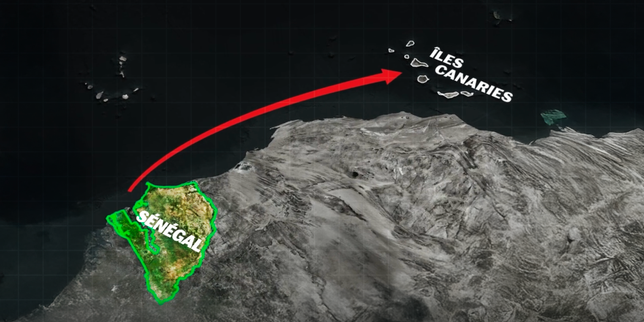
The Atlantic doesn't forgive mistakes. When people talk about modern migration routes, they usually picture overcrowded dinghies crossing the narrow strip of the Mediterranean between North Africa and Italy. But a massive shift has taken place. Thousands of young people from West Africa are now turning their backs on traditional paths, choosing instead the grueling, open-ocean crossing toward the Spanish Canary Islands.
Why? Because tightening border controls elsewhere have left them with terrible choices.
If you look at how migration patterns evolved, the physics of border enforcement always dictate the outcome. When European nations pour millions into patrols along the Mediterranean and strike deals with transit countries like Libya and Tunisia, they don't stop movement. They just redirect it. It is like squeezing a water balloon. Press hard in the center, and the edges bulge outward. For West African migrants, that outward bulge is the West African Atlantic Route, stretching from Senegal, The Gambia, and Guinea all the way to Tenerife and El Hierro.
The Geography of Desperation
The numbers tell a stark story. International organizations like the International Organization for Migration (IOM) and human rights groups monitor departures from coastal hubs in West Africa closely. Data from the IOM’s Displacement Tracking Matrix shows thousands of individuals embarking from places like Banjul and various Senegalese ports on overloaded wooden pirogues.
These aren't short trips. While crossing from Morocco to Spain can take hours, a journey from the coast of Senegal or The Gambia to the Canary Islands spans hundreds of miles of open ocean. It often takes a week or more.
The Atlantic route carries a horrific human toll. Estimates and testimonies compiled by groups like Médecins Sans Frontières (MSF) show that a staggering number of boats go missing or capsize. Strong currents, rough weather, and rudimentary navigation equipment turn these wooden fishing boats into floating coffins. Yet, young men and women keep boarding them.
Why Traditional Routes Are Closing
To understand this shift, look at what happened to the alternatives.
For years, the central and eastern Mediterranean routes were the primary veins for sub-Saharan migration. But heavy policing changed the equation. Enhanced naval patrols, crackdowns by local authorities, and violent pushbacks made those options nearly impossible for anyone without deep pockets or immense luck.
At the same time, European funding flooded North African nations to lock down their coastlines. Morocco and Mauritania intensified their own border enforcement under intense external pressure. As northern departure points became militarized zones, smugglers and migrants looked further south. They turned to countries with weaker state infrastructure or longer, less guardable coastlines—places like Guinea, Guinea-Bissau, The Gambia, and Senegal.
This southern shift created a paradox. To avoid detection and increased border walls, migrants chose a route that is exponentially more dangerous. They traded a high probability of interception for a high probability of shipwreck.
Economic Collapse and Youth Unemployment
Border policies are only part of the equation. You can't understand the pull of the Canary Islands without looking at the severe push factors driving youth away from home.
In many West African nations, the economic reality is brutal. Take Senegal or The Gambia, where the median age is exceptionally low, and formal job markets offer virtually no prospects for millions of young people. Local fishing industries have been devastated by foreign commercial fleets, stripping coastal communities of their traditional livelihoods. Climate vulnerability hits farming communities hard, ruining harvests and destroying rural incomes.
When you have no work, no money, and no political stability, the risk of dying at sea starts to look like a gamble worth taking compared to a lifetime of absolute stagnation. It is a rational calculation made under irrational conditions.
Smugglers exploit this despair ruthlessly. Networks operate openly along the coast, running recruitment campaigns, building makeshift boats, and charging hundreds of thousands of CFA francs for a spot on a pirogue. Survivors frequently report physical abuse, extortion, and theft by traffickers who take their last savings before pushing them into the surf.
What Happens When They Arrive
Reaching Spanish soil doesn't mean the struggle ends. The Canary Islands have faced severe reception crises. Local infrastructure struggles to handle the influx, particularly when it comes to housing the thousands of unaccompanied minors who survive the voyage. Shelters operate far over capacity, straining social services and igniting fierce political debates within Spain and across the European Union about burden-sharing and border management.
Many survivors find themselves trapped in legal limbo, facing slow asylum processes or potential deportation, while others manage to move onward to mainland Europe to join underground labor markets.
The Atlantic route remains a grim monument to a broken global migration system. As long as the root causes of poverty, conflict, and climate stress persist in West Africa, and as long as legal migration channels remain tightly shut, people will continue to build boats on southern beaches. They will look toward the horizon, betting their lives on a distant archipelago, because staying behind feels like no choice at all.