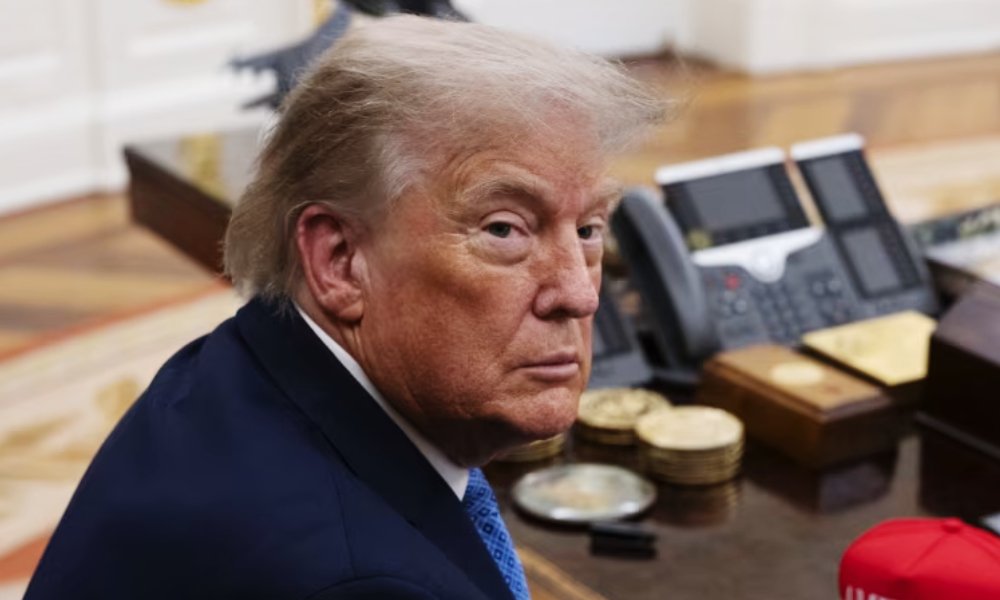
Donald Trump isn't shy about sending bills to international allies. His latest target is the global community relying on the Strait of Hormuz for stable oil shipments.
If you've been following energy markets or the ongoing friction with Iran, you know how vital this narrow strip of water is. Roughly a fifth of the world's traded oil passes right through it. When tensions flare in the Middle East, energy prices spike globally. Trump's recent stance is simple: if American warships are keeping the oil flowing, the countries benefiting from that security need to pay up.
The Core Demand for Reimbursement
Trump took to Truth Social to lay out his grievances without a filter. He claimed that the United States has spent generations doing heavy lifting for the rest of the world while receiving little to no assistance in return.
"The Countries of the World, which have been no help to us whatsoever, should, and will, reimburse the United States of America when this scam conflagration is all over," Trump wrote.
He argued that Washington has essentially shouldered the financial and military burden of securing global energy supplies for decades. While energy secretary Chris Wright noted that oil shipments escorted by the US Navy through the corridor have seen an upward average, Trump insists that American taxpayers shouldn't foot the total bill for a global lifeline.
Why the Strait of Hormuz Matters So Much
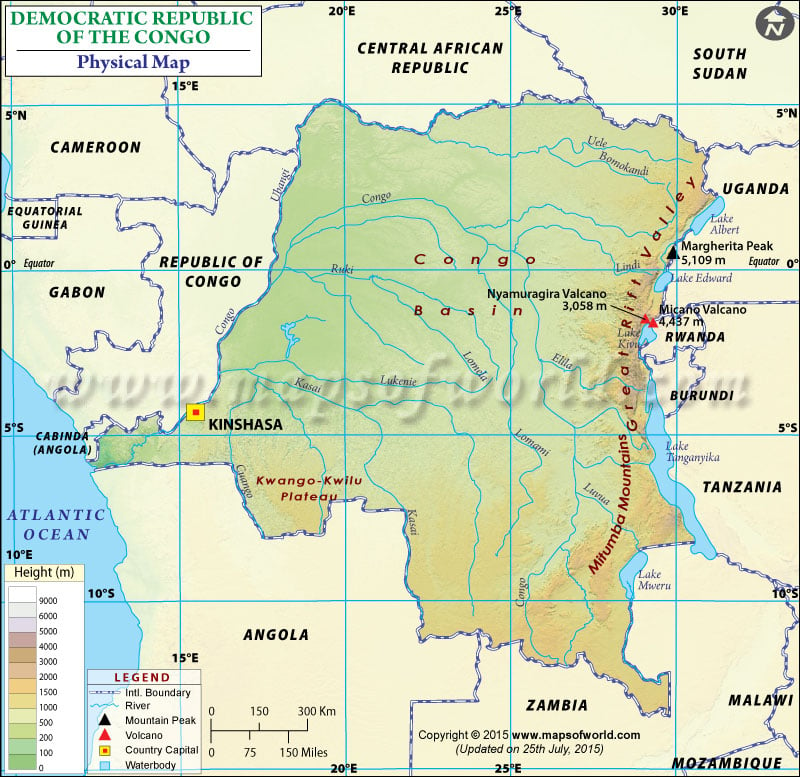
Geopolitics rarely revolves around a single geographic bottleneck, but the Strait of Hormuz is a massive exception. Located between Oman and Iran, it connects the Persian Gulf with the Gulf of Oman and the Arabian Sea.
Without it, major economies in Asia, Europe, and North America face immediate energy strangulation. That is why any disruption triggers an instant reaction in Brent crude and US West Texas Intermediate benchmarks, which have hovered above $100 a barrel amid regional flashpoints.
Tehran has long claimed governance authority over the strategic waterway, attempting to enforce its own transit restrictions and routing protocols. Washington, however, completely rejects Iran's jurisdiction. The US military maintains a heavy presence to guarantee open commercial transit, a strategy that comes with massive operational costs and stretched naval assets.
The Pushback and Diplomatic Realities
Getting foreign nations to actually hand over cash for maritime security is an uphill battle. Gulf states like Saudi Arabia, Qatar, the UAE, Kuwait, and Bahrain have complex regional dynamics to navigate. They rely on US security guarantees, but they also share a neighborhood with Iran.
Earlier proposals floated by Washington—including a short-lived idea to claim a 20% cut of cargo passing through the corridor—faced immediate skepticism and logistical hurdles. Iranian officials have dismissed the idea entirely, with Supreme Leader advisor Mohammad Mokhber stating that Tehran would never submit to paying an enemy for passage.
Meanwhile, diplomatic currents shift by the day. Trump suggested that Tehran is looking for a way out, claiming that the "failing nation of Iran wants to make a deal, quickly and badly." Whether talks resume or military postures harden, the underlying question of who pays for keeping global choke points open remains wide open.
Securing international trade routes has always been an expensive game. Trump's insistence on post-conflict reimbursement brings a transactional approach to traditional foreign policy, forcing energy-dependent nations to confront the real cost of maritime security.