The plane touched down at Belgrade airport carrying a cargo that immediately re-ignited old wounds across the Balkans. Ratko Mladic is dead. The former Bosnian Serb army commander, convicted of genocide and war crimes by the United Nations tribunal in The Hague, passed away at the age of 84 while serving a life sentence. His remains were flown back on a government aircraft, accompanied by his family and the Serbian justice minister.
What happens next isn't just about a funeral. It’s a test of how a nation handles its darkest chapters.
The Politics Behind the Coffin
When the casket draped in the Serbian flag arrived, it was carried by members of the Serbian Armed Forces to a military hospital for an autopsy. That military presence wasn't an administrative accident. It signaled a profound alignment that immediately triggered friction with international observers.
President Aleksandar Vucic and other officials found themselves walking a diplomatic tightrope. While thousands of mourners and nationalist groups viewed Mladic as a defender and gathered to pay their respects, foreign capitals watched closely. The European Union drew a hard line. EU Enlargement Commissioner Marta Kos canceled a planned visit to Belgrade, explicitly warning that the glorification of a convicted war criminal runs entirely counter to the values required for European integration.
You cannot claim to want a future inside a unified European framework while simultaneously honoring the architect of the Srebrenica massacre, where over 8,000 Muslim men and boys were killed in 1995. That contradiction is sharp, loud, and impossible to ignore.
Confronting the Past versus Rewriting History
The debate over Mladic highlights a deep societal fracture that has lingered for three decades since the breakup of Yugoslavia. To international courts, he is the "Butcher of Bosnia," responsible for the brutal multi-year siege of Sarajevo and atrocities that shocked the post-World War II world. To a significant portion of domestic nationalists, however, he remains a symbol of resistance.
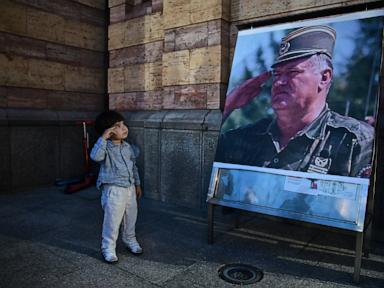
Murals of his face still dot city walls across Serbia, and state-aligned media channels frequently frame the regional conflicts of the 1990s as purely defensive campaigns. When state resources, government planes, and military honors are mixed with the burial of a man condemned for genocide, it sends a chilling message to victims and neighboring countries alike.
Reconciliation requires brutal honesty about historic crimes. It requires looking at the mass graves, acknowledging the verdicts handed down by the International Criminal Tribunal for the former Yugoslavia, and refusing to wrap mass murderers in national flags.
The funeral proceedings in Belgrade will cast a long shadow over the country's foreign policy aspirations for years. Leaders in Brussels have made it clear that European values demand accountability, not hero worship. If Serbia wants to move forward, it has to stop looking backward with blind nostalgia.
Convoy carrying body of Ratko Mladic arrives at Belgrade airport
This video captures the arrival convoy and military hospital transfer of Ratko Mladic's remains in Belgrade.