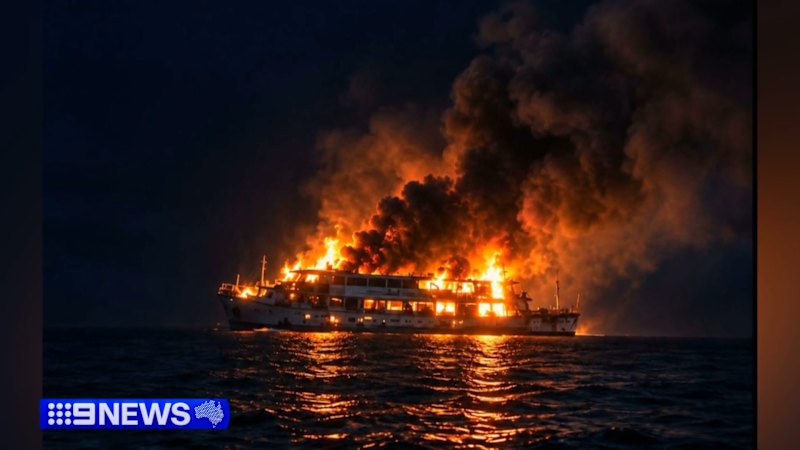
You smell smoke before you see the flames. Then panic takes over. That is the nightmare reality families faced when the passenger-cargo vessel MV June Aster caught fire off the coast of Coron, Palawan, turning a routine inter-island journey into a horrific disaster.
The ship left Manila with 134 people on board, including 117 passengers and 17 crew members. It was supposed to dock at Coron, a major tourist destination known for its stunning limestone cliffs. Instead, a sudden blaze erupted in the cargo hold on the evening of September 9, 2026. Survivors described a loud explosion that cut off power, plunging the ship into darkness and disabling public address systems before the fire spread through the cabins.
What started as a missing persons report quickly escalated into a staggering national tragedy. The initial death toll reported by the Philippine Coast Guard stood at five, with dozens missing. Days of recovery operations inside the charred wreck pushed the confirmed death toll to 77, as rescue workers combed through heavily burned compartments where bodies required DNA testing for identification.
Ferries remain the lifeblood of the Philippine archipelago. Thousands of travelers and cargo shipments move between islands daily because flights are either unavailable or too expensive. But this heavy reliance comes with a dark history. Maritime accidents happen with alarming frequency across the region. Weak enforcement of safety protocols, aging fleets, and overcrowding turn ordinary sea voyages into high-stakes gambles.
When you look at past incidents, a grim pattern emerges. In 2023, a fire on the MV Lady Mary Joy 3 killed over 30 people in the southern Philippines. Earlier in 2026, a triple-decker ferry sank off Baluk-baluk Island with heavy loss of life. These events are rarely isolated incidents of bad luck. They point to systemic failures in vessel maintenance and emergency readiness.
Survivors of the June Aster fire shared harrowing accounts of jumping from windows and fighting for life jackets while fellow passengers panicked in the smoke. Many found themselves unable to access safety equipment because chaos consumed the vessel within minutes. Coast guard patrols, local fishermen, and disaster management teams pulled 43 survivors from the water, but the horrific loss of life exposes how fragile maritime safety is in remote provinces.
Questions about accountability are mounting. Maritime authorities launched formal investigations into Atienza Interisland Ferries Inc., the vessel's operator, while survivors and grieving relatives demand answers about cargo loading procedures and crew communication protocols during the crisis. For families waiting at evacuation centers in Barangay Turda, the disaster is an unbearable reminder of the human cost behind lax regulatory enforcement.
If you travel through regions heavily dependent on maritime transport, safety cannot be assumed. Always locate the nearest exit and life raft station the moment you board. Do not rely entirely on the crew during an emergency, because chaos moves faster than instructions.
The ashes of the June Aster have settled, but the systemic risks facing Philippine inter-island transit remain entirely unresolved.