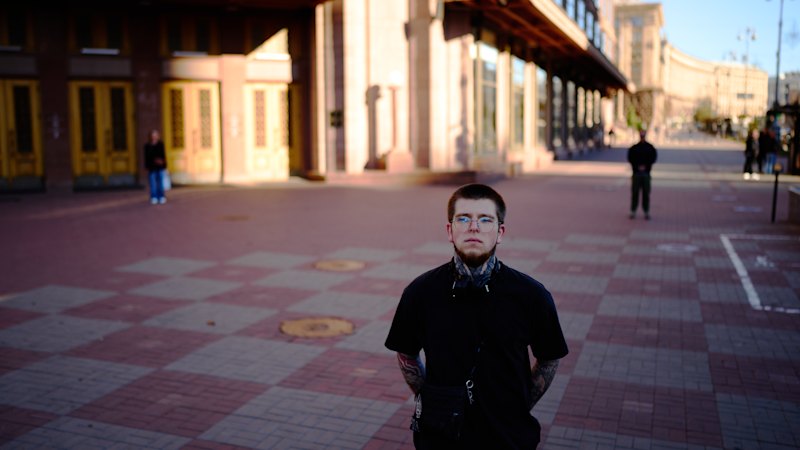
Air-raid sirens don't stop the espresso machine at Kashtan. They just lower the volume of the conversation.
Call it a miracle if you want. Foreign correspondents love the word. It fits neatly into evening dispatches filed from hotel lobbies where backup generators hum through the dark. Walk down Reitarska Street on a Tuesday afternoon, though, and you won't see a miracle. You'll see a barista calibrating a grind, a dog walker checking a phone notification that isn't about weather, and an old man adjusting his cane outside a pharmacy that was blasted out three winters ago and rebuilt with double-paned glass paid for by insurance claims that took nine months to clear. Read more on a connected topic: this related article.
Peace in Kyiv isn't suspension of war. It's the microeconomic and psychological price of enduring it.
The Calculus of Normalcy
Why do people stay in a city where ballistic trajectories take under five minutes from launch points across the border? Short answer: displacement is expensive, institutional memory anchors families, and collective defiance functions as a coping mechanism. Additional analysis by TIME explores related perspectives on the subject.
Data from municipal utility services and independent civic tracking groups show Kyiv's daytime population hovering near pre-2022 density levels during relative lulls. Restaurants pay commercial rent. Tax offices process corporate filings. Delivery couriers thread cargo e-bikes past concrete anti-tank hedgehogs left rusting at secondary intersections.
[ Air Raid Alert ] ---> [ App Check: Zmina/Kyiv Digital ] ---> [ Calculate Distance/Trajectory ]
                                                                        |
                       +-------------------+----------------------------+
                       | (Close/Fast)      | (Distant/Shahed Swarm)
                       v                   v
             [ Basement/Metro ]    [ Ignore / Finish Coffee ]
Foreign observers miss the boring machinery behind this resilience. It isn't poetry. It's logistics. Kyiv runs on redundant generators, Starlink terminals mounted beside Soviet-era brick facades, and municipal workers who patch municipal tram lines before the morning rush hour.
What the Editorial Writers Get Wrong
Writing about Kyiv through the lens of tragic poetry hides the friction. Headlines talk about "defiant joy" as if resilience were an infinite resource. It isn't.
Burnout doesn't look like panic. Panic is loud; sirens make sure of that. Burnout looks like skipping the shelter check on the third alert of the night because exhaustion outweighs calculus. Sleep deprivation is cumulative. Neurological studies on populations under chronic aerial harassment—documented extensively across urban conflict zones from London in 1940 to modern Ukraine—show chronic cortisol spikes that alter baseline risk assessment.
People aren't braver than you; they're adapted. And adaptation has a shelf life.
The Economic Ghost Town Inside the Crowded Cafe
Sit on a terrace for two hours and count the empty storefronts between functioning bakeries. Ground-floor commercial vacancy in central districts like Pecherskyi or Shevchenkovskyi sits unevenly. Prime spots turn over fast. Secondary retail bleeds cash.
- Commercial Insurance: War-risk coverage is functionally nonexistent for standard small business portfolios. Property owners self-insure or absorb total loss.
- Labor Supply: Mobilization drafts shift structural demographics. Finding certified electricians, HVAC technicians, or commercial drivers requires deep referral networks.
- Power Resilience: Tier-1 backup battery setups for a 40-seat cafe cost upwards of $8,000 to $15,000 USD, a capital expense that amortizes poorly when grid hits spike unpredictably.
Yet, entrepreneurs open doors. Why? Because liquidity moves locally, and sitting still guarantees zero revenue while moving buys optionality.
Navigating Reality on the Ground
If you're tracking urban survival metrics or reporting from the capital, drop the romantic filter. Look at actual stress indicators:
- Check pharmacy inventory depth: Antibiotic and antihypertensive stock volatility tells you more about supply chain stress than morale surveys.
- Track school shift patterns: Dual-shift underground and surface schooling reveals municipal capacity limits.
- Observe curfew compliance and enforcement shifts: Police presence density scales directly with counter-intelligence or kinetic threat warnings, not public relations.
Stop calling everyday survival a miracle. Miracles imply divine intervention exempting humans from physics and cost. Kyiv stays upright because millions of people treat survival like a administrative shift they cannot afford to quit.
Plan your assessments around structural capacity, power autonomy, and human attrition curves. Do not look for poetry where architecture and grit are doing the math.