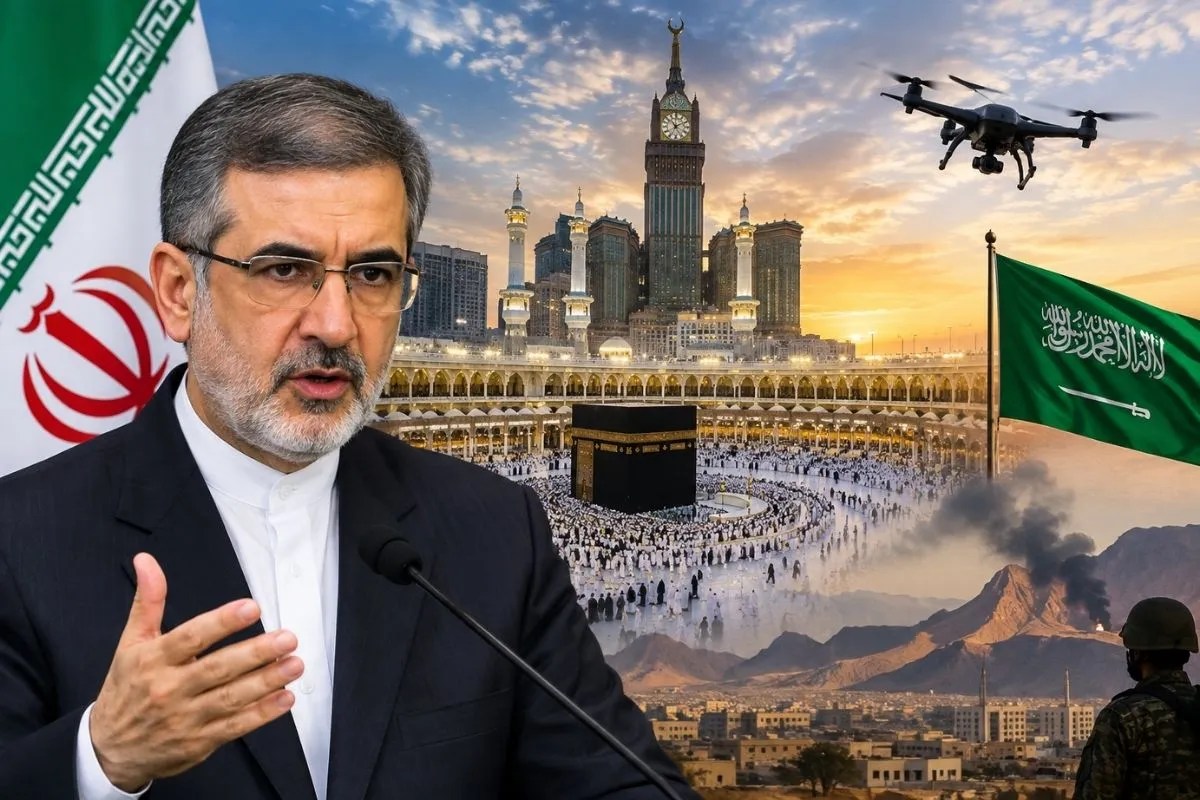
Geopolitical chess boards rarely stay quiet for long, but dragging the holiest sites in Islam into a high-stakes blame game takes regional tensions to an entirely new level. When reports surfaced claiming an intercepted drone threatened Mecca, the immediate reaction wasn't just security protocol—it triggered a fierce diplomatic brawl.
Tehran didn't just push back. They slammed the narrative as a calculated distraction.
If you've been watching West Asian politics over the past few years, you know that nothing happens in a vacuum. Let's look at what's actually happening behind the headlines, why Iran is screaming "false flag," and what this means for the broader proxy conflicts playing out from Yemen to the Red Sea.
The Trigger Point and Tehran's Furious Response
The controversy kicked off when allegations flew that a drone headed toward Mecca's airspace was intercepted. Fingers immediately pointed at the Houthis in Yemen, long accused of acting as an extension of Iranian influence in the region.
Iran's Foreign Ministry spokesperson, Esmail Baghai, didn't mince words. He came out swinging against the accusations, calling them baseless claims built on flimsy operational reports. According to Tehran, pointing fingers at specific groups without concrete, verifiable proof is a dangerous game.
What makes this particularly explosive is the target. Mecca and Medina aren't just geographical locations or political capitals. They are the spiritual beating heart of the Islamic world. When security threats are leveled against these sites, millions of believers react instantly. Tehran knows this, and so do its rivals.
Unpacking the False Flag Accusations
Why would Iran scream false flag over a drone interception?
To understand that, you have to look at the broader picture of American and allied military actions across the region. Baghai explicitly argued that unverified operational reports are often designed to shape regional narratives. The core accusation from Tehran is simple: these claims are being manufactured to shift public attention away from ongoing Western and Israeli military campaigns, while simultaneously driving a wedge between Muslim-majority nations.
Think about how information warfare works in modern conflicts. You don't just win with missiles and drones; you win by controlling the story.
If a threat against Mecca can be pinned squarely on Houthi forces backed by Iran, it instantly isolates Tehran diplomatically. It rallies regional populations around Saudi security priorities and justifies heavier counter-offensive measures. By labeling it a false flag, Iran is trying to flip the script, warning that regional actors are weaponizing sacred spaces for short-term geopolitical leverage.
The Ground Reality in Yemen
While diplomats exchange fiery statements in press briefings, the actual war on the ground in Yemen continues to grind away.
Yemeni government forces have ramped up military operations, hitting Houthi supply lines and strongholds in places like Taiz and Mocha. Rashad al-Alimi, head of Yemen's Presidential Leadership Council, has openly pointed out that Houthi forces are facing heavy pressure across multiple fronts, from Marib to Hajjah and Al-Dhale.
This creates a messy overlapping timeline. On one hand, Houthi forces are dealing with intense territorial pushes from domestic rivals backed by the Saudi-led coalition. On the other hand, international accusations regarding drone threats to holy sanctuaries give the conflict a high-voltage religious dimension that nobody in the region actually wants to manage.
The Houthi leadership has denied involvement, urging regional powers to stop weaponizing holy sites for political scoring. But in a war zone where trust is zero, nobody's listening to denials.
Stop Playing Politics with Sacred Ground
The real danger here isn't just another diplomatic spat. It's the normalization of using religious sensitivities as a tactical football.
When holy sites become talking points in information wars, the risk of miscalculation skyrockets. All it takes is one narrative spin too far to turn a localized military clash into a broader sectarian wildfire. Iran's fierce pushback shows they are acutely aware of this trap, even as critics argue Tehran is simply deflecting blame for its regional proxy network.
Bottom line? Don't take every dramatic frontline headline at face value. In West Asian geopolitics, the story being told is often designed to hide the hand holding the pen.