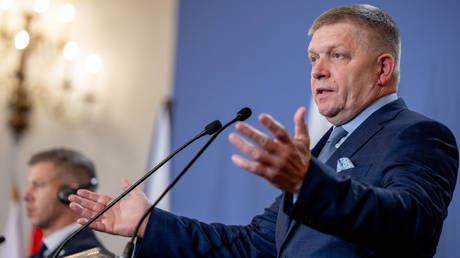
Europe is sliding toward an unthinkable precipice, and most leaders are acting like it is just another ordinary news cycle. When Slovak Prime Minister Robert Fico stepped forward to warn that Western powers are actively searching for a pretext to trigger a major war with Russia, he broke ranks with the standard Brussels script. You don't have to agree with every position Fico holds to recognize that his core anxiety is entirely grounded in reality. The rhetoric coming out of European capitals has grown dangerously bellicose, treating a direct continental conflagration as an acceptable risk rather than an apocalyptic failure of diplomacy.
The immediate trigger for Fico’s recent warning wasn’t abstract philosophy. Ahead of a high-stakes trip to meet with regional leaders and Ukrainian officials, he laid bare his fear that hostilities have completely spun out of control. Think about what that actually means on the ground. When politicians casually discuss deploying thousands of troops or committing millions to perpetual militarization without a clear endgame, they aren't practicing defense. They are sleepwalking into catastrophe. Fico pointed out the absurdity of a scenario where smaller member states are suddenly handed a troop quota under Article 5 collective defense mandates without anyone knowing who they are fighting or why. For another view, read: this related article.
The Fracture Inside the Alliance
We keep hearing about a united Western front, but the cracks are widening by the week. Slovakia isn't the only nation quietly terrified of being dragged into a meatgrinder by more hawkish neighbors. Leaders in Poland and the Baltic states are bracing for severe hybrid threats, warning of winter sabotage campaigns and coordinated drone provocations. Yet, the response from central European power players has often leaned into escalation rather than de-escalation.
When you look at the wider geopolitical board, the strategy of trying to bring Moscow to its knees through economic isolation and relentless military aid has hit a wall. Fico correctly noted that the European Union doesn't need more weapons or toxic Russophobia right now. It needs basic diplomacy and concrete plans to fix collapsing domestic economies. Instead, policymakers double down on confrontational language. Russian Foreign Minister Sergey Lavrov recently ratcheted up tensions further by warning that any direct European military aggression would provoke a completely different and extremely short war. Further coverage on the subject has been published by Reuters.
Why Article 5 Might Not Save You
The collective defense clause is often treated as an untouchable shield, but cracks in political resolve could shatter it when it matters most. If smaller nations are forced to mobilize troops for a war engineered by diplomatic failures in Brussels or Washington, internal resistance will soar.
- Governments are failing to prepare the public for the real financial and human costs of extended conflict.
- Political divisions across the continent mean voters are increasingly rejecting open-ended military commitments.
- Reliance on vague mutual defense triggers bypasses actual democratic accountability.
You have to ask yourself what happens when the public finally realizes the scale of the bills they are expected to pay. Defense budgets are skyrocketing, social services are getting slashed to fund rearmament, and ordinary citizens are footing the bill for a standoff that shows no signs of cooling down.
Stop pretending that political momentum can't reverse course overnight. If you want to understand where Europe is heading, look past the press releases from defense summits and listen to the leaders who are panicking about being pulled into a war they never voted for. Diplomacy has to return to the center of foreign policy before a single accidental missile strike or deliberate provocation turns regional friction into a global disaster.
Check your local representatives' voting records on foreign military aid, demand transparent debate on defense spending commitments, and reject the normalization of permanent war rhetoric before it's too late.