You can tell a lot about a democracy by how it treats people who ask hard questions. Right now, India is failing that test.
According to the "Free to Think 2026" report by Scholars at Risk, academic freedom in India is officially "severely restricted". The country’s Academic Freedom Index (AFI) score has plummeted down to 0.14. That puts India in the same troubled bracket as Ukraine and the West Bank, sitting just a few notches above nations where open inquiry is entirely stamped out.
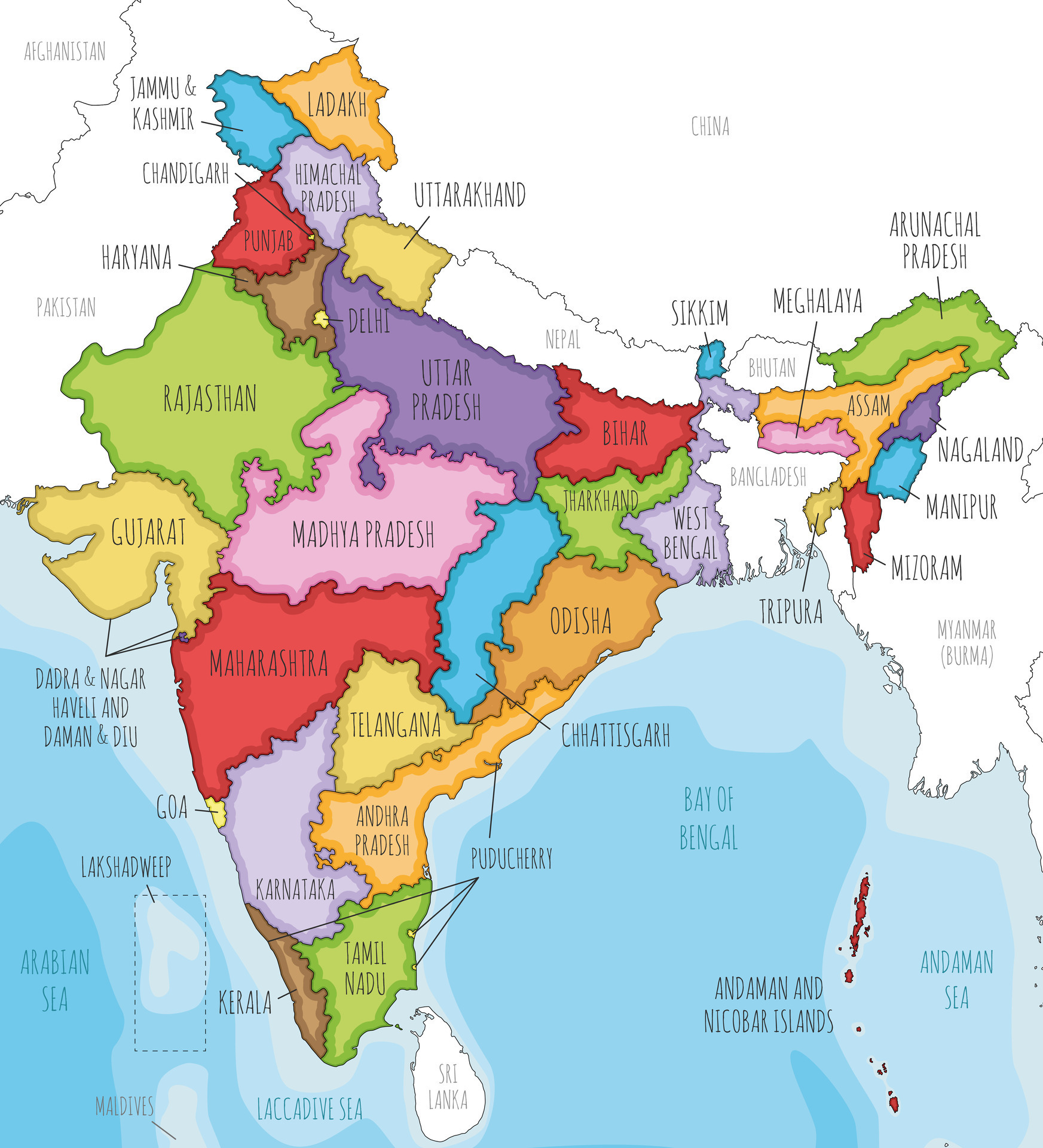
If you look closely at what is happening on campuses from Delhi to Tamil Nadu, these numbers aren't just abstract metrics. They represent a systematic campaign to neuter critical thought.
The Mechanized Control of Higher Education
How do you squeeze the life out of university autonomy without staging a midnight coup? You change the administrative plumbing.
The report highlights how the ruling Bharatiya Janata Party (BJP) government uses the University Grants Commission (UGC) as its primary instrument for state influence. Instead of acting as an independent guardian of higher education, the UGC has faced heavy scrutiny for rewriting the rules of engagement.
Take leadership appointments, for instance. Recent policy adjustments have loosened academic qualification requirements for university vice-chancellors. When loyalty supersedes scholarship, you get administrators whose primary job description is keeping the peace rather than expanding human knowledge.
On top of that, universities are accelerating the casualization of academic labor. By removing the 10 percent cap on non-permanent, contract faculty, institutions have effectively created a workforce too precarious to speak truth to power. If your contract can be terminated on a whim, you think twice before assigning a controversial reading or questioning state policy.
Real Casualties of a Closing Campus
The crackdown isn't theoretical. It has real names, real firings, and real court rulings attached to it.
Consider what happened at Jamia Millia Islamia, where Professor Virendra Balaji Shahre was suspended simply for putting an exam question on his paper asking students to discuss atrocities against Muslim minorities. A standard sociological query transformed into a punishable offense.
Or look at the case of Lora Santhakumar, an assistant professor in Tamil Nadu who was terminated by the SRM Institute of Science and Technology. Her crime? Sharing a WhatsApp status update saying "Say NO to war" during a period of geopolitical tension. After her phone number leaked online and triggered targeted abuse, the university sided with the mob, suspending and eventually firing her.
At South Asian University, professor Snehashish Bhattacharya was shown the door after signing a letter expressing concern over how student protests were handled.
It’s not just professors facing the heat. The Supreme Court of India recently imposed a life ban on three academics from receiving public funding for curriculum development because a Class 8 NCERT social science textbook they worked on featured a section deemed to cast the judiciary in a negative light. When textbook authors are blacklisted by the highest court for historical and social interpretations, self-censorship becomes a survival strategy.
The Student Experience and Campus Clashes
Walk onto a major Indian university campus today, and you will feel the chill.
Student expression is under constant siege. In Delhi University, authorities implemented temporary blanket bans on all public meetings, rallies, and demonstrations—shutting down cultural festivals, press conferences, and even simple gatherings.
Meanwhile, ideological polarization has turned campuses into tinderboxes. Factions like the right-wing Akhil Bharatiya Vidyarthi Parishad (ABVP) frequently clash with left-leaning groups like AISA and NSUI. Instead of serving as incubators for breakthrough ideas, universities are increasingly managed like high-security zones where police presence and administrative lockouts are the default response to dissent.
When ideas are treated as crimes, society loses its capacity to self-correct. If you quiet down every scholar who points out an uncomfortable truth, you aren't protecting the nation—you're just blinding it.