Discarded glass usually heads straight to a landfill or sits broken in a bin, collecting dust. Most cities treat glass bottles as trash because recycling them costs more than making new ones. But in New Orleans, a grassroots operation decided to change the script entirely.
Back in 2020, Franziska Trautmann and Max Steitz looked at the massive waste stream of empty bottles and started a backyard recycling experiment. They wanted to know if crushed glass could actually solve local problems. Fast forward six years, and that small-scale hustle known as Glass Half Full has diverted more than 12 million pounds of glass from landfills. Even better? They are turning those bottles into sand to help rebuild Louisiana's rapidly shrinking coastal wetlands.
Louisiana loses football fields of land to the Gulf of Mexico every year. Traditional restoration uses sediment dredged straight from the Mississippi River, but scientists need alternative materials. Enter crushed glass sand. Tulane University researchers have been testing whether this recycled material can work alongside natural sediment to support plant life and stabilize eroded shorelines.
The Mechanics of Turning Bottles Into Sand
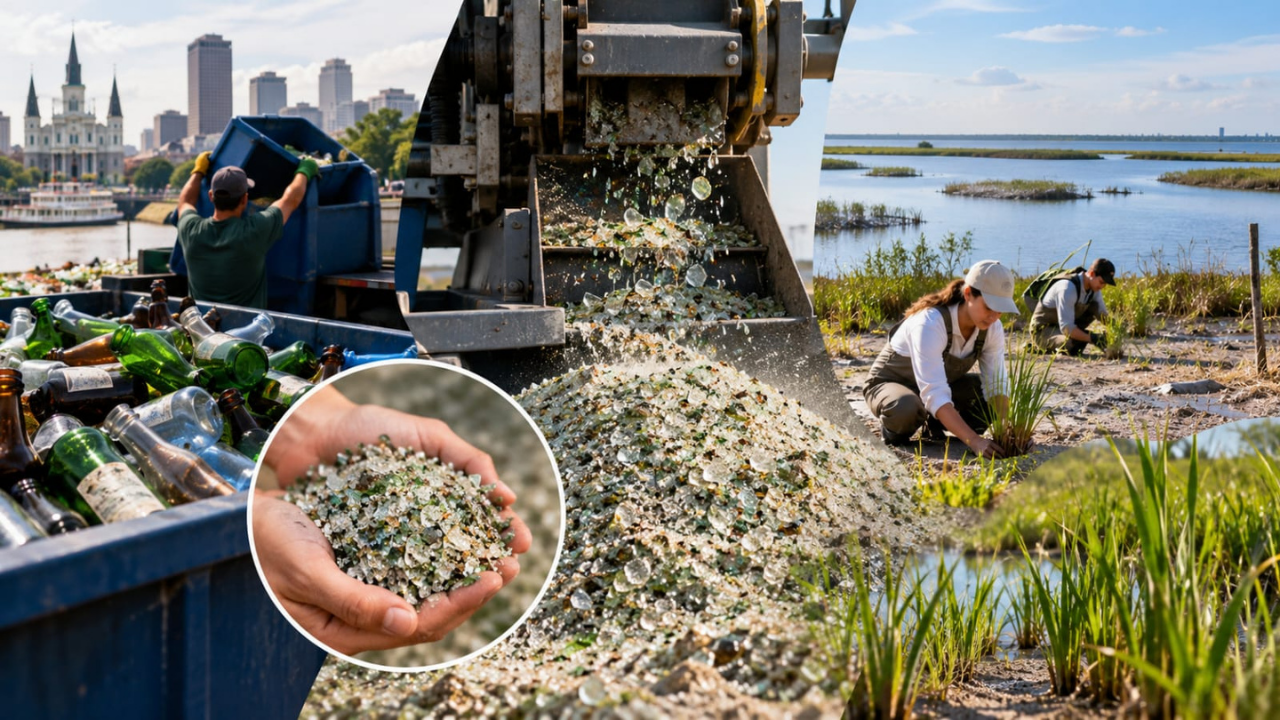
You cannot just smash a beer bottle on the ground and toss it into a marsh. Processing glass into a usable restoration resource requires industrial muscle and precise safety measures. Glass Half Full processes about two tons of glass per hour at their facility.
The operation accepts glass through residential drop-offs, commercial pickups, and local community drives. Heavy-duty machinery crushes and tumbles the sharp shards until they mimic natural sand and gravel. The finished product looks and feels remarkably like beach sand, minus the sharp edges.
Local construction industries use some of this output for building projects and disaster relief. However, the coastal applications demand a completely different level of scientific scrutiny.
Testing Recycled Glass in Fragile Ecosystems
Can coastal plants actually grow in crushed glass? That was the core question facing researchers in the ReCoast initiative, a collaborative effort bringing together ecologists, engineers, and coastal scientists.
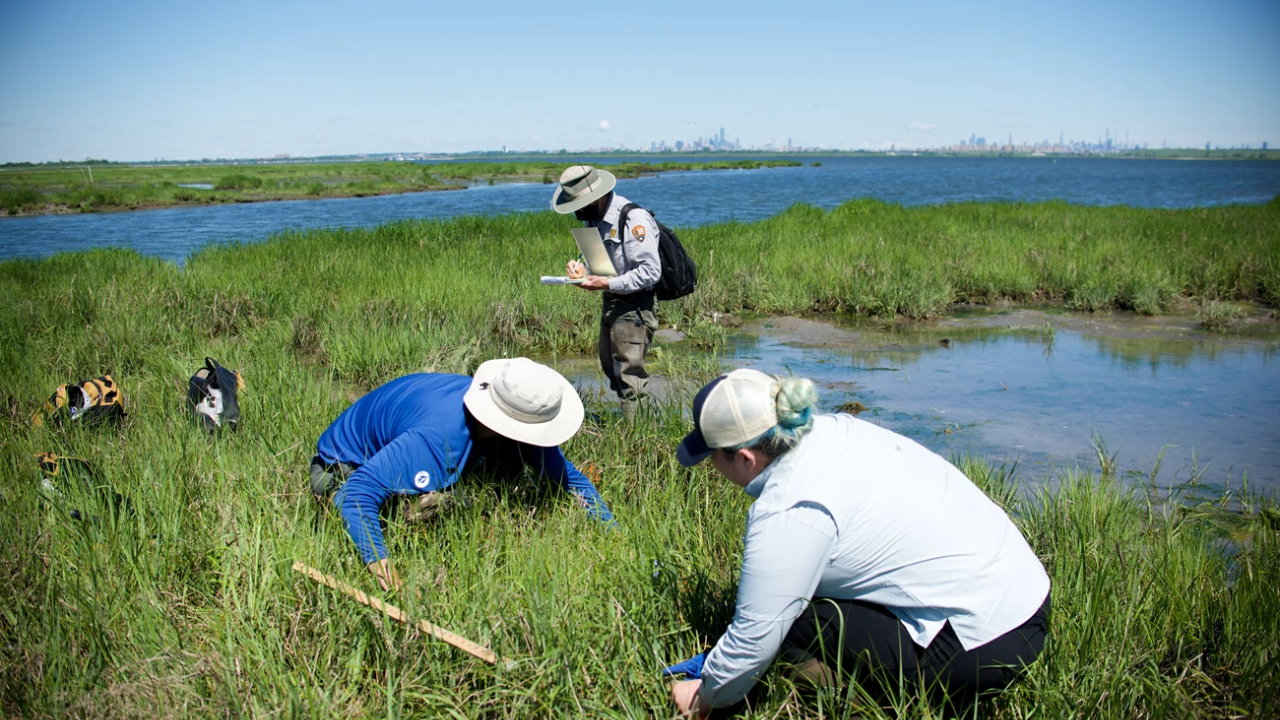
Recent experiments near New Orleans involved constructed islands in wetlands east of the city. Researchers divided these test plots into groups. Some used standard Mississippi River sediment, while others relied on a custom mixture of river sediment and glass sand.
The early results revealed a nuanced reality. Wetland plants do not always thrive in glass sand by itself. Because glass lacks the organic nutrients found in river silt, scientists had to adjust their approach. They started blending the recycled sand with nutrient-rich river sediment, beneficial bacteria, and fungi.
This biological fine-tuning matters because coastal restoration requires more than just piling material onto a shoreline. Without established vegetation and strong root systems, wind and waves wash away newly placed sediment almost immediately. When plants take root in these engineered mixtures, they hold the ground together and jumpstart a functioning ecosystem.
Real-World Impact Beyond the Lab
The scope of this project extends far beyond controlled university experiments. Glass Half Full has partnered on restoration projects across southeast Louisiana, including conservation work at the Big Branch Marsh National Wildlife Refuge. They have also collaborated with the Pointe-au-Chien Tribe to supply materials for areas heavily battered by Hurricane Ida.
Twelve million pounds is a massive milestone, but nobody is claiming that crushed bottles will single-handedly solve Louisiana's land loss crisis. The Mississippi River remains the heavy lifter for large-scale sediment diversion. Instead, recycled glass sand serves as a targeted tool. It provides a localized fix for specific coastal areas while keeping millions of pounds of waste out of local landfills.
If you live in New Orleans and want to help, start by saving your glass containers instead of throwing them in the regular trash. Check local drop-off schedules or sign up for community collection routes. Small neighborhood habits add up to millions of pounds of saved space and a fighting chance for a sinking coastline.