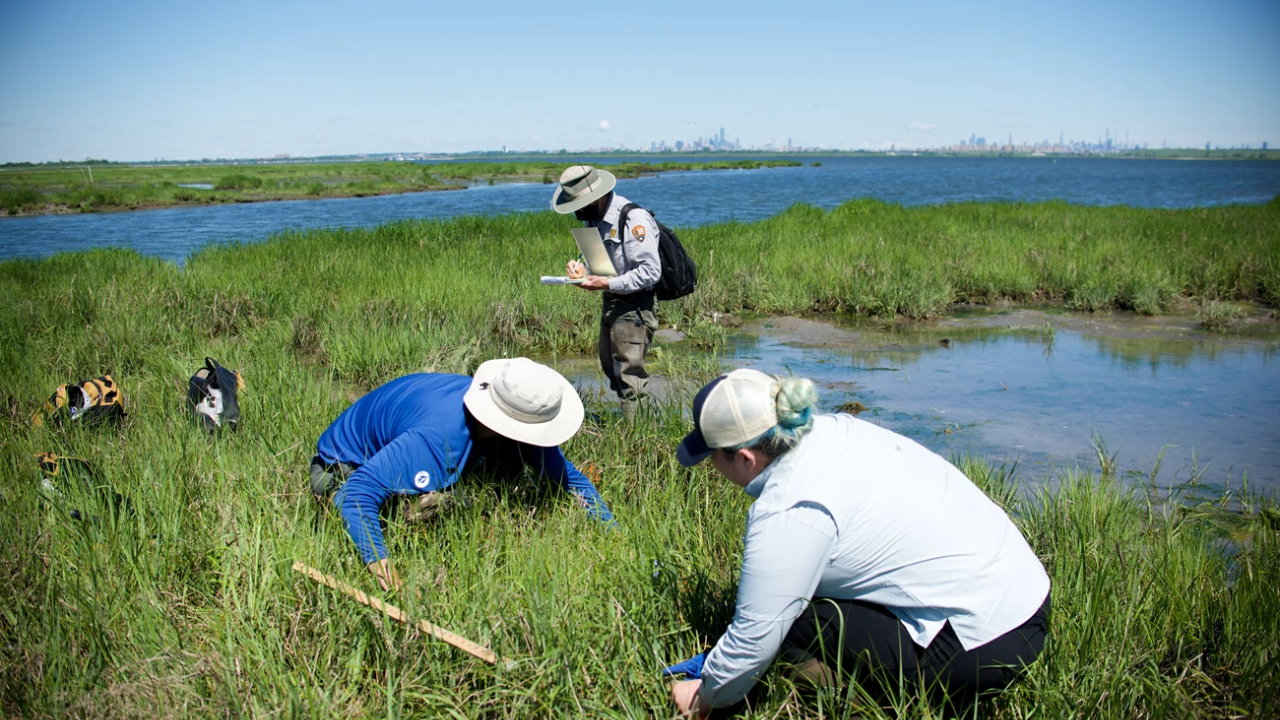
Salt marshes don't usually make headlines unless they're disappearing. For decades, coastal ecosystems around New York City took a brutal beating from development, pollution, and rising tides. People assumed the damage was permanent. But back in October 2003, a crew of 100 dedicated volunteers and National Park Service scientists decided to challenge that assumption at Big Egg Marsh in Jamaica Bay. They didn't just talk about saving the environment—they planted 20,000 smooth cordgrass seedlings by hand on a patch of dying salt marsh that had been artificially raised with clean sand.
If you think ecological restoration is always a slow, agonizingly painful failure, the results might surprise you. Just two years later, more than 80% of the experiment site was covered in healthy, thriving vegetation. This wasn't some corporate greenwashing stunt. It was sweaty, muddy grunt work that actually worked.
The Reality of Restoring a Dying Salt Marsh
Restoring a wetland isn't as simple as dropping a few seeds into the dirt and walking away. Jamaica Bay had lost massive chunks of its marshland for years, leaving the shoreline vulnerable and stripping away natural habitats for local wildlife. Before a single seedling went into the ground, engineers had to spray clean sand to raise the elevation of the sinking marsh. Without that foundation, any new plants would have simply drowned in the tidal currents.
Once the sand was down, the heavy lifting began. Volunteers planted Spartina alterniflora, commonly known as smooth cordgrass. Why this specific plant? Because it laughs in the face of high salinity. It thrives where other plants wither and die. Its root systems trap floating sediment, building up nutrient-rich peat over time. That peat creates an anchor, stabilizing the ground and making it possible for other species, like saltmeadow cordgrass, to move in later.
Of course, nature didn't make it easy.
When Nature Pushes Back
If you've ever tried to grow anything outdoors, you know pests and weather love to ruin your plans. Big Egg Marsh was no exception. Shortly after the 2003 planting, local geese treated the restoration site like an all-you-can-eat buffet. Tides aggressively washed away fresh shoots, and floating marine debris—everything from plastic bottles and old logs to random pieces of straw—smothered struggling plants before they could establish roots.
Researchers tracked the carnage through meticulous monitoring plots measuring one meter by one meter. They recorded soil chemistry, elevation changes, and plant counts several times a year from 2004 through 2008. Losses were real, and they happened fast.
Yet, the cordgrass fought back. Despite geese grazing and waves washing away early batches, the surviving plants spread faster than expected. Natural seedlings began popping up on their own, proving that you just need to kickstart an ecosystem for it to pick up the slack.
What 80% Health Actually Means for Urban Conservation
Two years post-planting, scientists walked the site and found that over 80% of the experimental area was vegetated and healthy. That milestone proved urban wetlands can bounce back if humans give them a physical boost.
Long-term follow-ups confirmed the trend. Years later, researchers returning to Big Egg Marsh found a self-sustaining ecosystem that had expanded its footprint well beyond that initial plot. That single 2003 experiment served as a blueprint, paving the way for larger restoration efforts across Jamaica Bay that eventually reclaimed more than 150 acres of lost marshland.
You don't need a massive, multi-billion-dollar infrastructure project to make a dent in environmental decay sometimes. You just need clean sand, tough native plants, and a hundred volunteers willing to get their boots muddy. Next time you hear someone say urban conservation is a lost cause, point them toward Jamaica Bay and watch them rethink their argument.