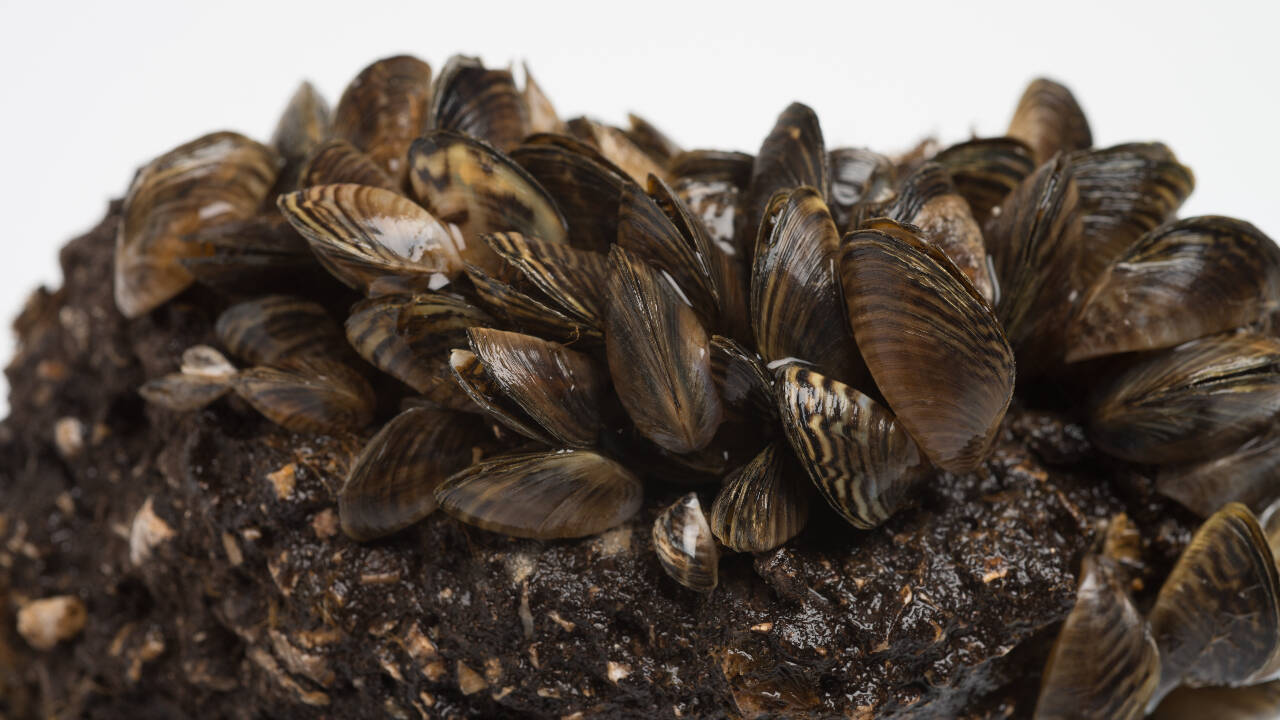
Zebra mussels are small, but their destruction is massive. Once these stubborn invaders show up in a freshwater system, they blanket lakebeds, choke out native species, and clog industrial infrastructure with relentless efficiency. For years, scientists struggled to find a control method that actually worked without nuking the entire local ecosystem in the process. Standard benthic mats—heavy covers laid across the lake bottom—starve the creatures of oxygen, but the process crawls at a snail's pace.
Then came a smarter approach tested in Michigan's Loon Lake. Researchers from the U.S. Geological Survey discovered that pumping carbon dioxide underneath weighted lakebed mats kills over 80 percent of caged zebra mussels in just five days. It is fast. It is localized. And it might just give conservationists a practical weapon against an invader that has resisted easy eradication for decades.
The Problem With Traditional Zebra Mussel Control
If you've ever dealt with freshwater biofouling, you know the standard playbook is full of compromise. You can scrape them off pipes by hand, apply harsh chemical molluscicides that drift into unintended areas, or drop heavy bottom-covering mats and wait weeks for results. Waiting weeks ties up expensive gear and leaves treatment zones vulnerable to operational delays.
Benthic mats work by blocking sunlight and oxygen, suffocating whatever sits underneath. But waiting out a stubborn infestation takes time. That delay costs money and resources. Worse, standard chemical treatments don't discriminate. They harm native mussels, fish, and macroinvertebrates just as easily as they wipe out the invasives.
How the Loon Lake Carbon Dioxide Experiment Worked
To test a faster option, researchers set up controlled plots in Loon Lake within Sleeping Bear Dunes National Lakeshore. They mapped out 4-by-4-meter areas on the lake bottom and deployed polyethylene mats coated in vinyl, secured tightly with sandbags and heavy weights.
They ran two distinct setups to compare results. The first group used an ordinary benthic mat alone. The second group used an identical mat, but researchers pumped carbon dioxide-infused water underneath it. To track survival rates, they placed roughly 360 zebra mussels inside cages across these plots before dropping the covers.
The gear stayed in place for five days. When crews pulled the covers up, the results weren't subtle.
Under the carbon dioxide mats, concentrations reached nearly 200 milligrams per liter, maintaining high acidity and low oxygen stress throughout the test. After five days, mortality among the caged zebra mussels topped 80 percent. Compare that to the ordinary mats, which yielded an average mortality of just 20.6 percent, and untreated reference plots sitting at 12.7 percent.
Why Carbon Dioxide Makes Sense as a Selective Weapon
The real breakthrough isn't just that carbon dioxide kills mussels quickly. It is that zebra mussels appear significantly more vulnerable to carbon dioxide gas toxicity than certain native freshwater species, such as native unionid mussels.
Earlier laboratory tests indicated that native species can handle carbon dioxide exposure levels that spell disaster for zebra mussels. By trapping the gas underneath a sealed lakebed mat, scientists keep the treatment contained right where the damage is happening. Instead of dissolving chemicals into an entire open lake body where they dilute and drift, the mat acts as a localized treatment chamber.
Speed changes the economics of lake management. When a treatment takes five weeks, you can only cover so much ground in a single summer season. Shrinking that window to five days means crews can pull up the mats, move the equipment, and redeploy it across multiple new sites in a fraction of the time.
What the Data Misses About Benthic Life
Before you assume we have found a silver bullet, look closer at the ecological fallout. Researchers noted that total numbers of benthic macroinvertebrates—the small organisms living on or near the sediment—dropped under both types of mat plots compared to untreated reference areas.
While overall species diversity remained comparable across treatments, knocking down local macroinvertebrates means the habitat still takes a temporary hit. Carbon dioxide isn't an invisible ghost that targets only zebra mussels and leaves everything else entirely untouched. It creates a harsh, acidic microenvironment under that mat that impacts whatever happens to be trapped underneath.
Future field deployments will need to balance speed with habitat preservation. Adjusting gas concentrations, shortening exposure times even further, or timing treatments around sensitive breeding cycles could minimize collateral damage to native lakebed communities.
Where Zebra Mussel Management Goes From Here
Right now, the Loon Lake project remains an experimental pilot rather than an overnight fix for every infested lake in North America. Scaling this up requires figuring out efficient bulk delivery systems for carbon dioxide in remote areas, handling heavy weighted gear safely, and securing permits for active gas manipulation in protected waters.
Yet, the core takeaway is clear. Physical barriers alone are too slow to keep pace with aggressive freshwater invaders. By turning the underside of a simple lakebed mat into a short-lived, high-concentration carbon dioxide chamber, researchers have unlocked a faster, more targeted way to push back against biofouling.
If you manage a fishery, run a municipal water intake, or care about freshwater conservation, keep an eye on this technique. It proves that solving tough environmental problems doesn't always require inventing a brand-new chemical compound. Sometimes, it is just about applying a familiar gas in a smarter way.