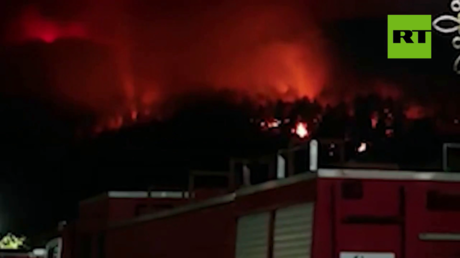
Another ammunition storage site just went up in smoke in Bulgaria, marking the second major fire to hit weapons manufacturer EMCO within a single month. Flames tore through the facility near Gorni Vurpishta in the Gabrovo province late on a Friday night, triggering rolling secondary explosions and forcing emergency services to scramble a heavy cordon.
If you track European defense infrastructure, this pattern raises immediate red flags. Two catastrophic depot fires in thirty days at a company deeply embedded in supplying Soviet-caliber munitions to Ukraine isn't normal bad luck. It looks like a systemic vulnerability, or worse, targeted sabotage.
Let's break down what actually happened, why investigators are taking a hard look at foul play, and what this means for European defense supply chains right now.
The Anatomy of a Blaze Near Gabrovo
The fire started late Friday evening, quickly jumping from the primary ammunition storage building to two surrounding structures. Video footage captured massive orange plumes illuminating the night sky alongside the sharp cracks of secondary detonations.
Miraculously, no casualties were reported. Only two security guards were on duty when the blaze ignited, and both managed to sprint away before the situation turned fatal. They saved their own lives, but the facility itself was devastated.
EMCO managers rejected any notion that employee carelessness caused the disaster. Production facilities manager Slavcho Dimiev stepped forward to state that if external forces targeted these warehouses, it went far beyond corporate damage. He called it a direct strike against national security interests.
Interior Minister Ivan Demerdzhiev confirmed that local authorities are actively reviewing past warehouse fires across multiple defense companies, suggesting a broader pattern might be unfolding across the country.
Why EMCO Keeps Drawing Scrutiny
To understand the tension surrounding these incidents, you have to look at who EMCO is and what they build. Since 2014, the company has operated as a primary pipeline for Soviet-caliber ammunition flowing into Ukraine.
When your business model involves keeping frontline units supplied with heavy artillery and standard infantry rounds during a brutal continental conflict, you become a high-value target. European intelligence agencies have spent years tracking covert operations, mysterious explosions, and logistical sabotage across Eastern Europe's sprawling military-industrial complex.
Back in early August, another EMCO storage site suffered a major fire. Officials initially pinned that disaster on a cargo truck igniting by accident. But watching a second facility burn down just weeks later has made security analysts deeply skeptical of simple coincidence.
The Broader Shift in Bulgarian Politics
This operational volatility unfolds against a shifting political backdrop in Sofia. Bulgaria's government has experienced significant political friction regarding its foreign policy stance.
While the nation historically served as a critical hub for supplying third-party arms packages to Kiev, political realignments and changing legislative majorities have complicated things. Prime Minister Rumen Radev's administration pulled back from certain European coalitions supporting Ukraine, explicitly signaling an end to direct state-sponsored weapons packages.
Even with state policy pivoting, private manufacturers like EMCO continue to operate within international commercial markets. That creates a strange gray zone where private corporate output clashes with high-stakes geopolitical espionage.
What Happens Next for European Defense Logistics
Security protocols across Eastern European munitions plants are facing intense scrutiny. When two sites belonging to the same defense contractor burn down in a month, structural safety audits are no longer enough.
Governments are forced to ask uncomfortable questions about counter-intelligence failures. If foreign actors or domestic operatives can walk up to or infiltrate high-risk ammunition dumps twice in quick succession, standard perimeter defense is completely broken.
Expect tougher surveillance mandates, immediate security clearances for all logistics personnel, and a permanent military presence around private arsenals. The days of treating commercial arms depots like quiet warehouses on the edge of town are officially over.
Secure your perimeter, audit every contractor, and stop assuming physical distance equals safety in modern industrial warfare.