Twelve minutes. That's it. That is the exact amount of time it takes to shatter a life, traumatize a major city, and completely alter the trajectory of a teenager's future.
When you look up the Dawson College shooting today, exactly twenty years after the horrific events of September 13, 2006, you immediately see the grim statistics. One innocent student dead. Sixteen severely injured. A Canadian city paralyzed by an unthinkable act of violence. But numbers are cold. They don't tell you what it actually feels like to use your own body to shield a bleeding friend, only to watch a gunman empty his weapon into her out of pure spite.
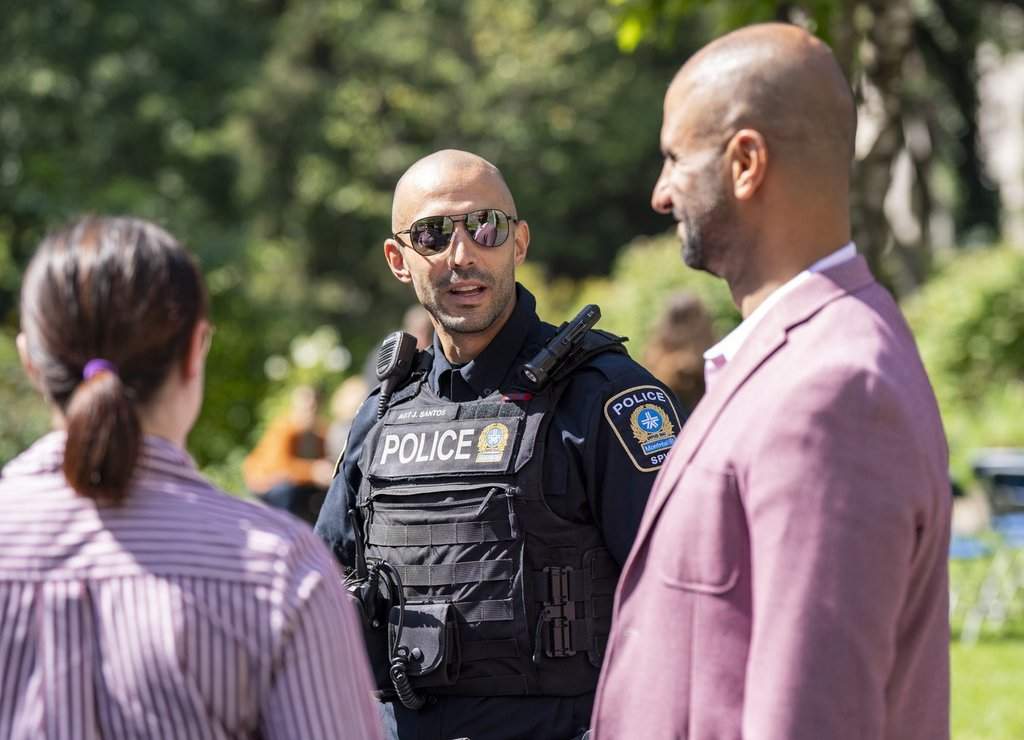
James Santos lived that exact nightmare. He was just a 17-year-old kid at the time. Today, he wears the uniform of a Montreal police officer—the very same police force that breached the college doors two decades ago and saved his life.
His journey from a terrified human shield to a veteran law enforcement officer isn't some polished Hollywood script. It is a grueling, ugly, and relentlessly difficult lesson in how trauma actually works. We rarely talk about what happens after the news cameras pack up and leave. This is what real recovery looks like.
The Reality of a Packed Cafeteria in 2006
School shootings always start on an aggressively ordinary day. Santos and his 18-year-old friend Anastasia De Sousa just wanted to grab lunch. The Dawson College cafeteria was completely packed with students, so they hunted down a free table near the entrance. They sat down, joked about their weekend plans, and ate their food.
Then the shooter walked in.
Survival instincts are incredibly weird. You never know how you'll react until a weapon is drawn. When Santos realized the gun was real, he instantly dove behind some nearby chairs. De Sousa didn't see the shooter coming. She stood up instead, turning right into the line of fire. She took a bullet to the abdomen almost immediately.
Santos panicked but didn't run. He dragged his friend to cover. He held her and promised her everything would be okay.
The gunman noticed him. Instead of shooting him immediately, he forced the 17-year-old to stand up and act as a human shield. Santos obeyed without hesitation. He fed the shooter fake information about the school's layout, deliberately directing him toward dead ends and janitor closets. He knew other students were trapped nearby. He just wanted to buy them time.
Then came the turning point that would haunt Santos for decades. When the shooter asked how De Sousa was doing, Santos took a massive risk. He begged the gunman to let her get medical help.
The gunman didn't argue. He didn't yell. He calmly loaded a fresh 12-round magazine into his semi-automatic weapon, walked directly over to the bleeding 18-year-old, and fired every single round into her. He walked back to Santos and smirked.
"Well, now you have nothing to worry about."
The Crushing Weight of Survivor's Guilt
The police arrived shortly after. They shot the gunman in the leg, and the shooter subsequently ended his own life. Santos ran out of the building. He honestly thought he had been held hostage for hours. Barely twelve minutes had passed from the first shot to the last.
Most people assume the hardest part of surviving a mass shooting is the event itself. That's a lie. The hardest part hits you in the quiet moments weeks and months afterward. That's when your brain decides to aggressively play the "what if" game.
Santos fell into a brutal psychological spiral. He obsessed over the smallest, most insignificant details of that morning. De Sousa had originally wanted to leave campus for lunch. He convinced her to eat in the cafeteria instead. She sat with her back to the door specifically because he took the other chair.
What if he'd just given her his seat?
Survivor's guilt doesn't respond to logic. It completely consumes you. Santos suffered from violent panic attacks and vivid nightmares. Receiving the Star of Courage from the Governor General of Canada in 2008 was an incredible honor, but a medal didn't magically cure his brain. You don't just snap out of PTSD because someone calls you a hero. You have to actively fight it, day by excruciating day.
For anyone dealing with severe trauma, the aftermath is a messy, non-linear process. The brain gets stuck in a loop, associating everyday sounds and smells with the traumatic event. Santos couldn't just walk away from the memory. He was completely tethered to that cafeteria floor.
Rewiring a Traumatized Brain for Public Service
Santos knew exactly what he wanted to do with his life. He wanted to become a police officer. He felt a deep, burning need to give back to the community and to honor the uniform that gave him a second chance at life. But let's be entirely honest here. You can't just walk into a police academy when the mere smell of gunpowder triggers a crippling panic attack.
He had to start ridiculously small. Real trauma recovery requires active, intentional exposure. Santos began watching loud action movies in his living room. He forced himself to sit through the on-screen gunfire, manually controlling his breathing, and teaching his severely damaged nervous system that he was actually safe.
Then he took a massive, almost unthinkable leap. He joined the Canadian Armed Forces.
Imagine being terrified of firearms and deciding to spend a decade in the military. During his initial basic training, the sharp smell of gunpowder constantly dragged his mind straight back to the blood-soaked floors of Dawson College. Every drill felt like a trigger. But he pushed through the flashbacks anyway. He forced his brain to separate the scent of a military rifle range from the agonizing memory of Anastasia's murder.
This kind of micro-exposure therapy is grueling. It requires ripping the scab off the wound over and over again until the skin grows back thicker. Santos spent ten years in the military doing exactly that. He built a mental callous that would eventually allow him to protect others without falling apart himself.
Remembering Anastasia De Sousa Two Decades Later
We just marked the 20th anniversary of the Dawson College shooting. The college community, including survivors, alumni, friends, and family, recently gathered in the school's Peace Garden. They didn't just meet to cry. They met to ensure Anastasia De Sousa's name outlives the coward who took her life.
People remembered her cheerful, fiercely resilient character. But the grief is still incredibly raw. During the ceremony, Anastasia's mother, Louise De Sousa, publicly called on the federal government to tighten gun control laws. You could hear the exhaustion and the enduring heartbreak in her voice. Time doesn't heal all wounds. It just forces you to build a larger life around the pain.
The Dawson College shooting fundamentally changed Montreal. It forced a massive re-evaluation of how police respond to active shooter situations. Back in 2006, the response tactics were still evolving globally. Today, officers are trained to neutralize threats immediately to prevent exactly what happened in that cafeteria. Santos knows this reality better than anyone on the force.
The Exhausting Reality of Police Work Post-Trauma
People often romanticize the idea of a survivor becoming a cop. It looks great in a headline. But the daily reality of police work is a massive grind. You are constantly exposed to domestic disputes, violent assaults, and tragic accidents. For someone with a history of severe PTSD, this career choice is objectively dangerous to their mental health.
Yet, Santos thrives precisely because of the exhaustive preparation he put himself through. He didn't rush the process. He spent years in therapy. He slowly and methodically rewired his brain's threat response. If he gets a high-stress call today, his body doesn't automatically flood with cortisol the way it did in 2006. He engineered his own resilience.
This is a massive lesson for anyone struggling with traumatic events. You cannot skip the ugly parts of recovery. You have to sit in the discomfort. You have to actively expose yourself to the things that terrify you, in a controlled environment, until they lose their power over you.
Wearing the Montreal Police Badge Today
After his long stint in the military, Santos finally entered the police academy. He spent a year working at a smaller detachment outside the city before officially joining the Montreal police force in 2018.
Now, twenty years after the shooting, Santos talks about September 13, 2006, with a remarkably steady voice. He remembers every single agonizing detail, but he views the memory in the third person. It is a psychological distance he fought desperately to achieve.
When you ask him about his daily patrols, you realize why his background is such an asset to the city. Police officers deal with people on the absolute worst days of their lives. When a 911 call comes over his radio today, Santos doesn't sweat. He doesn't panic. He falls back on years of relentless mental conditioning and tactical training.
He understands panic better than any textbook could ever teach. When he encounters a victim of violence, he knows exactly what they are feeling. He knows what it's like to be helpless, terrified, and convinced that you are going to die. That level of extreme empathy makes him a uniquely effective police officer.
He paid an unimaginable, soul-crushing price to wear that badge. The guilt and the nightmares stole years of his youth. But he wears the uniform today for Anastasia. He wears it for his city. And he wears it for the scared 17-year-old kid who thought his life was ending near a cafeteria entrance two decades ago.
Trauma doesn't have to be a permanent life sentence. Sometimes, it provides the exact fuel you need to become the person who confidently runs toward the danger next time.