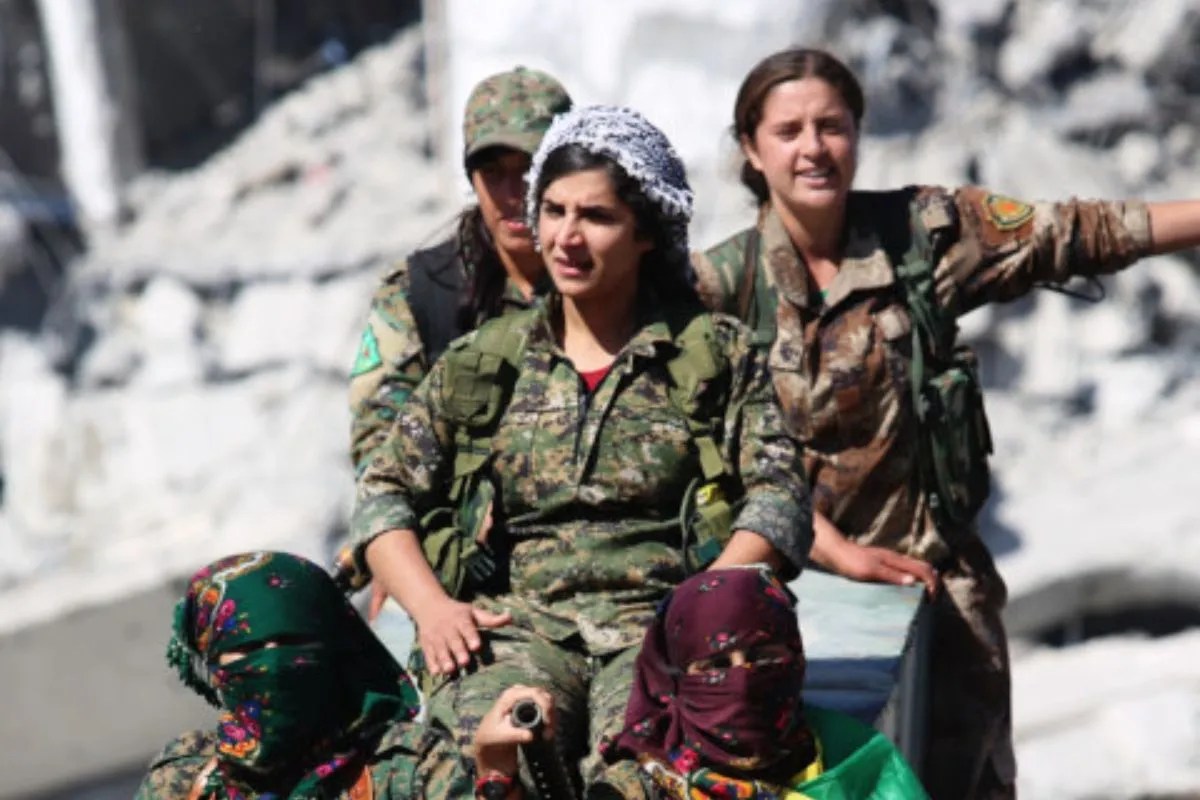
History loves irony, and it rarely gets more brutal than this. The very women who picked up rifles, built checkpoints, and dragged the Islamic State out of its strongest urban hideouts are now being told they don't fit into the new military structure.
If you followed the ground war in the Middle East over the last decade, you remember the images. Fearless fighters with braided hair, Kalashnikovs slung over their shoulders, standing triumphant over black-flagged ruins. Those were the members of the Women's Protection Units, universally known as the YPJ. They didn't just fight; they redefined what modern asymmetric warfare looked like when professional armies folded.
Yet, as the dust settles on a fragmented nation and transitional authorities attempt to piece together a unified national force, these battle-hardened veterans are finding closed doors. Commander Nourouz Ahmed recently sat down with leadership, including President Ahmed al-Shra, expecting a seat at the table. She walked away with a sobering reality check. The official stance from the new government was blunt. There is simply no room for women in the regular standing military.
Let's look at why this decision is causing massive friction on the ground and what it actually signals for the future of the region.
The Broken Promise of Integration
When the Syrian Democratic Forces (SDF) were effectively dissolved and integrated into official state structures, everyone assumed the YPJ would find a natural home. After all, over fifteen hundred combat-ready fighters possess tactical experience that most regular army recruits can only read about in textbooks.
The YPJ didn't ask to be disbanded into isolated units. They proposed staying intact as an organized, specialized brigade or battalion. It made tactical sense. Keeping a cohesive unit together preserves morale, trust, and specialized combat skills honed through years of urban warfare.
The government said no.
Instead, individual male fighters from the broader SDF network found pathways into the newly formed defense ministry, while female fighters were left out in the cold. It’s an old story dressed up in a new uniform. Men write the rules, men carry the guns, and women who actually won the war are asked to step aside once the peace talks begin.
Shifting Focus to the Interior Ministry
Not ready to surrender their hard-earned autonomy, YPJ leadership shifted negotiations toward the Ministry of Interior. Talks are currently underway regarding potential placement within special operations or internal security forces.
But this alternative comes with strings attached. Ministry representatives have indicated that if these women join, they won't be stationed exclusively in Kurdish-majority northeastern territories. They will be deployed anywhere across the Syrian map, subject to command directives that may scatter them across unfamiliar terrain.
For fighters who spent years protecting their local communities from existential threats, the prospect of being broken up and dispersed across a deeply fractured country feels less like integration and more like an attempt to neutralize an independent power base.
The Fight for Recognition Beyond the Battlefield
Twenty-year-old YPJ fighter Göksu Siyager put it bluntly in a recent interview. She noted that traditional state powers always default to viewing women as weak or secondary actors. She made it clear that their strength never came from state approval or male-dominated institutions in the first place, and they aren't about to compromise now.
That mindset is precisely why authorities are nervous.
The YPJ was never just a militia. It was a social experiment. It challenged deeply rooted patriarchal structures in northern Syria while simultaneously holding the front lines against religious extremism. When an all-female unit proves it can outfight a terrorist organization that terrified global superpowers, it creates a dangerous precedent for traditional rulers who prefer their societies neatly ordered along conventional lines.
What Happens Next
The exclusion of the YPJ from the new Syrian army highlights a harsh truth about post-conflict transitions. Winning the war against a common enemy is easy compared to dividing the spoils of peace and deciding who gets to hold power.
If the interior ministry negotiations fall through, thousands of armed, highly trained veterans will find themselves legally sidelined in a country that desperately needs stability. Ignoring them won't make them disappear. It will only create a new flashpoint in a land that has already bled enough.
You can try to erase women from the official registry of the armed forces, but you cannot rewrite the footage of who saved the country when everyone else ran away. The coming weeks will show whether the new administration has the foresight to absorb these fighters or the stubbornness to push them back into the shadows.