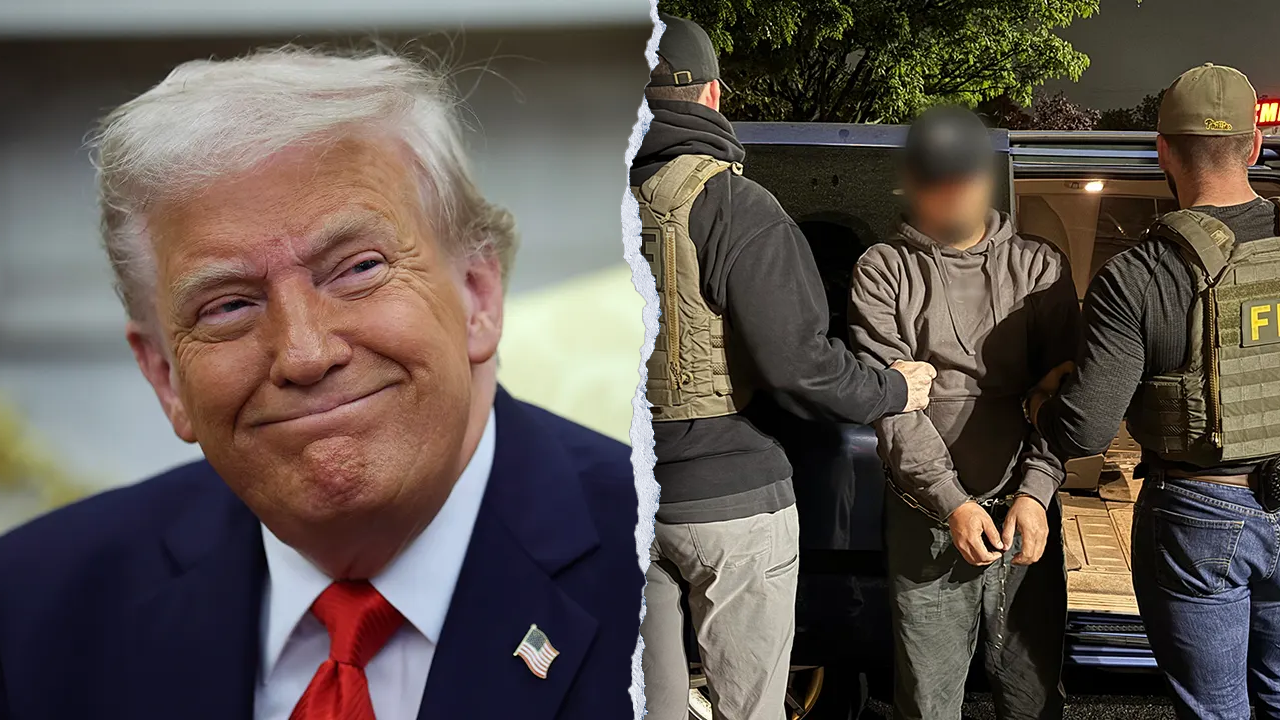
Donald Trump just dropped hundreds of pages of declassified intelligence documents to prove the 2020 election was stolen, but the massive document dump doesn't actually show what he claims it does.
If you watched the primetime address from the White House, the theater was classic Trump. Bundles of newly declassified memos, dramatic warnings about foreign hackers, and sweeping allegations that the American voting system is "catastrophically short" of secure. He accused China of pulling off the largest voter data heist in history. He pointed to CIA reports about voting machines to claim the system is easily compromised.
But if you actually read the papers, the narrative falls apart.
What the White House pitched as a bombshell disclosure is mostly a collection of old news, localized threat assessments, and heavily redacted memos that national security experts have understood for years. None of the declassified files prove that a single vote was altered, nor do they show that foreign interference changed the outcome of the 2020 election. Instead, we're looking at an aggressive political play to justify a sweeping election infrastructure overhaul right before the midterm elections.
Here is what is actually inside those declassified documents, what the administration left out, and why the entire spectacle matters for the upcoming vote.
The China Data Breach That Wasn't a Secret
The centerpiece of Trump's speech focused heavily on Beijing. He claimed that China committed the largest compromise of election data in history by illicitly acquiring 220 million U.S. voter files. It sounds terrifying on television.
Honestly, though, it's a massive exaggeration of how voter data works in the United States.
Voter registration files aren't top-secret state intelligence. They're largely public records. Political campaigns, corporate marketing firms, and academic researchers buy and download these exact files every single day to run phone banks and targeted advertisements.
"That data includes a ton of people, maybe even a majority of people, who are absolutely eligible voters," notes David Becker, executive director of the Center for Election Innovation & Research.
Did Chinese actors scrape or purchase this data? Highly likely. But having a list of names, addresses, and party affiliations doesn't mean China hacked into a voting booth or changed a tally sheet. It means they have a giant phone book. The intelligence community's official consensus has long been that Beijing weighed the options but decided against launching a major campaign to manipulate the 2020 vote count.
The Venezuela Voting Machine Misdirection
During the address, Trump pointed to declassified CIA intelligence detailing how voting machines could be weaponized to "do a big number" for corrupt regimes, specifically citing Venezuela's Nicolás Maduro. He used this to argue that American voting infrastructure is fundamentally vulnerable to internal and external enemies.
The problem? The technology mentioned in that specific CIA report belongs to Smartmatic—a company whose hardware and software are practically nonexistent in U.S. elections, save for a single contract in Los Angeles County.
Worse for Trump's argument, the June report from the CIA explicitly stated that U.S. intelligence "did not definitively confirm" large-scale electronic vote rigging even inside Venezuela itself. The memo contains absolutely zero evidence linking Venezuelan meddling to American polling places.
Real security experts repeatedly point out that U.S. voting systems are incredibly insulated. They aren't hooked up to the internet while votes are being cast. They are kept under strict physical lock and key until public pre-election testing occurs. Most importantly, almost every single jurisdiction in America utilizes a physical paper trail. If a machine gets glitchy or faces a cyber threat, officials simply audit the paper receipts by hand to confirm the math. We saw this happen in Georgia in 2020, where every single ballot was counted three separate times to verify the accuracy of the machines.
Old Memos Packaged as Fresh Evidence
The White House declassified a January 2020 National Intelligence Council report stating that adversarial nations like Russia, China, Iran, and North Korea have the technical capability to access centralized voter registries and electronic pollbooks.
This isn't a new discovery. The intelligence community has flagged these exact vulnerabilities since the 2016 election cycle.
However, the administration conveniently glossed over the crucial caveat embedded in that very same 2020 report: because American elections are intensely decentralized—run by thousands of individual counties and states rather than one federal entity—scaling a cyberattack to alter a national presidential outcome is practically impossible. A hacker might disrupt a localized database or slow down a reporting website on election night, but they can't change the certified physical paper totals.
The administration also raised eyebrows by showcasing a Department of Homeland Security review claiming that 278,000 noncitizens are registered to vote across federal files. The speech failed to explain the methodology behind this number. Independent audits consistently show that noncitizen voter registration is exceptionally rare, and actual voting by noncitizens is statistically negligible. When commercial data sets are cross-referenced against federal immigration logs, it yields an immense number of false positives—often flags on completely naturalized, legal citizens who simply haven't updated an old DMV file.
The Real Strategy Ahead of the Midterms
If these documents don't prove the 2020 election was stolen, why stage a massive primetime event to release them now?
Look at the legislative landscape. The administration is aggressively pushing the SAVE America Act, a bill that would force voters to present in-person proof of U.S. citizenship, such as a birth certificate or passport, just to register for federal contests. Trump explicitly tied the declassified memos to this bill, stating that anyone voting against it simply "wants to cheat."
By using the official declassification machinery of the executive branch to release redacted threat assessments, the administration creates a veneer of absolute authority. It allows surrogates to claim that "declassified intelligence proves the system is broken," even if the fine print says nothing of the sort.
It is a preemptive strike on the validity of upcoming elections, giving the administration a ready-made narrative if their party suffers losses in the midterms.
What You Should Do Next
Don't let the flood of document dumps and high-pitched political rhetoric panic you about the safety of your vote. Instead of getting caught up in the cable news cycle, take these practical steps to verify how your local system actually works.
- Check your voter status directly. Don't rely on third-party mailers or political warnings. Go straight to your official state portal (usually via your Secretary of State's website) to confirm your registration is active and accurate.
- Look up your local equipment. Every county publishes the exact make and model of the voting machines they use. Look yours up and check if they use voter-verified paper audits. Hint: they almost certainly do.
- Sign up to be a poll worker. The best antidote to election anxiety is seeing the process firsthand. Local bipartisan election boards are always looking for citizens to help manage check-ins, secure ballot boxes, and oversee the count on election night.