History has a funny way of bunching up. Some weeks pass without a single memorable headline, while others completely reset the course of human capability. The seven days between July 19 and July 25 are packed with exactly those kinds of moments. We aren't just talking about dry dates in a textbook. We're looking at the exact window where humans first touched another world, where India radically transformed its economy overnight, and where massive glass ceilings shattered for good.
If you look closely at these dates, you notice a strange, recurring pattern. The events that occurred during this specific week changed how we view power, technology, and what is possible. Let's look at what actually happened and why these moments still affect your life today.
The Night India Swallowed Its Banks
On July 19, 1969, most people in India went to bed thinking their money was in private hands. By midnight, everything changed. Prime Minister Indira Gandhi executed one of the most drastic economic maneuvers in modern history by nationalizing 14 of the country's largest commercial banks.
The Raw Politics Behind the Move
It wasn't a slow transition. It was an economic ambush. Gandhi didn't even consult her own finance minister before moving ahead. Private banking at the time served a tiny fraction of the population, mostly large corporate houses and wealthy urban merchants. Farmers and rural traders were left to the mercy of predatory moneylenders.
Nationalization brought over 70% of the country's banking wealth under government control overnight. Critics called it a socialist disaster that would kill free enterprise. Supporters called it the birth of economic democracy.
The Real Long Term Impact
Did it work? Yes and no. It successfully forced banks to open thousands of branches in rural areas, giving millions of regular people access to formal credit for the first time. It laid the groundwork for the agricultural growth that followed. But it also birthed a massive bureaucratic monster, leading to decades of political interference in loan distributions and creating the non-performing asset issues that Indian public sector banks still fight today.
The Greatest 102 Hours in Space Exploration
Just one day after India shook up its economy, the entire world stopped to look at the sky. On July 20, 1969, the Apollo 11 Lunar Module touched down on the Moon.
The Overloaded Computer Alarms
Most people know Neil Armstrong's famous quote about small steps and giant leaps. They don't know how close the mission came to absolute catastrophe. During the final descent, the Eagle lander's primitive computer started flashing 1201 and 1202 program alarms. The system was totally overloaded.
Apollo 11 Descent Timeline (July 20, 1969)
- 20:05 UTC: Powered descent begins
- 20:10 UTC: 1202 computer alarm flashes
- 20:14 UTC: Armstrong takes manual control to avoid boulder field
- 20:17 UTC: Touchdown at Tranquility Base with 25 seconds of fuel remaining
Imagine hurting toward a lunar surface at thousands of miles an hour with an alarm you've never seen in training. Mission Control gambled, realized the computer was just dropping non-essential tasks to focus on the thrusters, and told the crew to keep going.
The Fuel Tank Crisis
The computer issues weren't the only problem. The automated guidance system was steering them directly into a massive, boulder-filled crater. Armstrong had to switch to manual control and fly the lander like a helicopter across the lunar plains to find a smooth spot.
When the Eagle finally kicked up dust and settled at Tranquility Base, they had roughly 25 seconds of fuel left before they would have been forced to abort the mission or crash. It was pure, unadulterated human grit.
India Bold Leap to the Lunar South Pole
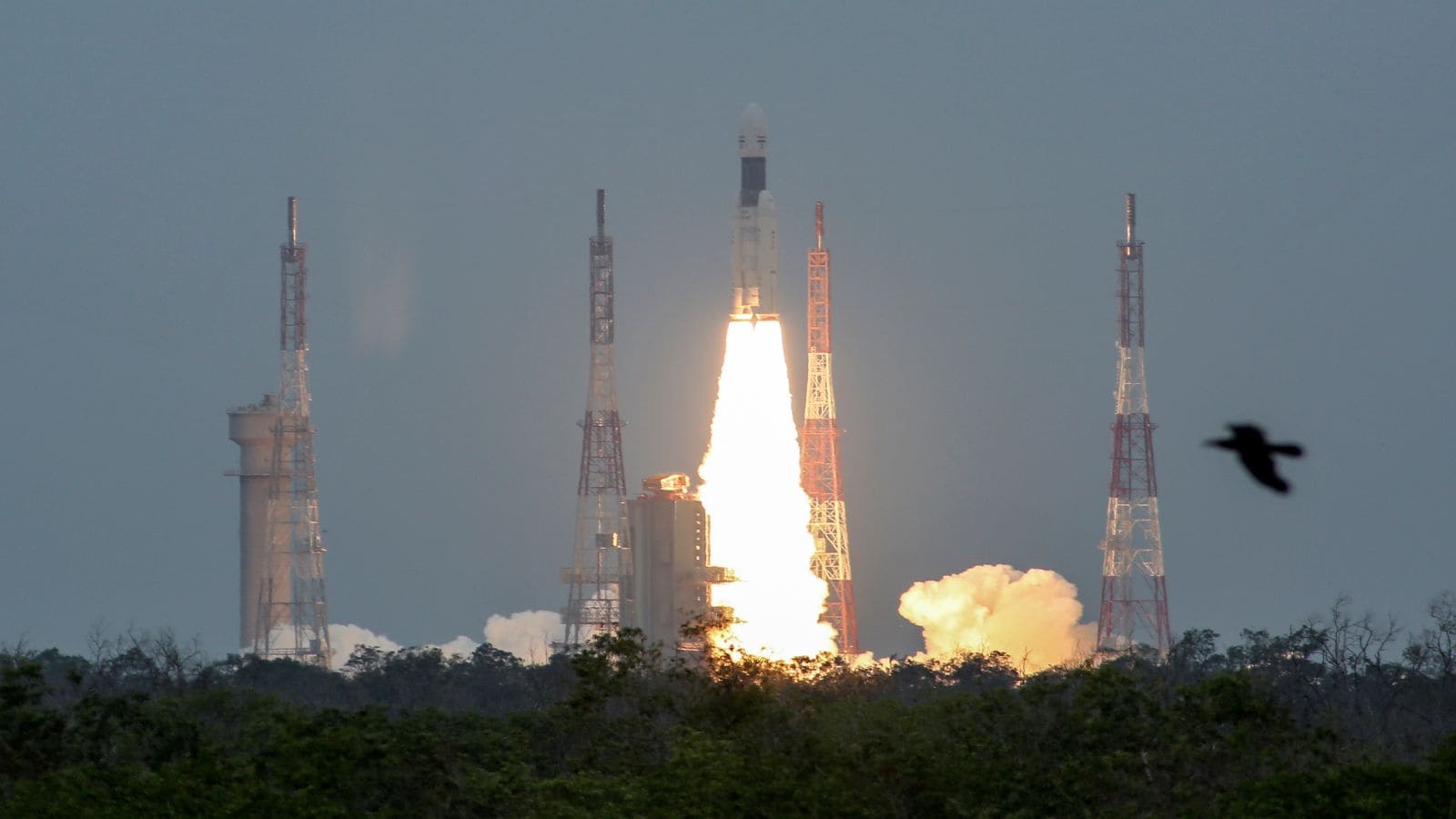
Fifty years after Apollo 11, another lunar mission grabbed global attention. On July 22, 2019, the Indian Space Research Organisation (ISRO) launched Chandrayaan-2.
The Painful Glitch and the Resurrection
The launch was originally scheduled for mid-July, but engineers detected a technical snag—a helium gas leak—just 56 minutes before liftoff. They aborted. Lesser teams would have taken months to recalibrate. ISRO fixed the problem, rescheduled, and launched successfully just seven days later on July 22.
The Bittersweet Reality of the Mission
Chandrayaan-2 is often remembered for the heartbreaking crash of the Vikram lander on the lunar surface later that September. It's easy to label a mission a failure when the final landing goes wrong. That's a massive mistake.
The Chandrayaan-2 orbiter was a spectacular success. It successfully entered lunar orbit, began mapping the surface, and provided the highest-resolution images ever taken of the Moon at the time. It was the data from this very orbiter that paved the way for the historic, flawless landing of Chandrayaan-3 years later. Failure is just data you haven't used yet.
Breaking the Highest Glass Ceiling in New Delhi
On July 25, 2007, India made history without leaving the atmosphere. Pratibha Patil took the oath of office, becoming the 12th President of India and the very first woman to hold the position.
The Political Firestorm
Don't let the history books fool you into thinking her ascent was a smooth, universally celebrated event. Her nomination sparked intense political fighting. Critics attacked her past record, her family business dealings, and questioned whether she had the political weight to handle the role.
She stood her ground through the media circus. She secured a resounding victory in the electoral college, winning nearly two-thirds of the total votes.
What Her Presidency Actually Changed
The presidency in India is largely a ceremonial role, but the symbolism mattered immensely. Patil used her platform to constantly push for the economic independence of rural women, fought against the practice of female foeticide, and championed child development initiatives. She proved that the highest office in the world's largest democracy wasn't an exclusive club for men.
The Birth of a Revolutionary Icon
Going back further in time, July 19 marks the birth anniversary of Mangal Pandey, born in 1827. He was the spark that set off the Indian Rebellion of 1857.
The Greased Cartridge Contradiction
Pandey was a soldier in the British East India Company's army. The rebellion started over something seemingly minor: a new type of rifle cartridge rumored to be greased with cow and pig fat. To load the rifle, soldiers had to bite the cartridge open. This offended both Hindu and Muslim troops.
The Single Act That Changed an Empire
On March 29, 1857, Pandey mutinied, attacking his British officers. He was captured and hanged, but his defiance spread like wildfire. By July of that year, the entire northern region of India was in open revolt. His birth on July 19 serves as a reminder that major historical movements often start with a single individual who simply refuses to comply anymore.
How to Apply These Historical Lessons Today
History shouldn't just be consumed passively. The events of this week offer clear takeaways you can use in your own life, career, or business right now.
- Take manual control when the system panics: When Armstrong faced computer alarms, he didn't freeze. He took the stick and steered the ship manually. When your systems or plans fail, rely on your core skills to guide you home.
- Reframe your failures as partial successes: Chandrayaan-2 lost its lander, but its orbiter saved the program. Look at your recent setbacks. Find the pieces that actually worked and use them to build your next win.
- Expect fierce resistance when changing the status quo: Indira Gandhi and Pratibha Patil faced immense blowback for breaking traditions. If you're trying to shift the direction of a project or an organization, don't expect applause. Expect a fight.
Stop treating history like a list of dead dates. Use these stories as a blueprint for handling your own crises, taking risks, and breaking boundaries.