You cannot bully your way through a narrow marine bottleneck that carries a fifth of the world's oil supply. Washington keeps trying anyway.
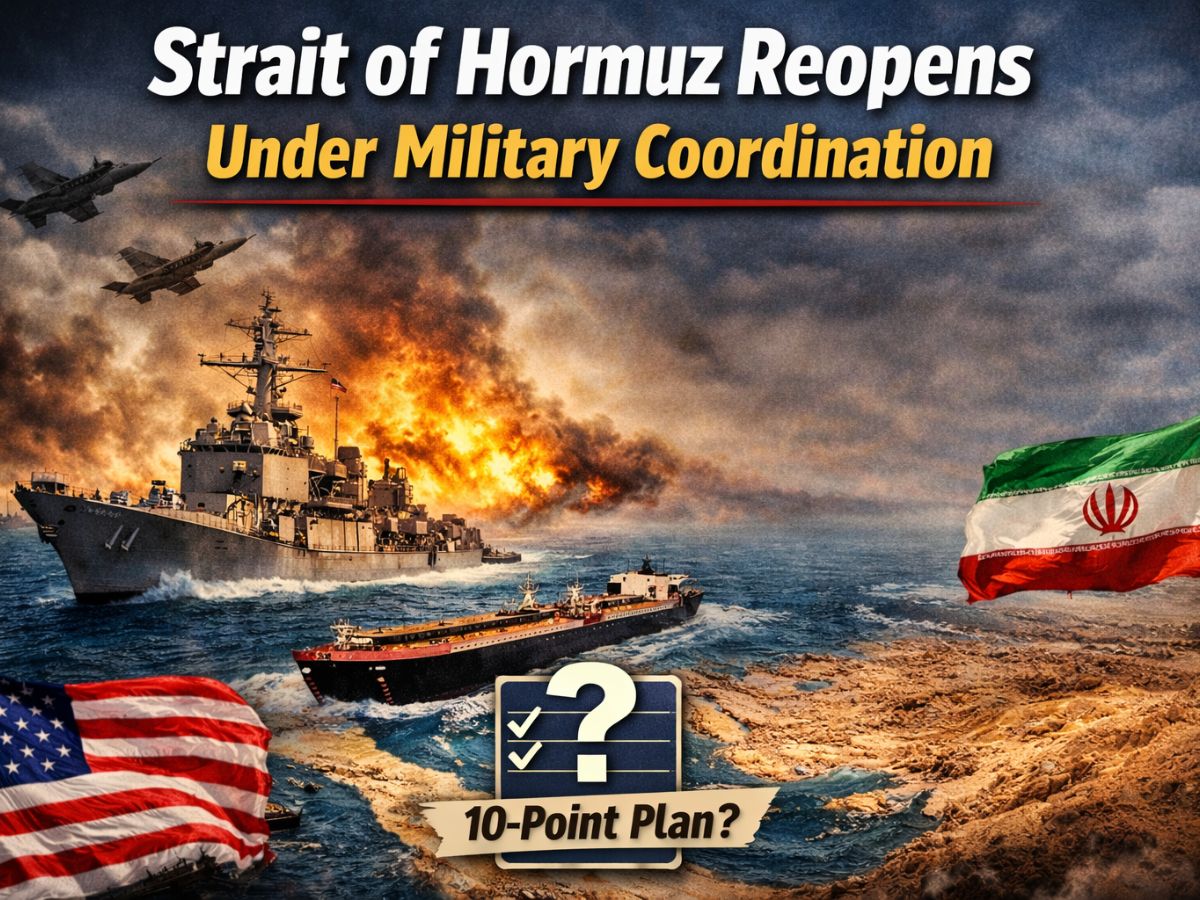
A high-stakes war of words erupted between Tehran and the White House over who actually controls the Strait of Hormuz. U.S. President Donald Trump claimed absolute authority over the critical shipping lane, boasting of a naval blockade he dubbed a "wall of steel". Tehran fired back immediately. Iranian Foreign Minister Abbas Araghchi dismissed the American posture as a dangerous intelligence failure, labeling Washington's entire strategy a historic miscalculation.
If you look at the actual maritime traffic data, Trump's claims of total control fall apart. Commercial transits through the strait have plummeted to single digits daily, a staggering drop from the roughly 130 vessels that normally pass through the corridor. Shippers aren't risking it. Insurance rates are punishing. The corridor remains effectively choked off, regardless of what social media posts out of Washington claim.
The Anatomy of an Intelligence Blunder
Why is there such a massive disconnect between Washington's rhetoric and reality on the water? It comes down to bad data. Araghchi didn't mince words on social media, warning that "fake intelligence" is far more damaging than fake news.
When military planners rely on assumptions rather than ground-level facts, bad things happen. The recent conflict proved that American and Israeli planners severely underestimated Tehran's asymmetric capabilities. Yet, policymakers act as if a show of naval force instantly rewrites the physical geography of the Persian Gulf.
It does not. The Strait of Hormuz is barely 21 miles wide at its narrowest point, with shipping lanes slicing through narrow channels that require precise navigation. Controlling it doesn't mean floating warships nearby. Controlling it means keeping commercial traffic moving safely. Right now, commercial traffic is sitting ducks or turning around entirely.
Who Pays the Price for a Choked Waterway?
Every time tensions spike in this region, global markets bleed. Energy consumers thousands of miles away foot the bill.
Iran's Persian Gulf Strait Authority made its stance crystal clear: the corridor stays restricted until Tehran's core conditions are met. They aren't backing down because of a naval deployment. They view the economic fallout as leverage against a coalition that launched a devastating military campaign earlier this year.
Meanwhile, cargo ships continue to report suspicious strikes and projectile hits near the Omani coast. Marine insurers are running for the hills. Shipping companies are rewriting routes around the entire African continent just to avoid the Persian Gulf. That adds weeks of transit time and massive fuel costs, which eventually trickles down to every single person filling up a gas tank or buying imported goods.
The Danger of Believing Your Own Propaganda
When leaders convince themselves that a complex geopolitical chess match is already won, they stop looking for off-ramps. Claiming "total control" of a contested chokepoint while commercial ships are too terrified to transit is a recipe for escalation.
Intelligence failures got Washington into a costly war in the first place. Doubling down on the myth that a naval wall can force open a heavily mined or targeted strait repeats those exact errors. Until policymakers acknowledge the actual leverage Iran holds over the waterway, the standoff will continue to squeeze global energy markets.
Stop pretending a show of force solves a structural crisis. Look at the numbers, watch the shipping logs, and accept the reality on the water.