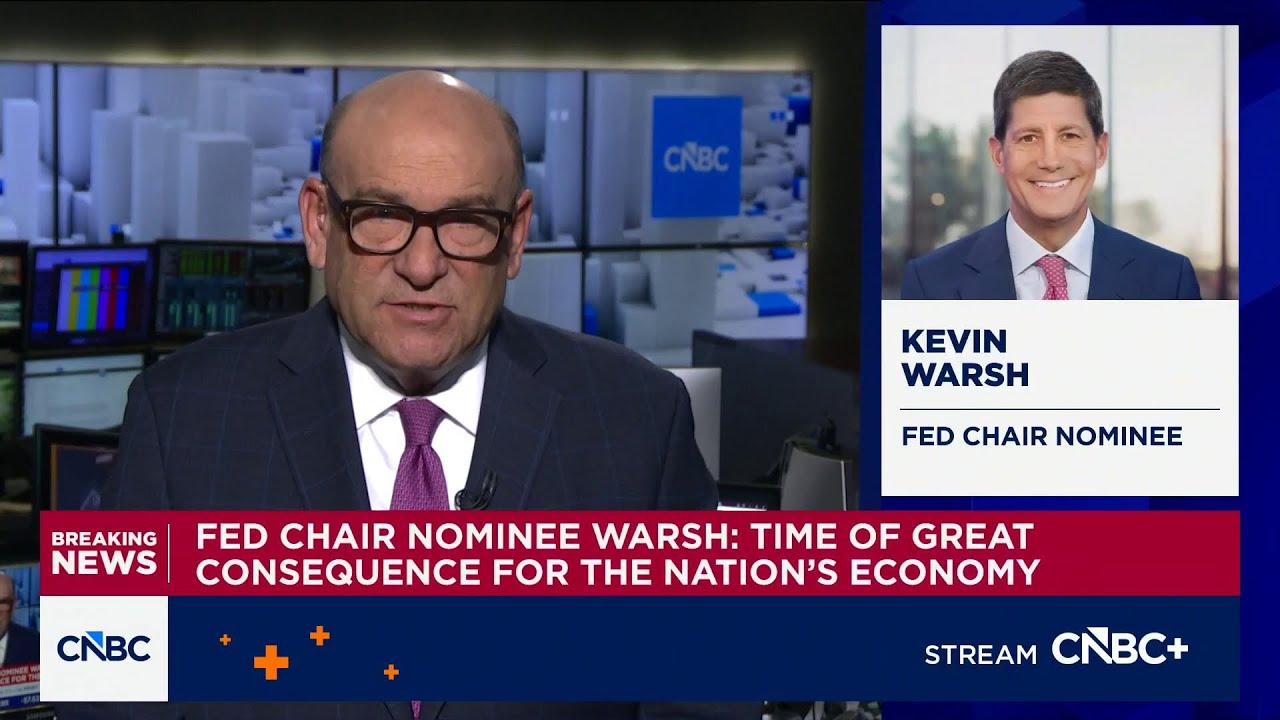
Wall Street hates a vacuum. Right now, traders are staring into a massive one, and it has Federal Reserve Chair Kevin Warsh's name written all over it.
Markets drifted on August 28, 2026, holding their collective breath ahead of Warsh's keynote address at the Kansas City Fed's annual economic symposium in Jackson Hole, Wyoming. Investors want one thing: a clear reaction function. They want to know precisely what economic triggers will force the central bank to hike interest rates again. Instead, they are getting silence, high-stakes ambiguity, and a Treasury department stepping on the Fed's toes.
Here is what is actually happening behind the scenes, why markets are sweating, and what you need to do with your portfolio right now.
The Problem with the New Fed Chair
Kevin Warsh took the reins as Fed chair earlier this year. Since then, he has presided over a single Federal Open Market Committee meeting, keeping the benchmark rate steady in a range of 3.5% to 3.75%.
That sounds calm on paper. In reality, it is driving bond traders crazy.
Warsh has consistently refused to spell out his policy reaction function. He wants the incoming economic data to do the talking. The trouble is that markets hate guessing games. Traders currently price in roughly a 34% chance that officials will push rates higher at the upcoming September meeting. Without firm forward guidance, every jobs report and inflation print turns into a market-shaking event.
Economists are deeply divided. Some analysts warned that a speech focused purely on big-picture academic topics—rather than concrete monetary policy paths—would be misread by the Street as a dovish pivot. That kind of misinterpretation risks sparking a brutal long-bond selloff, potentially driving the 30-year Treasury yield past 5.5%.
The Treasury Clash Complicates Everything
To make matters worse, Warsh isn't even the only player in town driving market sentiment.
Treasury Secretary Scott Bessent recently rolled out a plan to expand the department's weekly debt-buyback program to at least twice its normal size. That fiscal intervention directly clashes with the tighter monetary stance the Fed has tried to project.
Economists point out that the Treasury's actions have effectively undermined Warsh's maneuvering room. You have monetary policy pulling in one direction while fiscal policy pushes in another. When Washington's left hand doesn't know what the right hand is doing, asset prices pay the price.
Warsh has tried to pivot toward institutional reform. He established five separate task forces to review everything from balance sheet policy to inflation frameworks, drafting outside academics and business leaders to break up old groupthink. He has repeatedly promised Congress that the central bank holds zero tolerance for sticky inflation and needs a generational regime change.
Talk is cheap when bonds are selling off.
How to Position Your Portfolio Today
Stop waiting for central bankers to save you. When monetary policy enters a fog, defensive positioning is your best defense against sudden volatility.
- Shorten your duration: If long-term Treasury yields threaten to break higher due to lack of policy clarity, holding long-duration bonds is a losing game. Keep maturities short.
- Watch the data, not the speeches: Warsh wants the data to dictate reality. Stop trying to decode every nuance of a Jackson Hole speech and focus purely on core inflation prints and employment numbers.
- Manage cash flow aggressively: High uncertainty means equity valuations can compress fast. Keep dry powder ready to deploy when market overreactions create genuine discounts.
Uncertainty is the permanent tax of investing. Right now, the tax bill is exceptionally high.
Fed Chairman Kevin Warsh delivers remarks from Jackson Hole
This video captures Federal Reserve Chair Kevin Warsh delivering his highly anticipated address at the Jackson Hole symposium, providing immediate context on the policy signals markets were waiting to hear.
http://googleusercontent.com/youtube_content/1