Washington keeps trying to use its old playbook on Tehran, but the rules of the game just changed completely. For decades, American foreign policy relied on a predictable mix of economic carrots and military sticks to force concessions from adversarial nations. If a country didn't comply, you squeezed their oil exports, froze their bank accounts, or threatened targeted airstrikes.
That strategy is officially hitting a brick wall in the Middle East.
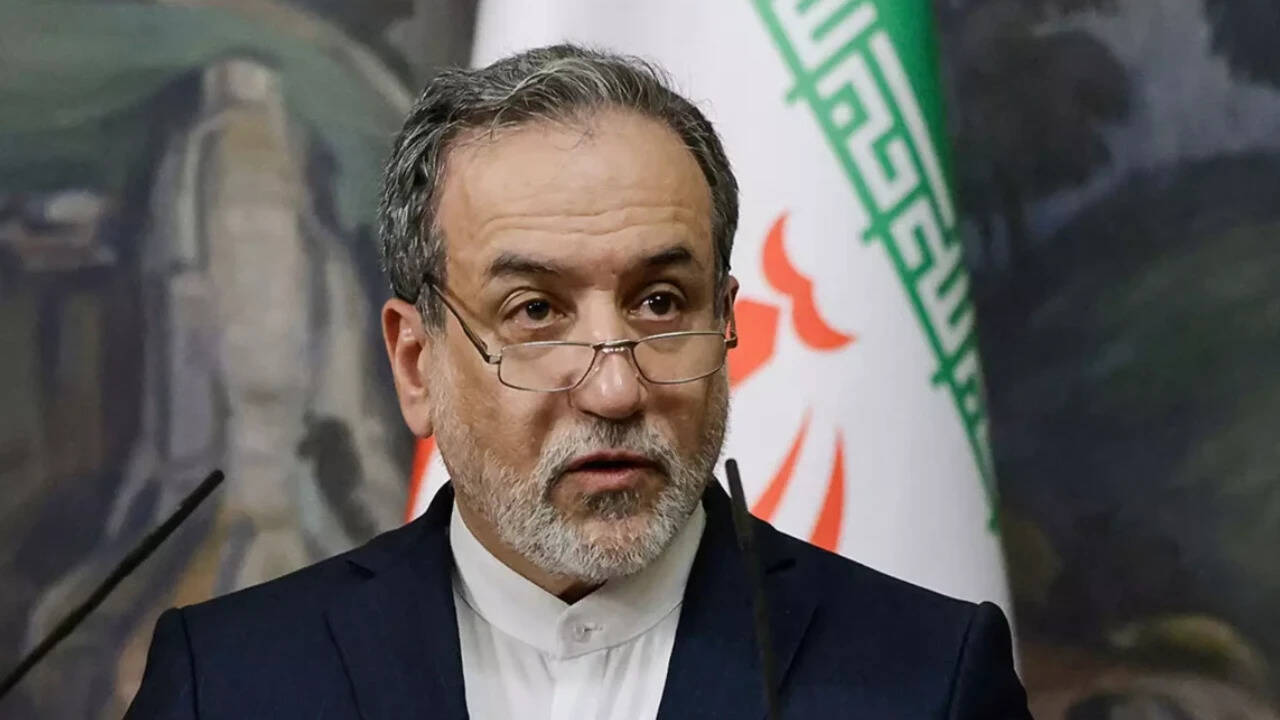
Iranian Foreign Minister Abbas Araghchi recently laid out exactly why the Trump administration's aggressive posture isn't working. In a blunt interview with the Mehr News agency, Araghchi recounted a tense exchange with US envoy Steve Witkoff that exposes the massive disconnect between American diplomatic assumptions and Iran's current reality on the ground.
The message from Tehran is clear. You can't leverage fear against leadership that already operates under the assumption that death is imminent.
The Failure of the Zero Enrichment Ultimatum
The root of the current diplomatic deadlock goes back to the absolute demands Washington brought to the table before the outbreak of the recent 12-day war. US negotiators entered talks demanding zero uranium enrichment from Iran. It was a maximalist position designed to force a total capitulation.
Iran stood firm and resisted the demand. When the US realized it couldn't get what it wanted through diplomatic arm-twisting, the situation devolved into open military conflict. Araghchi points out that this was Washington's first major miscalculation. The US assumed a short, sharp shock would break Iran's resolve, dismantle its nuclear ambitions, and force the Islamic Republic to surrender.
Instead, the US and its regional allies found themselves facing a resilient adversary prepared for a prolonged conflict. The infrastructure didn't instantly collapse, and the public didn't immediately turn on the government in the way Western planners anticipated.
When Threats Lose Their Currency
During his talks with Witkoff, Araghchi asked the American envoy a series of deeply uncomfortable questions that highlight the psychological gap between the two negotiating teams. He asked if Witkoff had ever sat in a meeting believing the building could be bombed at any second. He asked if the envoy had ever talked on a phone thinking it might suddenly explode, or if he'd checked on his family wondering if it was the last time he'd ever speak to them.
According to Araghchi, the American team just stared back blankly.
This isn't just rhetorical theater. It reveals a fundamental shift in Iran's geopolitical stance. When a regime and its negotiators have survived the targeted bombing of the Supreme Leader’s residence and the subsequent 40-day war, standard coercive diplomacy loses its leverage.
US Strategy: Offer infrastructure/power plants -> Demand zero enrichment -> Threaten military action
Iran Response: Reject infrastructure bribes -> Maintain local enrichment -> Accept risk of total conflict
The US tried offering bribes, promising to build power plants and develop local infrastructure if Iran made major concessions. Tehran rejected the offers outright. You can only threaten someone who has something left to lose, or someone who is actively terrified of the consequences. When your counterpart walks into a room fully expecting the worst possible outcome, your threats become background noise.
The Misguided Comparison to Venezuela
Washington has a habit of viewing its adversaries through a single, uniform lens. Araghchi specifically referenced the January 3 US operation that targeted Venezuelan President Nicolas Maduro, flying him to New York for trial.
American strategists seemed to think a similar display of overwhelming force or decapitation strikes would cause the Iranian state apparatus to fold. It didn't. Iran isn't Venezuela. Taking out key figures or targeting central leadership nodes hasn't triggered a total institutional collapse.
Instead, the ultra-hardline factions and the public administration continue to navigate a complex, brutal internal power struggle while maintaining a unified front against external military pressure. Figures like President Masoud Pezeshkian, negotiator Mohammad Bagher Ghalibaf, and Araghchi himself have managed to maintain the state's core functions despite intense domestic volatility and foreign strikes.
What the West Gets Wrong About Iranian Resilience
The persistent mistake in Western capital cities is the belief that more economic pain and more military pressure will inevitably lead to a breaking point. They look at Iran's internal divisions, the protests, and the economic toll of sanctions, and they conclude that one more push will finish the job.
They miss the psychological landscape. Decades of isolation, combined with the recent intense kinetic conflict, have conditioned Iran's political and military leadership to operate in a permanent state of crisis management.
When President Trump states that the US can knock out Iran's power-generating plants in "the small part of an afternoon," it doesn't spark panic in Tehran. It simply reinforces their belief that the US is an existential threat that can never be trusted, rendering the signed Memorandum of Understanding functionally dead in their eyes.
If the US wants to alter the trajectory of the Middle East, it has to stop relying on the assumption that its adversaries share the same risk calculations. Threats only work when the other side values survival over resistance. Right now, Iran's leadership is explicitly telling the world that they've already factored the cost of death into their diplomatic strategy.
Next Steps for Geopolitical Analysts
To accurately forecast where this standoff goes next, stop looking at standard economic indicators and focus on these specific markers:
- Track Mutual Compliance Metrics: Watch Paragraph 13 and Paragraph 9 of the current MoU. If the US Treasury continues to enforce revoked sanctions, expect Iran to completely freeze any back-channel diplomatic tracks.
- Monitor the Strait of Hormuz: Watch for naval alignment between Iran and Oman. Tehran is shifting from total closure threats to selective passage management, granting transit only to specific nations to undermine US maritime authority.
- Evaluate Internal Infiltration: Keep tabs on how Iran addresses the active "security holes" within its leadership structure. Their ability to plug these intelligence leaks will dictate how long they can withstand ongoing targeted strikes without systemic collapse.