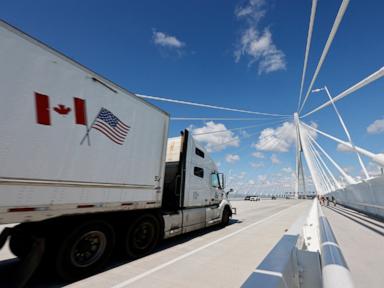
Trade disputes usually feel abstract, playing out in congressional hearing rooms or distant news briefings. Right now, that rule doesn't hold up. If you live anywhere near the northern border, the economic fallout of the escalating trade war between the United States and Canada is hitting close to home.
Tit-for-tat tariffs on billions of dollars in cross-border goods are altering daily commerce. Supply chains are cracking, and local businesses are feeling the pinch. More importantly, this economic friction is colliding directly with upcoming midterm politics. Voters in key border states are asking a straightforward question: who pays the price when neighbors stop trading?
The Anatomy of Border Strain
The economic damage isn't distributed evenly across the country. States heavily reliant on cross-border logistics are absorbing the heaviest blows. Michigan, Maine, Ohio, and Minnesota rank among the top jurisdictions for combined import-export business with Canada.
When fresh levies hit items ranging from specialized manufacturing inputs to everyday consumer staples, local economies suffer immediately. Take the automotive sector in Michigan. Industry groups note that existing margins are already razor-thin. Additional cost pressures threaten production lines and raise retail prices for vehicles.
Cross-border tourism is another casualty. Small businesses near International Falls and other northern outposts rely heavily on Canadian visitors. When geopolitical tensions flare and nationalist sentiment hardens on both sides of the border, tourist foot traffic dries up. Small business owners see revenues drop sharply, turning minor policy disagreements into existential business threats.
Political Shockwaves in Battleground Regions
Elections are won and lost on kitchen-table economics. When voters face higher costs at the grocery store or see their local employers struggle with supply disruptions, political sentiment shifts fast.
Elected officials representing northern districts find themselves caught in the middle. In Maine, incumbent lawmakers are fielding complaints from local companies facing rising operational costs and unpredictable trade talks. Voters don't care about the complex geopolitical posturing originating thousands of miles away in Washington. They care about their bottom lines.
As the midterm landscape takes shape, candidates ignoring these localized economic shocks do so at their peril. Trade policy is no longer just a federal talking point. It's a localized referendum on economic stability.
What Businesses and Voters Are Doing Now
Adaptation is happening fast, but it's expensive. Canadian retailers and grocers are accelerating a "Buy Canadian" movement, actively seeking alternative suppliers to reduce their reliance on American goods. On the American side, businesses are desperately trying to diversify supply chains away from northern dependencies, adding overhead costs that ultimately trickle down to consumers.
If you're operating a business in a trade-sensitive region, banking on a quick resolution is a risky bet. Diversifying your supply channels and locking in domestic alternatives where possible is the only way to insulate against ongoing uncertainty. Trade wars rarely end cleanly, and the structural shifts happening right now will likely leave a permanent mark on North American commerce.
Canada-US relations forever changed amid trade war
This video provides an in-depth look at how retaliatory tariffs and shifting diplomatic stances are permanently altering the commercial relationship between the United States and Canada.
http://googleusercontent.com/youtube_content/1