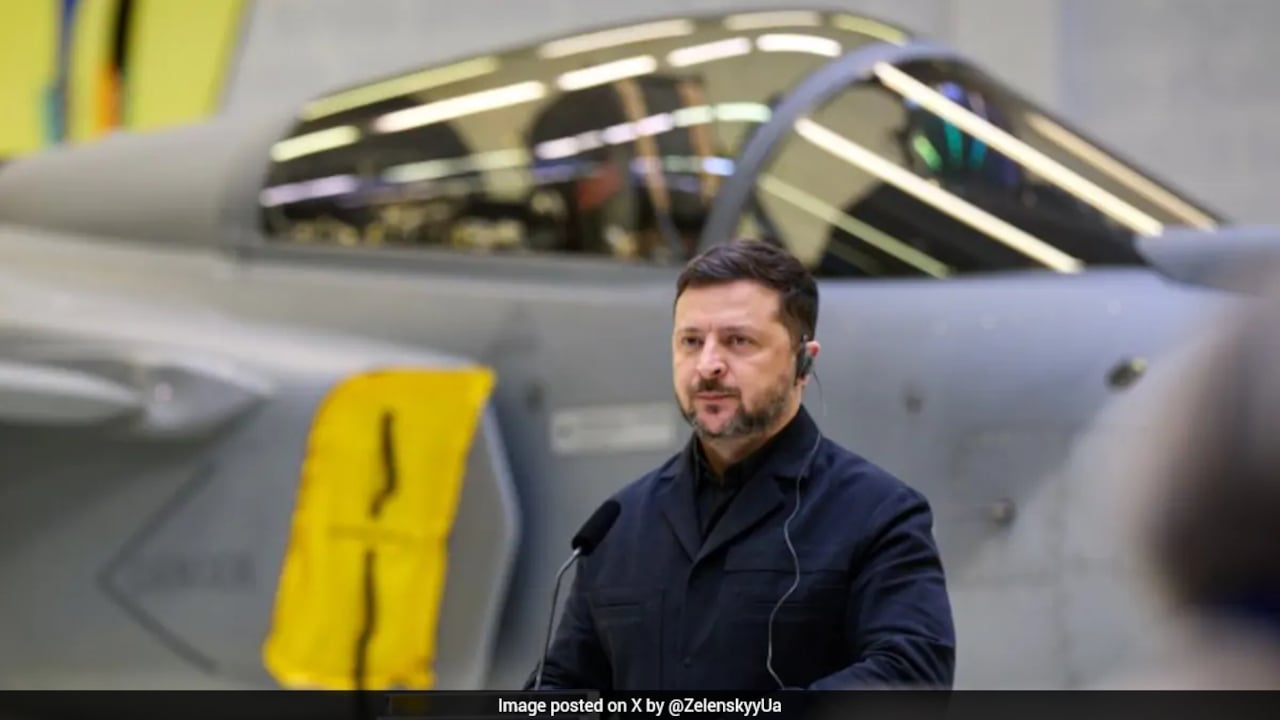
Ukrainian President Volodymyr Zelenskyy didn't mince words during his recent trip to Washington. He told U.S. President Donald Trump and members of the Senate straight up: Ukraine's survival depends on anti-ballistic missile systems.
Kyiv can handle regular drones. Domestic production and clever local tactics have scaled up to knock down flocks of Iranian- and Russian-built loitering munitions with high reliability. But ballistic missiles are a completely different ballgame. If you liked this post, you might want to read: this related article.
The Core Problem Facing Kyiv
Drones fly slow. Ballistic missiles move at hypersonic speeds, dropping out of the upper atmosphere with devastating kinetic energy. When Moscow launches these weapons against Ukrainian cities, standard mobile fire groups with heavy machine guns or basic anti-aircraft guns are completely useless.
Zelenskyy made it clear to U.S. lawmakers that defending against ballistic trajectories requires specialized technology. That technology points almost exclusively to systems like the U.S.-made Patriot battery infrastructure and PAC-3 interceptors. Without these specific interceptors, major urban centers remain wide open to devastating strikes. For another perspective on this development, check out the latest coverage from USA Today.
Why the Current Pace Isn't Working
Deliveries through existing channels like the Prioritized Ukraine Requirements List (PURL) program are lagging behind battlefield realities. Ukraine's leadership has repeatedly stressed that global stockpiles of interceptors are stretched thin.
When a country fights for its existence, empty launch tubes are a worst-case scenario. Zelenskyy pointed out that seeing Patriot batteries without loaded missiles is painful for citizens enduring daily bombardments.
Beyond standard military aid mechanisms, discussions have even turned toward exploring whether Ukraine could eventually manufacture its own defense systems locally. Trump noted that long-term domestic production options could be on the table. Critics point out that building complex anti-ballistic infrastructure takes time Ukraine simply doesn't have right now.
What Happens Next
The diplomatic push in Washington isn't just about military hardware. Kyiv argues that closing the skies forces Moscow to rethink its strategy. As long as ballistic missiles remain a reliable tool for destruction, diplomatic progress stays stalled.
The immediate requirement remains clear. Interceptors must reach the front lines before the next wave of aerial assaults hits civilian infrastructure. The coming weeks will show whether Washington answers the call with the speed Kyiv demands.