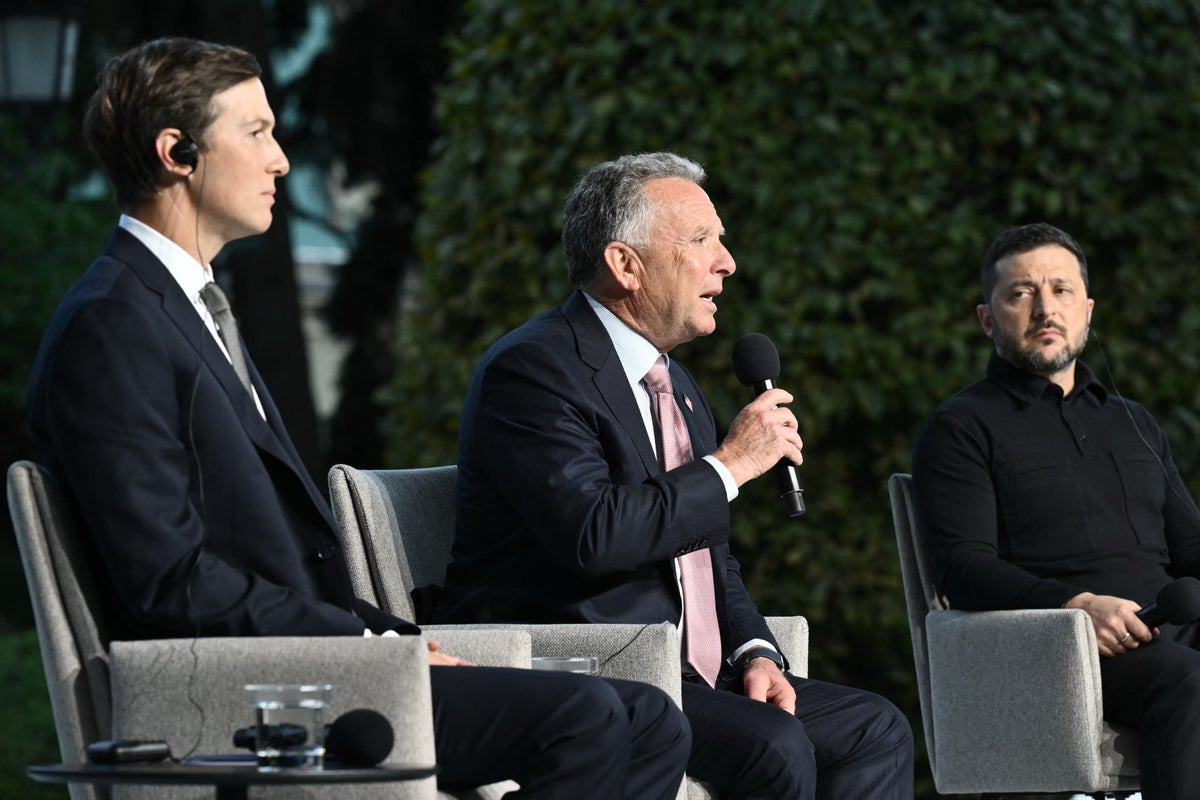
Sitting across from Vladimir Putin for three hours in Moscow doesn't make you a peacemaker. It makes you part of a very old, very cynical room. Steve Witkoff and Jared Kushner found that out the hard way when Ukrainian journalist Dmytro Gordon dropped a blunt question in Kyiv: Don't you find it disgusting?
Honesty check. Diplomacy with war criminals isn't pretty. It smells like stale coffee, high-stakes bluffing, and geopolitical panic.
When Trump’s informal-meets-formal dealmakers touched down in Kyiv after shaking hands with the Kremlin chief, Volodymyr Zelensky called the talks "substantive." Dmitry Peskov in Moscow smiled and noted small steps. Meanwhile, winter is coming. Another brutal, frozen grinding machine of a winter for power grids, trenches, and exhausted infantry.
The Room Where the Deal Doesn't Happen Yet
Let's look at the mechanics of what Witkoff and Kushner are actually doing. Track-two diplomacy mixed with family-office proximity isn't standard State Department protocol. It's transactional triage.
You fly to Moscow. You listen to maximalist territorial demands wrapped in historic grievances. You fly to Kyiv. You absorb the moral fury of a sovereign state getting carved at the edges by attrition.
Gordon’s question wasn't diplomatic. It was moral shorthand for a deeper fatigue. Ukraine doesn't just fear bad terms; they fear normalization. Sitting at the table implies the table is legitimate.
Peskov says trilateral formats aren't ruled out. Kushner nods toward coordination. Zelensky urges keeping lines open because freezing to death or losing Bakhmut-style sectors block by block leaves zero good choices.
What the Coverage Misses About Shadow Envoys
Everyone treats backchannel envoys like rogue agents or magic wands. They're neither.
- Information asymmetry is total. Putin tells Western visitors what feeds his domestic projection and tests Western resolve.
- Backchannels run on deniability. If a proposal fails, Washington shrugs. If it sticks, claims get laid.
- The math hasn't changed. Land-for-peace formulas require enforcement teeth nobody in Washington or Brussels is willing to bleed for via boots on the ground.
When people ask is Putin deceiving them, the framing is slightly juvenile. Putin isn't deceiving anyone in the sense of a magic trick. He’s presenting a reality where Ukraine loses sovereignty installment by installment, and he waits for Western election cycles to do the heavy lifting.
Why Trilateral Talks Are a Trap and a Lifeline
Zelensky endorsing trilateral talks sounds like movement. It’s actually defensive positioning.
If Kyiv refuses all talks, Washington's political winds shift toward "Ukraine is being stubborn." If Kyiv sits down, they legitimize the baseline absurdity of negotiating architecture designed under shellfire.
European powers—France, the UK, Germany—are hanging around the perimeter like junior partners watching a garage sale they didn't authorize. Their security guarantees are paper-thin until someone signs an Article 5-style commitment with actual enforcement. Right now, nobody is writing that check.
The Real Cost of Disgust in Diplomacy
Gordon’s "disgusting" line hit hard because it cuts through the sterile veneer of foreign policy journalism.
Diplomacy requires holding hands with monsters when the alternative is body bags stacking infinitely higher. Ask Henry Kissinger. Ask Richard Holbrooke. Moral revulsion is a valid human baseline, yet operational statecraft operates in sewers.
The danger with Witkoff and Kushner isn't that they feel dirty. It's that transaction-first negotiators treat sovereign borders like real estate closings where title defects get smoothed out with a side agreement on mineral rights or buffer zones.
Borders aren't zoning variances. When you redraw them under gunpoint, you don't buy peace. You finance the next war ten years downstream.
What Happens Next Week
Watch the phone records, not the press releases.
- Trump speaks to Putin and Zelensky.
- Moscow tests whether Washington will pressure Kyiv into territorial concessions before the snow settles.
- Kyiv holds the line on NATO-adjacent security architecture or hard floor guarantees.
If you're tracking this conflict, stop looking for a cinematic breakthrough. There is no signing ceremony on the lawn. There is only a slow, rotting realization that Putin wants exhaustion to do what missiles couldn't finish, and Western intermediaries are shopping for a exit ramp that doesn't look like total defeat.
Stop asking if the handshake was polite. Ask who enforces the ceasefire line when the first artillery shell breaks it forty-eight hours after the ink dries.
Prepare for a long, cold quarter. Coordinate your intelligence, harden your energy grid assumptions, and stop pretending backchannel charm offensive equals a peace accord.