The headlines moved fast, but the truth took a little longer to surface. When Iranian state media claimed a barrage of ballistic missiles successfully struck American military installations in Jordan, Washington's initial response was a flat denial. Officials rushed to downplay the threat, insisting nothing happened.
Then reality caught up with the narrative.
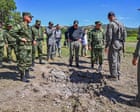
Behind closed doors and through anonymous leaks to outlets like Reuters and CBS News, a different story emerged. An Iranian missile strike on the Muwaffaq Salti Air Base in Jordan actually did connect. It caused material damage to American military aircraft, exposing the messy friction between official political messaging and operational facts on the ground.
Breaking Down the Muwaffaq Salti Strike
Muwaffaq Salti Air Base isn't just another dusty outpost. It serves as a vital logistics and air operations hub for American forces deployed across West Asia. When the ballistic missiles targeted the facility, the defense systems didn't catch everything.
A U.S. official later confirmed that the strike inflicted specific, measurable damage. An A-10 Thunderbolt II—the legendary Warthog—was left with a missing wing, rendering it out of commission. Roughly eight F-15 fighter jets sustained lighter damage before technicians managed to patch them back into service.
These aren't minor scratches. They are multi-million-dollar assets sitting in a theater of war where every single hull matters.
The Politics of Denial
Why did American officials initially deny or minimize the impact? Simple optics. Admitting that an adversary's missile made it past defenses to chew up frontline fighter jets creates immediate political pressure. It invites awkward questions about air defense readiness, interceptor inventories, and regional vulnerabilities.
President Donald Trump asserted that no such damage occurred, attempting to project absolute security. But when anonymous defense officials contradict the commander-in-chief to reporters, it highlights a deep communication fracture. You see the same pattern across modern conflicts: political leaders want to project strength through total denial, while military personnel deal with the messy reality of equipment loss.
The Broader Air Defense Crunch
This single strike in Jordan highlights a much larger problem that defense analysts have warned about for months. Interceptors are running low.
When the Islamic Revolutionary Guard Corps targets regional shipping or U.S. warships, American batteries burn through expensive stock at an unsustainable rate. Estimates from groups like the Center for Strategic and International Studies indicate that a vast majority of U.S. Patriot interceptors were expended during the early months of the current conflict.
Firing thirty Patriot interceptors to counter a single wave of incoming threats drains the cupboard. When supplies dwindle, even a partially successful missile strike carries heavy consequences because replacement timelines stretch for years, not weeks.
What Happens Next in the Region
The clash in Jordan is part of an escalating loop. U.S. forces respond to attacks on shipping lanes by striking Iranian assets, Tehran retaliates with ballistic missiles, and regional airspaces turn into battlegrounds. Jordan's military previously reported intercepting dozens of stray or targeted ballistic missiles entering its airspace, showing that neighboring nations are caught directly in the crossfire.
If you are watching the Middle East right now, stop listening to the press releases. Look at the logistics, track the interceptor stockpiles, and watch how military planners adapt when assets take direct hits. The narrative will always spin the damage away, but the physical wreckage in the hangars tells the real story.