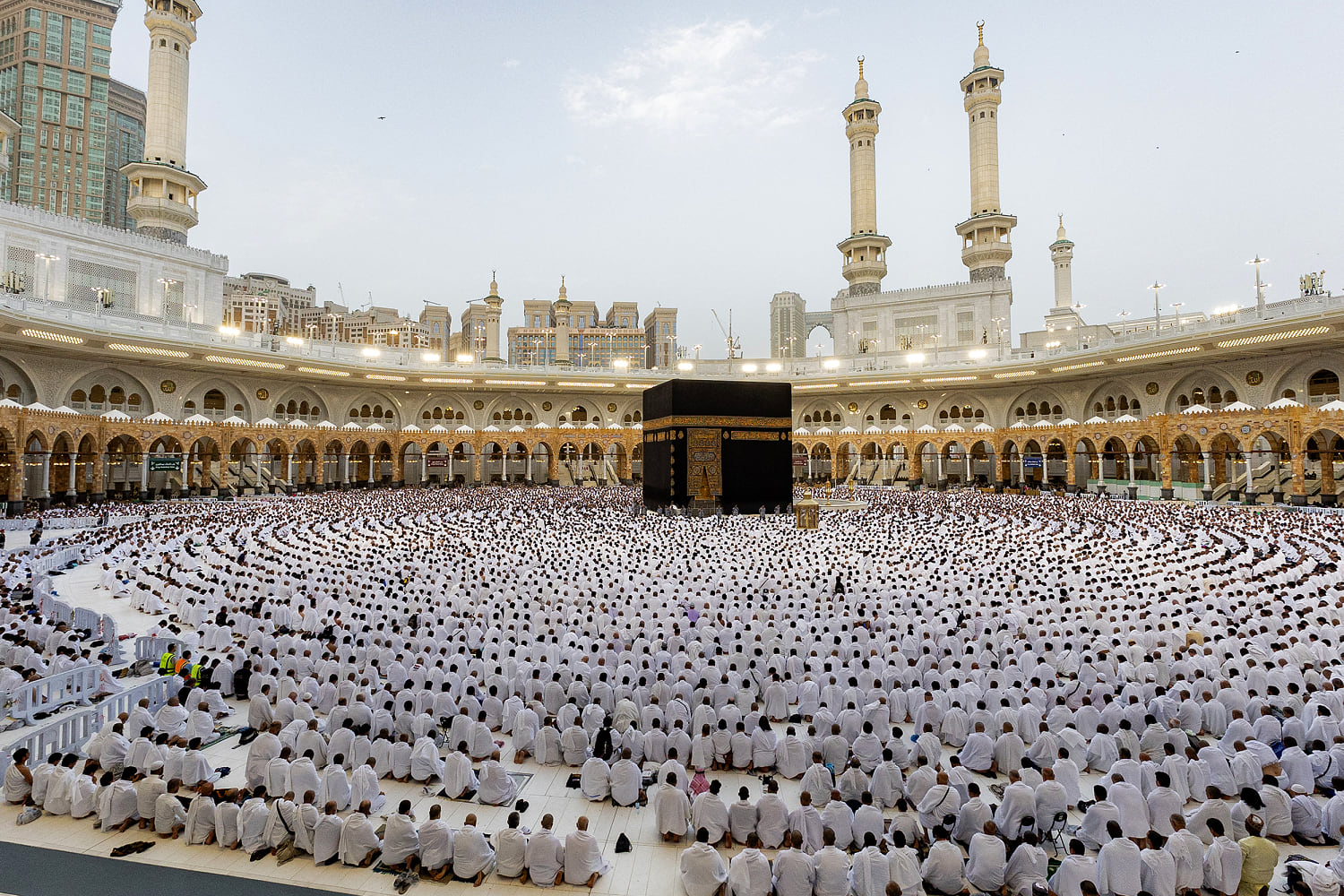
When air defenses track a projectile heading directly toward Islam's holiest sanctuary, geopolitical calculations change instantly. Saudi Arabia's recent declaration that Mecca represents an absolute red line isn't diplomatic rhetoric. It signals a severe escalation point in a regional conflict that has already pushed Brent crude past $108 a barrel and rattled global energy markets.
The Saudi-led coalition announced it intercepted a drone targeted at the holy city, though Houthi leadership in Yemen flatly denied involvement. Regardless of denials, the psychological and strategic impact of the event reverberates from Riyadh to Washington. Let's look at why this specific flashpoint threatens to shatter whatever fragile containment remains in the Middle East.
Beyond Oil Fields and Chokepoints
Most conflict analysis focuses purely on crude flows, maritime shipping lanes, and export terminals like Ras Tanura. Oil prices and diesel costs spike because pipelines and tankers face constant threats. Yet attacking or even appearing to target Mecca introduces an entirely different dimension of risk.
Mecca holds profound spiritual significance for over a billion Muslims worldwide. For the Saudi monarchy, which derives its core legitimacy in part from serving as the Custodian of the Two Holy Mosques, a direct threat to the city crosses an existential boundary. Riyadh cannot absorb such attacks quietly. A response to a threat against Mecca carries religious and political imperatives that economic policy calculations simply cannot override.
The Washington Calculus and Diplomatic Posture
The White House finds itself walking a tightrope. President Donald Trump noted publicly that Houthi representatives indicated through backchannels that they want to avoid a direct fight with the United States, while expressing confidence that regional tensions would smooth out. At the same time, Vice President JD Vance warned about the mounting risks of a broader energy crisis as disruptions plague both the Strait of Hormuz and the Bab al-Mandab strait.
Washington has maintained open communication channels with Saudi leadership and regional actors, offering intelligence support without committing to heavy ground engagements. Yet relying on backchannel assurances while crude prices surge and supply routes remain vulnerable leaves little room for error.
What Happens Next for Regional Stability
The dynamic on the ground in Yemen and surrounding waters remains volatile. Riyadh's air campaigns continue alongside Houthi claims of strikes on military and energy infrastructure. When red lines are drawn around holy sites, the threshold for massive military retaliation drops to near zero.
Watch the frequency of coalition air operations and shifts in European and Asian energy importing strategies. If diplomatic guardrails fail completely, the localized war in Yemen will merge entirely into a broader Gulf conflagration with global economic consequences.
Houthis Threaten Mecca as Oil Crisis Explodes (Condensed)
This video provides an on-the-ground look at the strategic implications of the recent drone interception near Mecca and the resulting shockwaves across global oil markets.