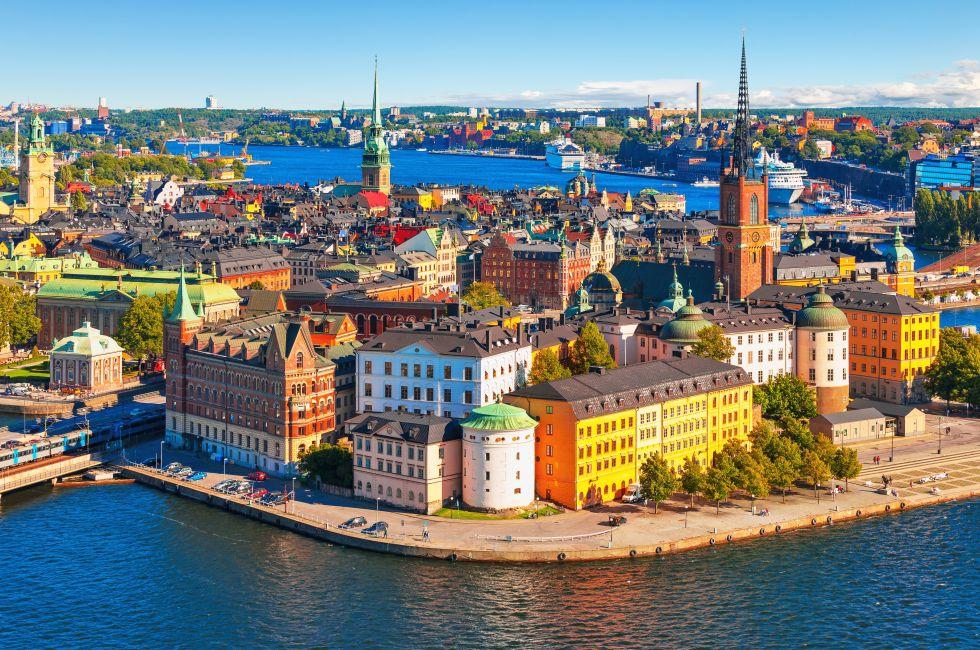
Swedish politics moves fast. Prime Minister Ulf Kristersson just handed in his resignation following a general election where his right-wing bloc lost a razor-thin parliamentary majority to the left-wing opposition.
If you glance at the numbers, the shift looks microscopic. The four left-wing opposition parties secured 176 seats in the 349-member Riksdag, while the four parties backing Kristersson’s government managed 173 seats. Just about 50,000 votes separated the two political camps in a nation of roughly 10.6 million people. Yet that tiny margin is enough to upend Stockholm's power balance and force a complicated government formation process.
The Math Behind the Power Shift
Elections in Sweden rarely yield sweeping blowouts. The country operates on a proportional representation system that practically guarantees coalitions, minority governments, and intense parliamentary math.
This time, Magdalena Andersson’s centre-left Social Democrats finished as the largest single party, spearheading an alliance that includes the Left Party, the Greens, and the Centre Party. Securing 176 seats gives them the bare minimum three-seat cushion needed for a majority, but winning the vote was actually the easy part. The real headache starts now.
Kristersson explicitly noted the messy landscape left behind by the campaign trail. In his resignation letter to the speaker of parliament, he pointed out that pre-election promises and red lines drawn by various left-leaning factions could create massive hurdles for any stable coalition. By stepping down immediately, he handed the baton to the speaker to kick off formal talks, letting caretaker ministers hold down the fort while the left tries to piece together a functional administration.
Why Forming a Government Will Be Brutal
Anyone who thinks Magdalena Andersson has an easy path ahead hasn't been paying attention to Sweden's internal party friction.
The left bloc is an uneasy marriage of convenience. Take the Centre Party, for instance. They have already made it clear they refuse to support any government that hands actual cabinet posts to the Left Party. Meanwhile, the Left Party is demanding ministerial representation to justify their support to their own voters.
Bridging that gap means Andersson has to negotiate across deep ideological divides. On economic policy, social spending, and administrative reform, the Greens, the Left, and the Centre pull in very different directions. If those internal contradictions snap, Sweden could face weeks or even months of political paralysis—reminiscent of the record 134 days it took to form a government back in 2018.
The Broader European Ripple Effect
Beyond Sweden's borders, the vote caught the attention of leaders across Europe. Spanish Prime Minister Pedro Sanchez quickly welcomed the outcome, framing it as a vital win for social democracy after years featuring right-wing governance intertwined with nationalist factions.
Yet, looking closely at the data shows that Sweden's political terrain remains fractured. Even though the left secured the win, the Social Democrats actually recorded some of their lowest historical support metrics, and the far-right Sweden Democrats—despite losing some ground and parliamentary seats—remain a massive force in national discourse after years of commanding the political conversation on crime, integration, and security.
The speaker of parliament now holds the cards, initiating round-table consultations with party leaders. Parliament can vote on a new prime minister as early as September 29, but whether that vote brings stability or just another fragile compromise remains entirely up in the air. Watch the internal negotiations between the Centre and Left parties closely. That is where this entire government will either survive or collapse.