When we think of a Supreme Court justice, we usually picture them sitting in quiet, black-robed contemplation, insulated from the chaos of modern politics. But the reality of being a justice today looks less like a quiet chamber and more like a tactical defense operation.
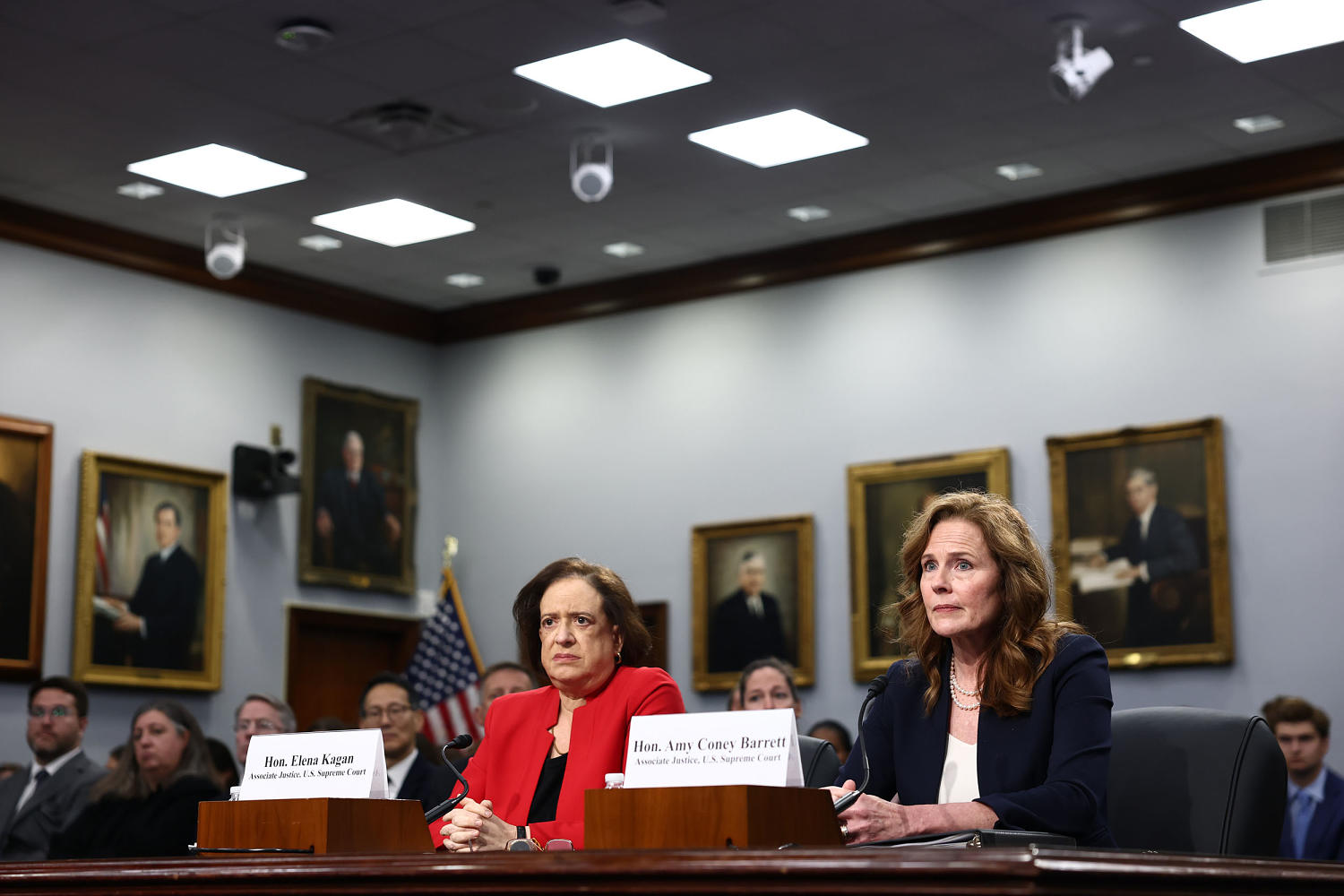
Take the testimony of Justice Amy Coney Barrett. During a rare, highly anticipated appearance before a House appropriations panel on Tuesday, Barrett peeled back the curtain on what it's like to raise a family while serving on the nation's highest court. The details she shared should worry anyone who cares about the independence of our legal system.
She recalled having to wear a bulletproof vest home a few years ago. Think about that for a second. How do you explain to your 12-year-old child why you're wearing body armor just to walk through your own front door?
"I didn't expect that performing this service was going to put me in the position of explaining to my children what a bulletproof vest was and why I had to wear one," Barrett admitted to lawmakers.
But body armor isn't the only issue. Just six weeks ago, Barrett’s home was targeted by a fake "swatting" call. Her teenage son opened the front door only to see police cruisers lining their street in response to a hoax report of gunshots and screaming. Thanks to the Supreme Court Police already stationed at her residence, local authorities quickly realized it was a false alarm. Still, the psychological toll of these incidents on a family is immeasurable.
Inside the High Stakes Push for More Funding
Barrett and Justice Elena Kagan didn't climb Capitol Hill just to share terrifying personal anecdotes. They came with a clear budget request: the Supreme Court needs more money, and it needs it immediately.
The court is asking Congress for $228 million for the upcoming fiscal year. That represents a 10% jump from the previous year. When you look closely at where that money is going, the priorities are crystal clear:
- $14.6 million is earmarked to expand personal protection details for the justices. This expansion would add six more agents for each member of the court.
- $2 million would fund a new, off-site residential security post. This post is designed to coordinate emergency responses much faster and boost the rank of the Supreme Court's in-house police force.
- $6.5 million is slated for a brand-new physical screening facility for visitors. This would sit entirely outside the main historic building, mirroring the security setup at the U.S. Capitol Visitor Center.
- $2.3 million is requested for upgraded cybersecurity to counter online threats and hacks.
Currently, each justice is protected by a team of four to eight officers. But as threats escalate, those numbers are constantly stretched to their limits. Kagan noted that the Supreme Court Police expects a massive 38% surge in threats targeting the court in 2026 alone.
This Isn't Just a Supreme Court Problem
While the high-profile justices make the headlines, the safety crisis stretches far deeper into the federal judiciary. The threat landscape has grown increasingly hostile for judges of all stripes.
According to the U.S. Marshals Service, there was a staggering 57% spike in "security incidents of significant concern" targeting federal judges in fiscal year 2025. A recent analysis also found that over 120 federal prosecutions in 2025 involved threatening communications, with a dozen of those cases directly targeting members of the judiciary.
We can trace the sharpest inflection point of this crisis back to 2022. Following the leak of the draft opinion that ultimately overturned Roe v. Wade, the atmosphere turned electric. Not long after, a man armed with weapons and tactical gear was arrested near Justice Brett Kavanaugh’s home, later admitting he planned to assassinate the justice.
Since then, the danger hasn't dissipated; it has simply morphed into a steady stream of harassment and digital intimidation. Last year, Barrett's own sister was the target of a bomb hoax in South Carolina. It's a continuous, coordinated pressure campaign that targets not just the public figures, but the people they love most.
What Happens When Safety Threatens Judicial Independence
When judges are forced to look over their shoulders, the core of our legal system is at risk. It doesn't matter where you fall on the political spectrum. If a conservative justice is targeted by left-wing extremists, or a liberal judge is threatened by right-wing agitators, the result is the same: the erosion of rule of law.
Kagan summed up the internal ethos of the court quite simply: "All of us live with the knowledge that [threats] may again materialize. But... all members of the court continue to do their jobs as they believe legally right, adjudicating cases without fear or favor."
It's a noble sentiment, but we shouldn't force our judges to test their physical courage just to do their jobs. If our system of government relies on a judiciary that is independent of public pressure and physical intimidation, then keeping these public servants safe isn't a luxury. It's a basic operational requirement.
Thankfully, Congress seems to agree across the aisle. Rep. David Joyce, a Republican from Ohio who chairs the key House subcommittee, made it clear that judicial officers "must be able to do their jobs without fear for their safety." Rep. Steny Hoyer, the top Democrat on the panel, echoed the sentiment, pointing directly to our "deeply divided country and increasingly violent rhetoric."
The Immediate Path Forward
This budget isn't a cure-all, but it's a necessary shield. If you want to see how we protect the integrity of the courts moving forward, keep an eye on these critical steps:
- Fast-Track the Appropriations Bill: Congress must approve the $14.6 million increase for the Supreme Court Police without letting it get bogged down in partisan budget fights.
- Bolster Local and Federal Coordination: The SWAT incident at Barrett's home was defused quickly because Supreme Court Police were on-site to coordinate with local dispatchers. Expanding these communication channels to all federal judges' residential areas is vital.
- Hold Bad Actors Accountable: Federal prosecutors must continue to aggressively track down and prosecute those who make threats or weaponize fake emergency calls. If there are no real consequences for swatting a judge, the behavior will only get worse.
Ultimately, a democracy cannot function if its highest judges are forced to live like targets in a conflict zone. Securing the court isn't about politics—it's about survival.