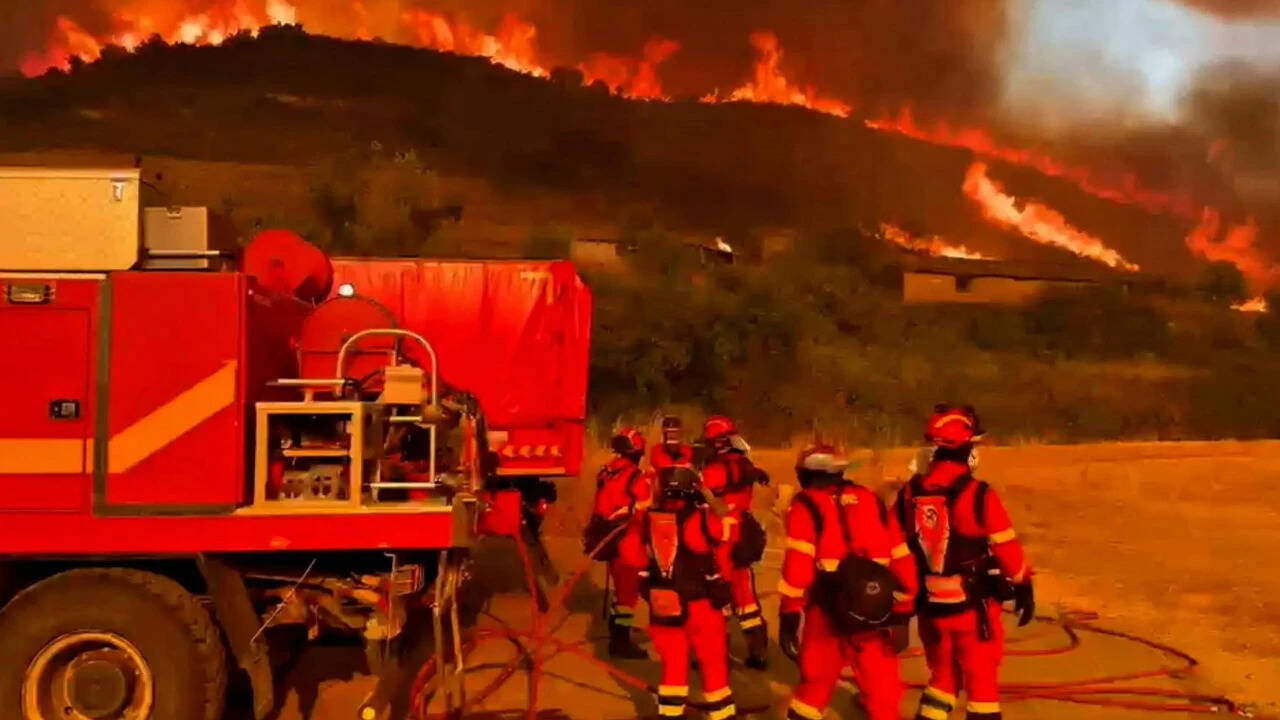
Spain is burning again, and if you think this is just another typical summer flare-up, you're missing the bigger picture. Over 16,000 hectares of land have already been reduced to ash in the northeastern region of Aragon. More than 1,100 people had to abandon their homes as the country's largest wildfire of the year tore through the Cinco Villas region in Zaragoza.
It looks like chaos. It looks like a sudden disaster. But the truth is harsher. This environmental nightmare was entirely predictable.
When a single fire spreads across a 60-kilometer perimeter and forces the evacuation of multiple municipalities across Zaragoza and neighboring Navarre, it isn't just bad luck. It's the result of a dangerous cocktail of changing weather patterns, shifting winds, and decades of structural neglect in rural management. Firefighters are working around the clock to contain the blaze, but the conditions on the ground show exactly why Europe is losing the battle against extreme summer fires.
Inside the Zaragoza Fire Ground
The crisis kicked off in the Cinco Villas region. Within hours, the fire mutated from a localized brush fire into a fast-moving wall of flames driven by shifting, unpredictable winds. This isn't a simple wall of fire that crews can just line up and block.
Luis Biendicho, the regional minister of environment and tourism, highlighted the core issue facing emergency crews. The wind simply won't cooperate. It keeps shifting directions, turning what was once a safe flank into a dangerous new frontline. When the wind changes every few hours, traditional containment strategies fall apart.
Emergency responders deployed roughly 400 ground personnel and 19 aircraft to tackle the main front. Crews spent terrifying nights focusing almost entirely on defensive actions, trying to save homes in municipalities like Uncastillo. While electricity has finally been restored to the affected towns, the structural damage to the surrounding agricultural land and ecosystems will take decades to fix.
The Green Trap of a Rainy Spring
Everyone loves a wet, green spring. It feels like a shield against summer drought. In reality, it sets a perfect trap.
Heavy rainfall earlier in the year caused a massive explosion of undergrowth and grasses across northern Spain. When the inevitable early summer heatwaves hit, all that beautiful green vegetation died out and dried up. It turned into perfect, highly combustible kindling.
When you combine that dense carpet of dry fuel with low humidity and temperatures pushing past normal limits, you get fires that don't just burn. They explode. The fire in Cinco Villas moved so fast that residents in six different municipalities barely had time to pack a single bag before the evacuation orders came down.
A Multifront Crisis Across Spain
Zaragoza isn't fighting this battle alone. Spain is currently dealing with multiple major outbreaks that are stretching emergency resources to their absolute limits.
In Guadalajara, another aggressive wildfire near La Mierla scorched around 900 hectares, forcing immediate lockdowns and local evacuations. The situation became so volatile that regional authorities had to call in the Military Emergency Unit. This specialized branch of the Spanish Armed Forces sent 100 soldiers just to keep the flames away from populated villages.
Closer to the capital, a third fire broke out near Lozoyuela, north of Madrid. While smaller at around 70 hectares, its proximity to major infrastructure caused immediate panic. Law enforcement ended up arresting a man suspected of starting that specific blaze. It highlights a dark truth about the wildfire crisis. Nature creates the perfect conditions, but human error or malice often pulls the trigger.
The Real Problem Nobody Wants to Face
We hear a lot about climate change during these crises. Yes, global temperature spikes play a massive role. But blaming climate change alone is a lazy cop-out that ignores a massive policy failure: rural abandonment.
Over the last few decades, Spain's interior has emptied out. Younger generations move to cities, leaving small villages abandoned. When people leave, traditional land management disappears.
Shepherds used to clear the undergrowth naturally with livestock. Local farmers cleared dead wood to use as fuel. Now, those forests are completely unmanaged. They have become overgrown powder kegs waiting for a spark. Without regular, human-led maintenance on the ground, no amount of high-tech firefighting aircraft can stop these blazes once they find a rhythm.
What Needs to Change Immediately
Fighting fires reactively is a losing game. Throwing hundreds of millions of euros at bigger helicopters and more water bombers won't solve a systemic land crisis. The strategy has to pivot toward aggressive, proactive preparation.
Redefining Fire Breaks
Traditional fire breaks are often too narrow to stop modern, wind-driven wildfires. Flying embers can easily jump a standard clearing. Spain needs wider, strategically placed buffer zones around rural towns, utilizing fire-resistant vegetation and managed grazing lands to slow down advancing fronts.
Reviving Rural Economies
Governments need to incentivize people to return to rural land management. Subsidizing managed goat and sheep grazing in high-risk forest zones is vastly cheaper than deploying the military every time a hill catches fire.
Overhauling Evacuation Protocols
With fires moving faster due to extreme dryness, community-level preparation is non-negotiable. Rural residents need clear, practiced exit routes and neighborhood-specific warning networks that don't rely solely on localized mobile infrastructure, which frequently fails when towers burn down.
Check the local fire risk maps before traveling through rural southern Europe during peak summer. Keep a basic emergency kit in your vehicle, and never ignore early evacuation warnings from local civil protection agencies. Waiting to see the smoke with your own eyes is usually a fatal mistake.