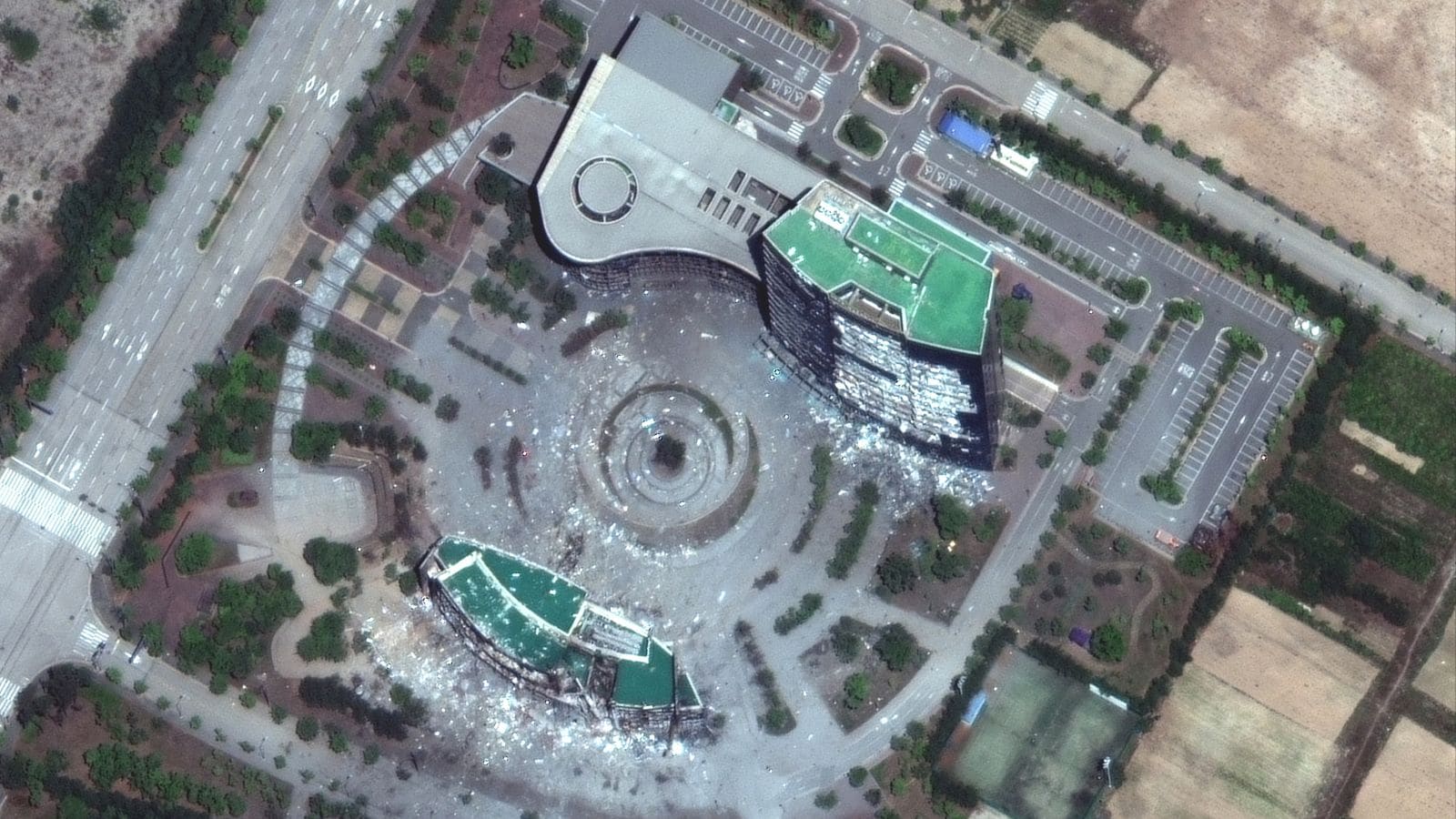
A Seoul court just handed down a massive financial judgment against Pyongyang. You're looking at a 44.6 billion won price tag—roughly $32.5 million—ordered to be paid by North Korea for the dramatic 2020 demolition of the joint liaison office in Kaesong. It sounds like a historic win. Honestly, it's basically an empty paper victory.
If you dig into the mechanics of this lawsuit, you realize it represents uncharted legal territory. The South Korean government took the unprecedented step of suing its northern neighbor directly. Yet, holding a court order and actually collecting the cash are two completely different things.
The Anatomy of a Symbolic Lawsuit
Back in June 2020, rising anger over anti-Pyongyang propaganda leaflets sent across the border via balloons boiled over. Kim Yo-jong warned that the joint liaison office would soon collapse. Days later, explosives leveled the four-story building in the border town of Kaesong.
Seoul’s Unification Ministry filed the damages claim in June 2023. The total amount demanded wasn't pulled from thin air. It combined 10.25 billion won for the liaison office structure itself with 34.45 billion won for an adjacent general support center that suffered heavy collateral damage during the blast.
The Seoul Central District Court granted the full amount. But because Pyongyang didn't participate or acknowledge the proceedings, the court had to rely on service by public notice. North Korea simply ignored it.
Can Seoul Actually Collect the Money?
Short answer? No.
There's no realistic mechanism to force Pyongyang to wire $32.5 million to Seoul. Past civil lawsuits brought by individual South Korean citizens against the North over human rights abuses or wartime grievances hit the exact same wall. You can win the argument in a courtroom, but you cannot seize assets that don't exist within your jurisdiction.
So why bother filing the suit in the first place?
Governments use legal actions to establish official records. By taking North Korea to court, Seoul formally codified the destruction as an unlawful, violent act that breached bilateral agreements. It creates an institutional baseline for future administrations, signaling that property destruction carries a documented cost, even if payment remains elusive.
What Happens Next on the Peninsula?
Tensions fluctuate constantly along the world's most heavily fortified border. Current leadership in Seoul has signaled a preference for renewed dialogue, even as Pyongyang cold-shoulders overtures.
Don't expect North Korea to write a check anytime soon. Instead, view this ruling for what it truly is: a loud diplomatic statement wrapped in legal paperwork.
North Korea ordered to pay Seoul $32.5 million for blowing up office
This video provides an overview of the recent Seoul court ruling ordering Pyongyang to pay $32.5 million for the 2020 liaison office demolition.
http://googleusercontent.com/youtube_content/1