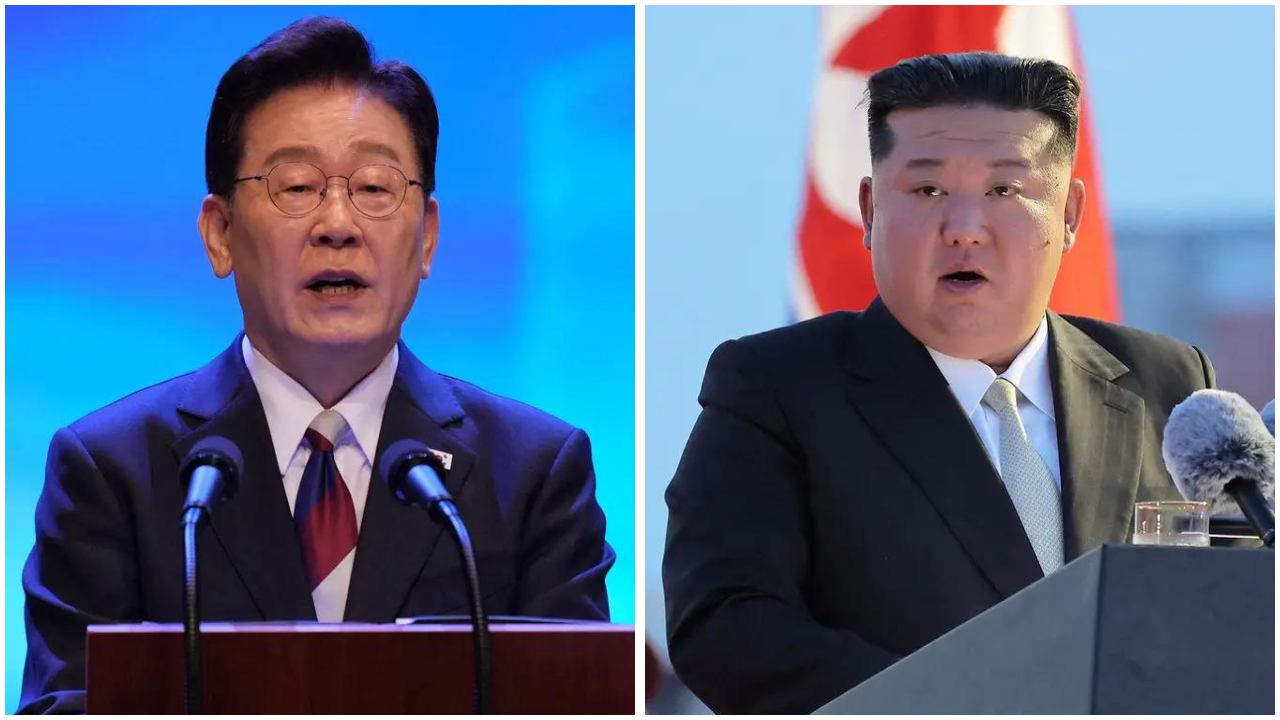
South Korean President Lee Jae Myung wants to rewrite history. During a speech commemorating the 81st Liberation Day in Seoul, Lee urged Pyongyang to drop its hostile posturing and start direct discussions to formally close the book on the 1950-53 Korean War.
It sounds simple on paper. In reality, it is a diplomatic uphill battle.
The Korean War never technically ended. It stopped with an armistice, not a peace treaty, leaving both sides staring across one of the most heavily fortified borders on earth for over seven decades. Lee is pushing to swap that unstable ceasefire framework for a permanent peace regime.
What Lee Actually Proposed
Speaking at the Sejong Center in Seoul, Lee laid out a direct challenge to the North. He asked leadership to put down mutual threats and sit down as direct parties to the conflict.
The pitch goes beyond just a symbolic peace declaration. Lee noted that these talks could tackle practical measures to halt the expansion of North Korea's nuclear arsenal.
His administration is offering a clear trade-off:
- Respect for Pyongyang's existing political system.
- No attempt to force reunification by absorption.
- A firm promise to halt hostile acts from the South.
Seoul wants to replace confrontation with a multi-layered security layout designed to prevent accidental military escalation.
Why Pyongyang Is Ignoring the Phone Calls
If the offer sounds reasonable, you might wonder why North Korean leader Kim Jong Un hasn't jumped at the chance.
The short answer is that Pyongyang isn't interested right now. Kim has fundamentally shifted North Korea's long-term strategy. He has officially abandoned the historic goal of peaceful reunification, rewritten policy to label the South as his country's primary adversarial threat, and ordered frontline defenses reinforced.
Every olive branch Seoul has extended since Lee took office has hit a brick wall. North Korea has completely ignored the overtures, choosing instead to double down on military alignment with Moscow.
Intelligence reports show Pyongyang supplying ammunition and troops to support Russia's war in Ukraine. In return, analysts point out that North Korea is receiving vital financial lifelines, food, energy supplies, and critical military technology from Russia. Why talk to Seoul about nuclear caps when you are securing backing from a major global superpower?
The Shadow of Military Drills
Timing is everything in geopolitics, and Lee's latest push comes right on the doorstep of annual joint military exercises between the United States and South Korea.
North Korea views these multi-day drills as an invasion rehearsal. Washington currently keeps roughly 28,500 troops stationed in South Korea as part of its ongoing security pact. Military officials note that North Korean troops returning from deployment alongside Russian forces have brought fresh combat lessons back to the peninsula, making the threat landscape even more volatile.
Seoul is walking a tightrope. It maintains overwhelming conventional military deterrence while simultaneously pleading for dialogue.
Where Diplomacy Goes From Here
You cannot force a partner to the negotiating table who refuses to pick up the phone. Lee's strategy relies on persistence and creating structural safety nets that lower the temperature over time.
The path forward depends entirely on whether international pressure or economic strain eventually forces Pyongyang to rethink its isolationist posture. Until then, South Korea's leader is keeping the door open, betting that peace remains cheaper than the alternative.