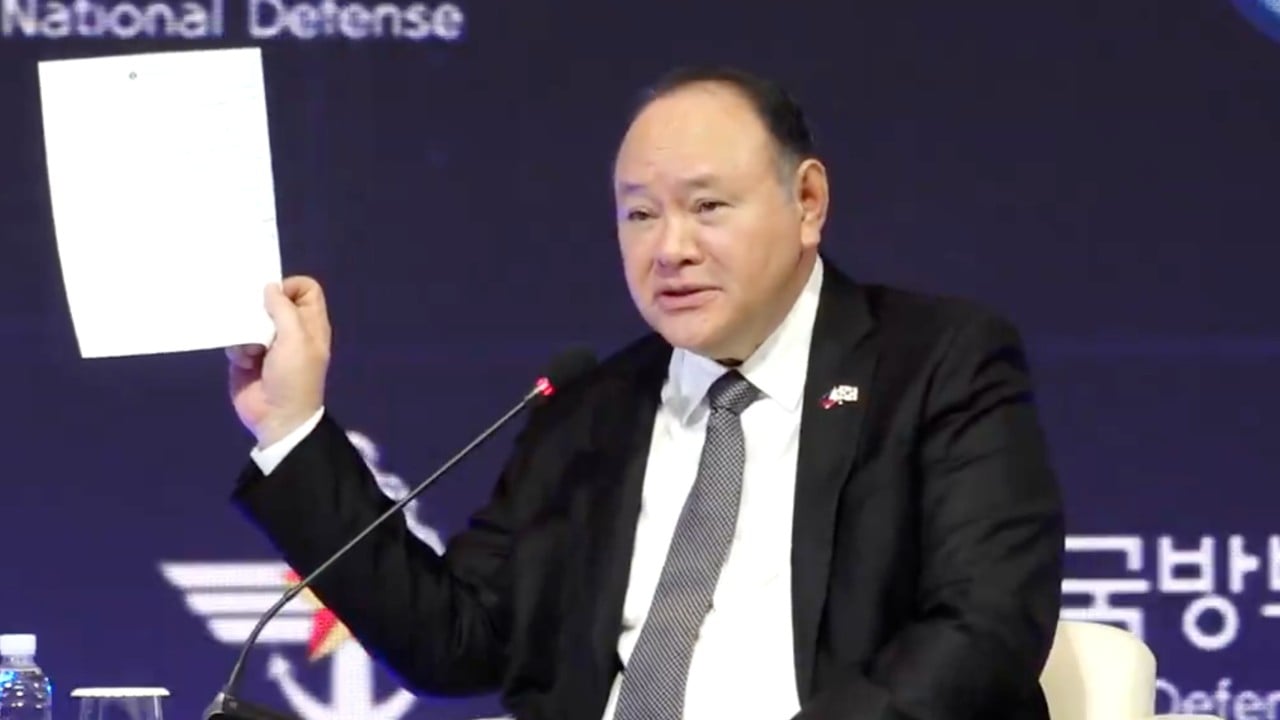
Diplomatic friction rarely offers good theater, but a security forum in South Korea delivered a masterclass in modern geopolitical showdowns. Philippine Defense Secretary Gilberto Teodoro did something unexpected on live international television. He pulled out a secret diplomatic note handed to him by a Chinese military attaché mid-speech, read it aloud line by line, and dismantled Beijing's arguments in real time.
China hit back accusing Manila of lying and grandstanding. Yet, this high-stakes standoff exposes a deeper truth about the shifting power dynamics in the South China Sea. If you want to understand why tensions are nearing a boiling point, look past the public statements and examine how back-channel tactics are blowing up in public.
What Happened on Stage in Seoul
The setting was the Seoul Defense Dialogue. Teodoro was taking questions during a panel session discussing stability and regional order. A forum organizer approached the podium and handed him a handwritten memo originating from a military attaché at the Chinese embassy.
Instead of pocketing the note quietly, Teodoro looked at it, realized its source, and decided to share it with the room. The memo reiterated Beijing's long-standing rejection of the 2016 international arbitration ruling, which had invalidated China's sweeping historic claims under the nine-dash line. The note declared the tribunal's award "illegal, null and void."
Teodoro didn't flinch. He fired back immediately, pointing out that rejecting a binding tribunal decision under the United Nations Convention on the Law of the Sea simply because you lost amounts to trampling on international law. He labeled the maneuver actual coercion, bullying, and aggression, turning a private diplomatic jab into an open public indictment.
Beijing's Reaction and the Battle of Narratives
Chinese foreign ministry spokeswoman Mao Ning wasted little time responding, urging Philippine officials to stop grandstanding and lying. Beijing's frustration is obvious. When a sitting defense minister exposes private maneuvers on a global stage, it disrupts the carefully scripted narrative that diplomatic channels are quietly managing regional disputes.
For months, confrontations between Chinese and Philippine coastguard vessels near contested reefs and shoals have escalated. Ships have traded water cannon blasts and blockades, fueling fears that a minor collision could trigger the US-Philippines mutual defense treaty. By broadcasting the note, Manila signaled a shift in strategy. They're done playing defense behind closed doors. They are taking the friction straight to the international community.
The Cost of Publicly Exposing Diplomatic Pressures
Calling out aggressive behavior publicly comes with immediate consequences. Beijing had already placed sanctions on Teodoro, targeting him for previous outspoken criticisms. Airing grievances openly hardens positions on both sides, making compromises much harder to achieve through traditional diplomatic channels.
Yet, for smaller nations navigating maritime disputes against a regional superpower, silence often gets interpreted as weakness. By treating the memo as a physical memento of desperation rather than a warning, Manila is betting that international visibility offers a better shield than quiet compliance.
The fallout from Seoul proves that the battle for the South China Sea isn't just fought with coastguard cutters and water cannons. It is fought with microphones, legal precedents, and the willingness to call out pressure tactics right as they happen.