A 5.5-magnitude earthquake isn’t usually what makes international headlines. In California or Japan, a tremor that size might rattle the coffee cups, trigger a few car alarms, and quickly fade from the local news cycle. But when the ground shook central Peru late Saturday night, the reality on the ground looked vastly different.
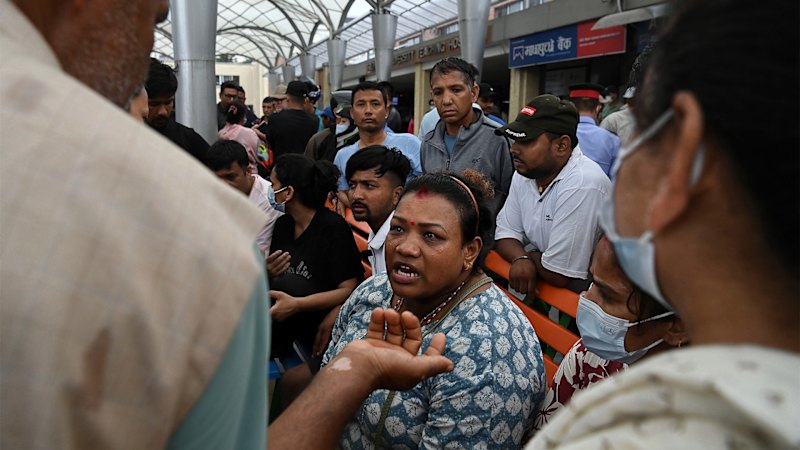
Five people are dead. Dozens are injured, and hundreds have been forced from their homes into the freezing Andean night.
When you look at a seismic map tracker, a 5.5 sticker looks minor. It feels routine. But maps don't capture the fragile architecture of mountain towns, the crushing weight of unreinforced mud brick, or the terrifying physics of a shallow rupture. This wasn't a minor event for the people of Huancayo province—it was a disaster.
The Anatomy of Saturday Night's Quake
The numbers from the U.S. Geological Survey seem straightforward. The earthquake struck at 9:24 p.m. local time, with its epicenter located just two kilometers west-southwest of Sicaya, a city in the agricultural heartland of the Andes.
Epicenter: 2 km WSW of Sicaya, Peru
Magnitude: 5.5
Depth: 10 kilometers
Fatalities: 5 confirmed
Displaced: 300+ residents
Two critical factors turned this moderate tremor into a lethal event: depth and location.
The rupture occurred a mere 10 kilometers below the surface. In seismology, depth is everything. When an earthquake is deep—say, 100 kilometers down—the earth's crust acts like a massive shock absorber, soaking up energy before it hits the surface. When a quake strikes at a depth of just 10 kilometers, there is no buffer. The seismic waves hit the surface with raw, concentrated violence.
Worse, the epicenter sat right beneath populated agricultural districts. Towns like Chongos Bajo and Chupaca took the brunt of the kinetic energy. The shaking didn't have to travel far to find targets.
Why the Andes Crumble Under Moderate Tremors
If you walk through the historic streets of Chongos Bajo, you see why a 5.5-magnitude quake can kill. The issue isn't the tectonic force alone; it's what happens when that force meets human engineering.
Local officials point directly to adobe construction as the primary culprit behind the structural failures. For centuries, communities throughout the Andes have built homes using sun-dried mud bricks mixed with straw. It's cheap. It keeps out the mountain cold. It's traditional.
But adobe is heavy, brittle, and possesses virtually zero tensile strength.
When the ground moves horizontally during a shallow earthquake, an adobe wall cannot flex. It cracks instantly. Once the walls fracture, the heavy mud-and-tile roofs collapse straight down. This creates a vertical crushing hazard that traps residents before they can escape their doorways.
Images broadcast by local media outlets tell a grim story. Families huddled under heavy blankets in the freezing Andean night air, watching rescue teams pick through mounds of crumbled dirt where their living rooms used to be. Historic local churches and ancient convents—the cultural anchors of these communities—lie partially ruined, their thick walls split wide open. Even livestock remained trapped under the heavy debris.
Living on the Ring of Fire
Peru is no stranger to seismic activity. The country sits squarely on the Pacific Ring of Fire, an arc of intense volcanic and seismic activity wrapping around the Pacific Ocean.
Off the coast of Peru, the Nazca tectonic plate is grinding eastward, shoving its way beneath the massive South American plate. This process, called subduction, forces the Andes Mountains upward. It also builds up unimaginable amounts of stress within the earth's crust.
[ Nazca Plate ]  ======>  shoves beneath  ======>  [ South American Plate ]
                                                    (Result: Andes Uplift & Shallow Faults)
Most people associate Peru's seismic risk with massive coastal mega-thrust earthquakes, like the catastrophic 7.9-magnitude quake that devastated Pisco in 2007 and killed nearly 600 people. Those giant quakes occur along the oceanic plate boundary.
What gets overlooked are the internal, shallow continental faults running directly through the mountain chain itself. These faults don't produce magnitude 8 disasters, but they trigger smaller, localized ruptures right beneath vulnerable mountain towns. When a fault snaps ten kilometers below a town built of mud and straw, you don't need a mega-quake to cause tragedy.
The Immediate Crisis and Next Steps
The focus in Huancayo province has shifted to search, rescue, and basic survival. Peru's National Civil Defense Institute deployed emergency teams to the region to locate the missing, clear blocked mountain roads, and assess unstable buildings.
Power grids failed across several districts immediately after the shaking stopped, leaving rescue workers to comb through unstable rubble by flashlight and emergency generators. Widespread displacement means hundreds of people need immediate shelter, clean water, and warm clothing to survive the high-altitude winter nights.
If you live in or travel through seismically active regions like the Andes, tracking automated maps isn't enough. Security requires proactive preparation.
- Audit structural vulnerabilities: If you own property in older Andean districts, inspect walls for pre-existing settling cracks. Adobe structures can be reinforced using external wire mesh and specialized plaster, a technique proven to prevent catastrophic collapses during moderate shaking.
- Secure indoor spaces: Heavy furniture, overhead storage, and loosely hung items cause a high percentage of injuries during shallow quakes. Anchor tall shelves to structural studs.
- Establish communication backups: Saturday's disaster knocked out local power grids, disabling standard charging and cellular infrastructure. Keep physical copies of emergency contacts and maintain a battery-powered radio to track civil defense updates when networks go dark.