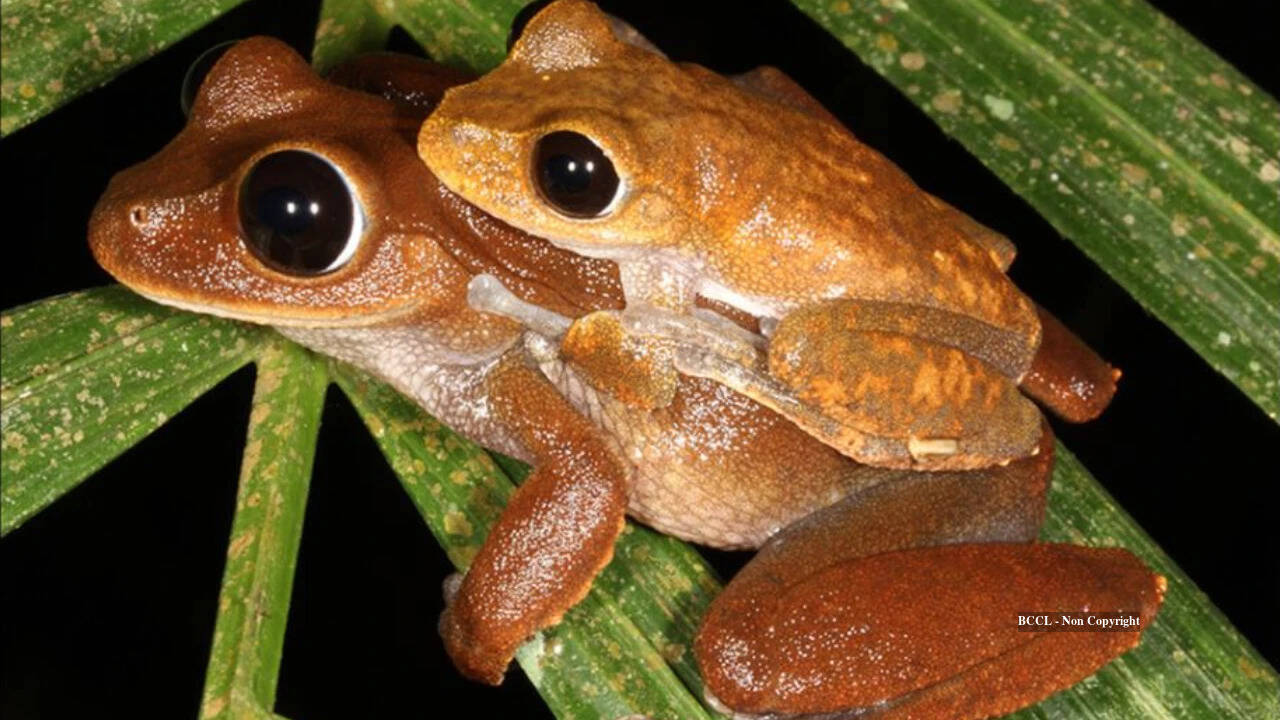
You don't need to spot an animal to know it is still hanging on. For decades, conservationists tramped through the muddy, leech-infested rainforests of Queensland, Australia, straining their ears for the calls of upland frogs that vanished during the devastating chytrid fungus outbreaks of the 1980s and 1990s. Many of those species were written off as local extinctions, hidden away in inaccessible gorges where nobody could verify their status.
That approach is changing fast. A team from James Cook University recently used environmental DNA, or eDNA, to detect threatened rainforest frogs without ever seeing or hearing them. By scooping up water samples from lowland creeks—sometimes up to 22 kilometers downstream from where the animals actually live—they found genetic proof that populations are surviving in places everyone thought were empty.
The Chytrid Crisis That Rewrote Australian Ecosystems
The chytrid fungus tore through Australia's wet tropics after arriving via the international frog trade. It attacks keratin in amphibian skin, making it impossible for them to regulate essential electrolytes. The pathogen hit cool, wet upland areas hardest, wiping out iconic species like the Waterfall Frog and the Lacelid Frog from their historic strongholds by the early nineties.
Traditional surveys left massive gaps. If a creek was too remote, or if the frogs were hiding in tiny numbers under rocks, field researchers simply missed them. It created a frustrating information void. Wildlife managers had to make tough allocation choices without knowing if a species was hanging on by a thread or already gone.
Finding Ghosts Twenty-Two Kilometers Downstream
Led by Dr Cecilia Villacorta-Rath at JCU’s TropWATER, the research team took a radically different path. Instead of climbing upstream waterfalls, they collected water from accessible lowland stream sites in regions like the Daintree Rainforest. Every time a frog moves, feeds, or sheds skin cells, it leaves behind microscopic bits of genetic material.
Modern lab extraction techniques can pick up those minute genetic traces out of a standard water sample. The real surprise of the study was just how far those signals travel. The team successfully detected target frog DNA up to 22 kilometers downstream from the actual populations.
Professor Conrad Hoskin, a co-author on the project, points out that this method completely flips standard ecological survey work on its head. You let the flowing water do the heavy lifting. Instead of scouring every square meter of a drainage basin, you test the runoff.
The Good News and the Reality Check
The results brought genuinely positive surprises. Several endangered frog populations turned out to be far more widespread than historical records suggested, showing signs of bouncing back in waterways where they had not been logged in decades.
Yet, the method also delivered stark warnings. Take the Armoured Mistfrog, a critically endangered species thought completely wiped out until a single population showed up in 2008. When the JCU team ran eDNA tests across historic and prospective surrounding creeks, those other sites came up blank. The data confirmed a sobering truth: that one solitary location is the absolute last stronghold holding the species back from total extinction.
Knowing that fact changes conservation strategy overnight. Instead of spreading resources thin across wide regions, field teams can direct funding and habitat protection straight to the exact creek keeping the Armoured Mistfrog alive.
The Challenges of eDNA Fieldwork
While picking up genetic traces from a water bottle sounds simple, field biology is rarely foolproof. Dr Villacorta-Rath notes that while the sampling protocols are straightforward enough for citizen scientists or Indigenous rangers to use, interpreting the lab data requires precision.
Water temperature, heavy rainfall events, flow velocity, and sample storage methods can all alter DNA detectability. A sudden flash flood can dilute genetic signatures, while warm water can accelerate DNA degradation. Researchers must account for these environmental variables before drawing hard conclusions from a positive or negative sample.
Despite those variables, institutions are already expanding the framework. JCU teams are currently training community volunteers to collect eDNA water samples across Far North Queensland to track broader aquatic biodiversity, including fish, turtles, and freshwater crustaceans.
If you are working in conservation or regional waterway management, the takeaway is clear. Stop relying solely on visual or acoustic counts for elusive aquatic species. Integrating eDNA sampling into routine monitoring cuts survey costs, reaches inaccessible terrain, and gives you an early warning system long before a species vanishes from the map entirely.