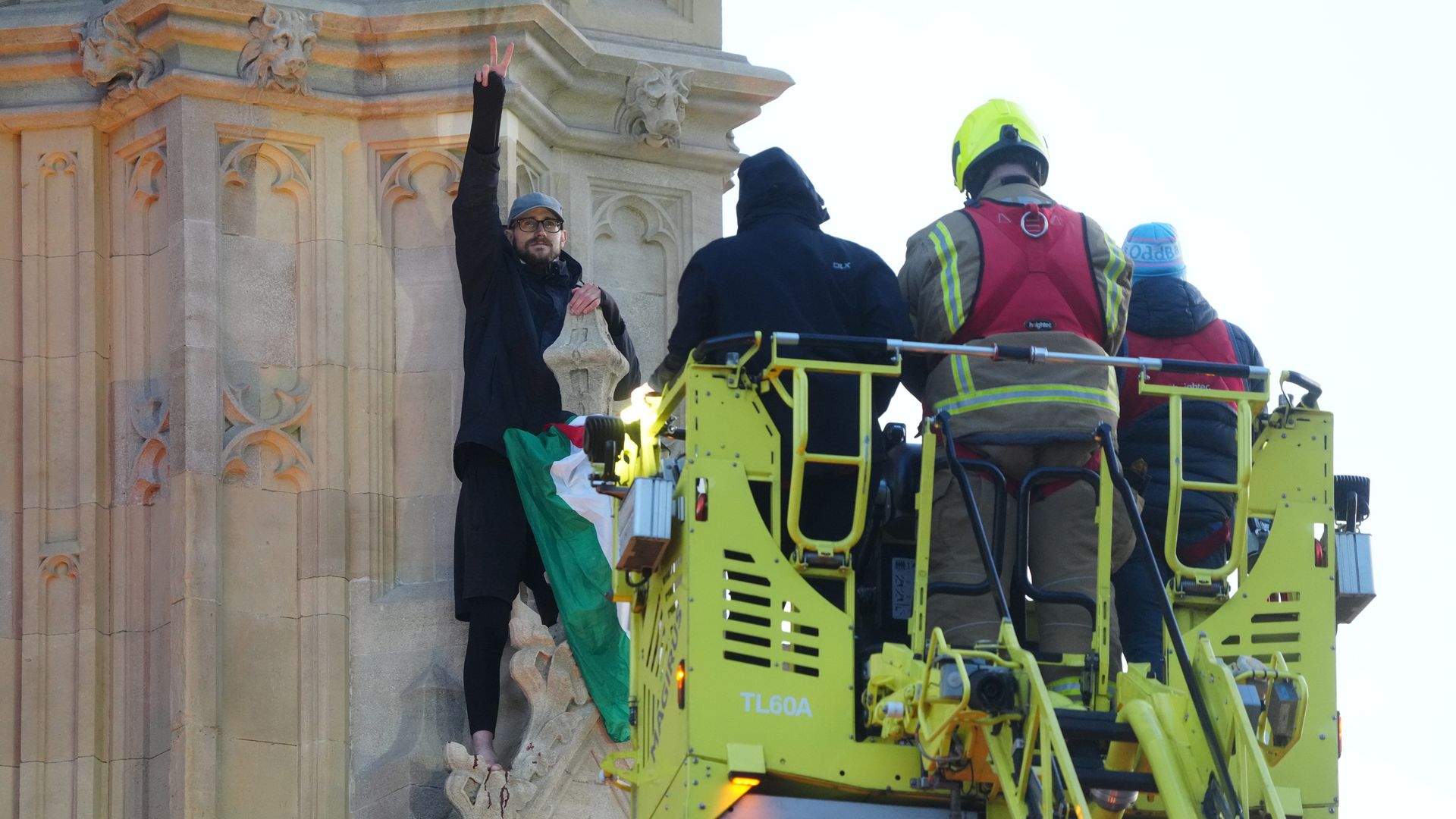
Climbing the Elizabeth Tower isn't your average Sunday afternoon activity. Yet back in March 2025, thirty-year-old Daniel Day decided to scale the iconic London landmark barefoot, carrying a Palestinian flag, and stay perched on a ledge for nearly seventeen hours.
Fast forward to July 2026 at Southwark Crown Court, and Judge Tony Baumgartner handed down a 14-month prison sentence, suspended for two years. Day dodged actual jail time.
Let's look at why this stunt happened, what it cost taxpayers, and why the legal system opted for supervision over a prison cell.
The Cost of a Seventeen-Hour Stunt
You might wonder how someone even manages to climb one of the world's most recognizable and secure structures. Day planned ahead. He researched the recent restoration work on the building, pulled off the climb at roughly 7:20 AM, wore thermal clothing, and carried a camera to livestream his protest on Instagram.
The fallout was immediate and expensive.
- The stunt cost the British taxpayer at least £92,000 due to the massive emergency services response.
- Transport for London took a heavy hit, losing an estimated £25,000 in bus fares as police shut down Bridge Street, Westminster Bridge, and parts of Parliament Square.
- Over 2,500 tourist visits to the Houses of Parliament had to be canceled.
- Police had to place large safety mattresses at the base of the tower because Day was in an intensely precarious position, even dropping blood onto the stonework as his bare feet cut against the harsh exterior.
Instead of coming down when asked, Day livestreamed clips to his followers, arguing with police negotiators and threatening to go higher if anyone approached. He eventually descended around midnight, ending a 16.5-hour ordeal.
Guilty Verdicts and Personal Mitigation
A jury at Southwark Crown Court found Day guilty of intentionally or recklessly causing a public nuisance. He also pleaded guilty to trespassing on a protected site under the Serious Organised Crime and Police Act.
During the trial, prosecutors pointed out that Day thrived on the attention of crowds gathering in Parliament Square, playing to an audience while shouting slogans.
So why didn't he go straight to prison?
Judges look closely at personal mitigation and post-offense behavior. Judge Baumgartner noted that Day had not committed any further offenses since the Big Ben incident. Furthermore, Day presented unique personal circumstances, including failing eyesight.
While the judge made it clear that strong personal principles do not grant anyone a license to break the law or endanger emergency responders, the suspended sentence reflects a cautious balance.
What the Sentence Actually Entails
A suspended sentence isn't a walk in the park. Day won't sleep behind bars tonight, but he faces strict oversight.
He must attend up to 20 rehabilitation days and submit to electronic monitoring for four months. If he steps out of line or commits another crime over the next two years, that 14-month prison sentence will activate immediately.
Protest laws in the UK remain a lightning rod for debate. High-profile stunts grab headlines, but they also drain public resources and test the limits of free expression. Next time someone tries to scale a landmark for a cause, they know the courts can still pull punches—but the financial and legal bill always comes due.
Man arrested after 16-hour Big Ben protest holding Palestinian flag
This video footage shows the actual scene outside the Elizabeth Tower during the protracted police operation and the deployment of emergency services.
http://googleusercontent.com/youtube_content/1