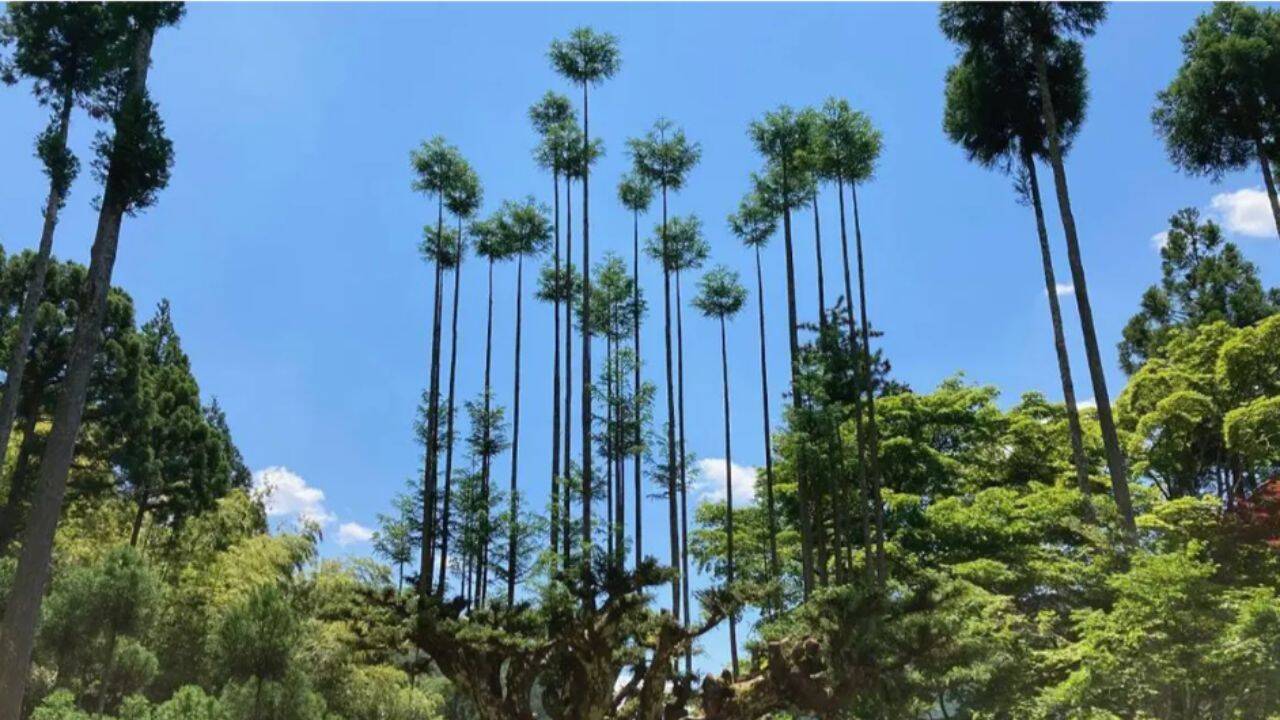
You’ve likely seen those viral images of what looks like a massive, ancient tree platform sprouting perfectly straight, vertical timber shoots. The internet loves to frame daisugi as a magical, secret ancient way to get wood without killing trees.
It sounds like a perfect solution to modern deforestation. But honestly? It’s a bit more nuanced than that.
It’s Not Magic, It’s Just Extreme Gardening
People often think daisugi is some kind of mystical forest practice that lets you skip the logging process entirely. It’s not that simple. Think of it as high-stress training for cedar trees.
Developed in the 14th century in the Kitayama region of Japan, this method was born out of pure necessity. The terrain was incredibly steep and mountainous. Planting traditional groves was a logistical nightmare. The locals needed high-quality, straight timber for their teahouses and palaces, but they couldn't exactly clear-cut the side of a mountain without causing a massive landslide.
So, they improvised. They basically created a "platform cedar" (which is what daisugi literally means). They took a mature tree, pruned it heavily, and forced the remaining stump to produce vertical shoots.
How the Process Actually Works
If you’ve ever tried your hand at bonsai, you’ll recognize the logic. It’s the same basic principle, just applied on a massive, functional scale.
- The Base: You start with a mature cedar. You prune the upper branches until only a flat, platform-like surface remains.
- The Shoots: Because the tree’s root system is already established and massive, it pushes out several new, straight shoots from that platform.
- The Management: This is where the work comes in. For the next two decades or so, foresters have to guide these shoots. They use bamboo poles and ropes to make sure they grow perfectly vertical.
- The Harvest: After about 20 years, these shoots are harvested as taruki—the round, uniform logs used in traditional roof construction.
The parent tree? It just keeps going. It doesn't die. It simply starts the process over. A single mother tree can produce timber for 200 to 300 years.
The Reality of the Timber
You’ll read claims that this wood is "200% stronger" or "140% more flexible" than regular cedar. While that sounds like a marketing pitch, it’s rooted in the way the tree grows. By limiting the growth to these specific, forced shoots, the wood develops an incredibly dense, knot-free quality.
It’s superior, yes. But it’s not for everything. Don't expect to build a modern high-rise skyscraper with it. This is specialty lumber, crafted for the specific aesthetic and structural needs of traditional Japanese architecture.
Can We Use This to Save the Planet?
Environmentalists love to point to daisugi as the answer to global deforestation. It’s a beautiful thought. But let’s be practical.
Daisugi is incredibly labor-intensive. In an era where modern forestry relies on speed, heavy machinery, and scale, a technique that requires years of manual, hands-on pruning is a hard sell. It’s a craft, not a commodity operation.
Most daisugi today isn't even used for industrial timber production. You’ll mostly see it in carefully curated gardens, temples, or as a decorative technique. It’s a living piece of history.
Why It Still Matters
Even if we aren't going to replace industrial logging with 600-year-old Japanese pruning techniques, the lesson here is about stewardship.
Modern forestry is obsessed with the "cut and replant" cycle. It's fast, it's efficient, and it’s destructive to the soil and the local ecosystem. Clearcutting messes with water tables and destroys habitats. Daisugi proves that you can live in harmony with a forest, harvesting what you need while keeping the primary biological asset alive for centuries.
If you’re interested in sustainable practices, stop looking for one big technological "fix" that’ll save the world. Look at the ancient methods that prioritized the long-term health of the land.
Daisugi isn't going to fix the global climate crisis overnight. But it’s a masterclass in how to manage resources without destroying the very thing you're harvesting. That’s a mindset worth keeping, even if you never pick up a pair of pruning shears.
Go look at your own backyard or local woodlot. You don’t need to be a professional forester to start treating trees as long-term partners instead of short-term inventory. Start small, research how your local species respond to coppicing or pollarding—similar, less extreme versions of this concept—and watch how much more a single plant can give you when you stop killing it for a quick harvest.