Nothing defines Venezuelan identity quite like oil. For over a century, through dictatorships, booms, and punishing economic collapses, the country's national psyche has rested on a single bedrock principle: the underground wealth belongs to the people of Venezuela, not foreign corporations and not outside governments.
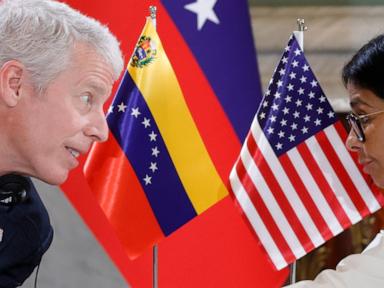
That founding myth took a brutal hit when acting President Delcy Rodríguez struck a high-stakes agreement with the United States. Under the terms, Washington gains control over roughly one-fifth of Venezuela's total oil reserves—the largest proven reserves anywhere on earth. While politicians in Caracas and Washington frame the move as an economic lifeline for a broken nation, ordinary citizens are looking at the hundred-year concessions with deep resentment. To many locals, it doesn't look like salvation. It looks like a surrender of sovereignty.
A Century of Black Gold and National Pride
You can't understand the backlash without looking at how oil built modern Venezuela. For generations, state-owned Petróleos de Venezuela, or PDVSA, wasn't just a corporate entity. It acted as a social safety net. Oil revenues funded universal healthcare, heavily subsidized housing, free food programs, and cheap domestic gasoline that felt like a birthright.
When past leaders nationalized fields and squeezed out foreign energy giants, they did so with enthusiastic public backing. Citizens viewed those takeovers as reclaiming what was stolen during early extraction eras. Even during the devastating economic decay that forced millions of Venezuelans to flee abroad, that emotional attachment to the resource remained intact. People still believed the oil was theirs.
Handing over 65 billion barrels of proven crude across 17 strategic fields for a century changes that dynamic entirely. Under the joint venture arrangement with North American Blue Energy Partners—backed by a 35% stake from the U.S. Pentagon's Office of Strategic Capital—the reality on the ground feels starkly different. The U.S. secures the right to buy 20 percent of production at cost, alongside a right of first refusal for the rest. For citizens watching from cities like Cabimas, the heartland of the country's petroleum industry, the bitter pill is hard to swallow.
Pragmatism Versus Patriotism
Talk to workers inside the oil sector, and you will hear a profound internal conflict. They know the infrastructure is completely broken. Years of systemic mismanagement, lack of maintenance, and international sanctions left pump jacks rusting and refineries operating at a fraction of their capacity.
Without foreign machinery, capital, and advanced extraction technology, those massive reserves are essentially worthless locked underground. Many oil workers admit that without outside help, the country cannot pull itself out of economic freefall. They ask a blunt question: What good is owning the world's largest oil reserves if you lack the tools to pump a single barrel efficiently?
At the same time, citizens point out that the current political landscape didn't emerge in a vacuum. Many view the arrangement as the ultimate fulfillment of a long-range strategy that kicked off when U.S. forces captured former President Nicolás Maduro, placing Rodríguez in a position of transitional power. They feel powerless as foreign policy decisions are made over their heads.
The Road Ahead for an Energy Giant
The numbers sound staggering on paper. Projections suggest targets of pushing production past 1.5 million barrels per day, potentially injecting billions into state coffers through taxes and foreign direct investment. Energy Secretary Chris Wright noted that the overarching mission focuses on bringing stability and opportunity.
Yet legal and political risks loom large. Venezuela's constitution explicitly requires National Assembly approval for long-term concessions involving strategic national assets. Future political leaders could easily argue that a transitional administration lacked the legitimacy to sign away a century of control, leaving the long-term viability of the pact on shaky ground.
Right now, everyday Venezuelans are caught between two harsh truths. Pride demands that national treasures stay in national hands, but empty wallets and ruined infrastructure demand immediate rescue. Whether this massive energy pact rebuilds the nation or deepens its historical wounds remains to be seen.