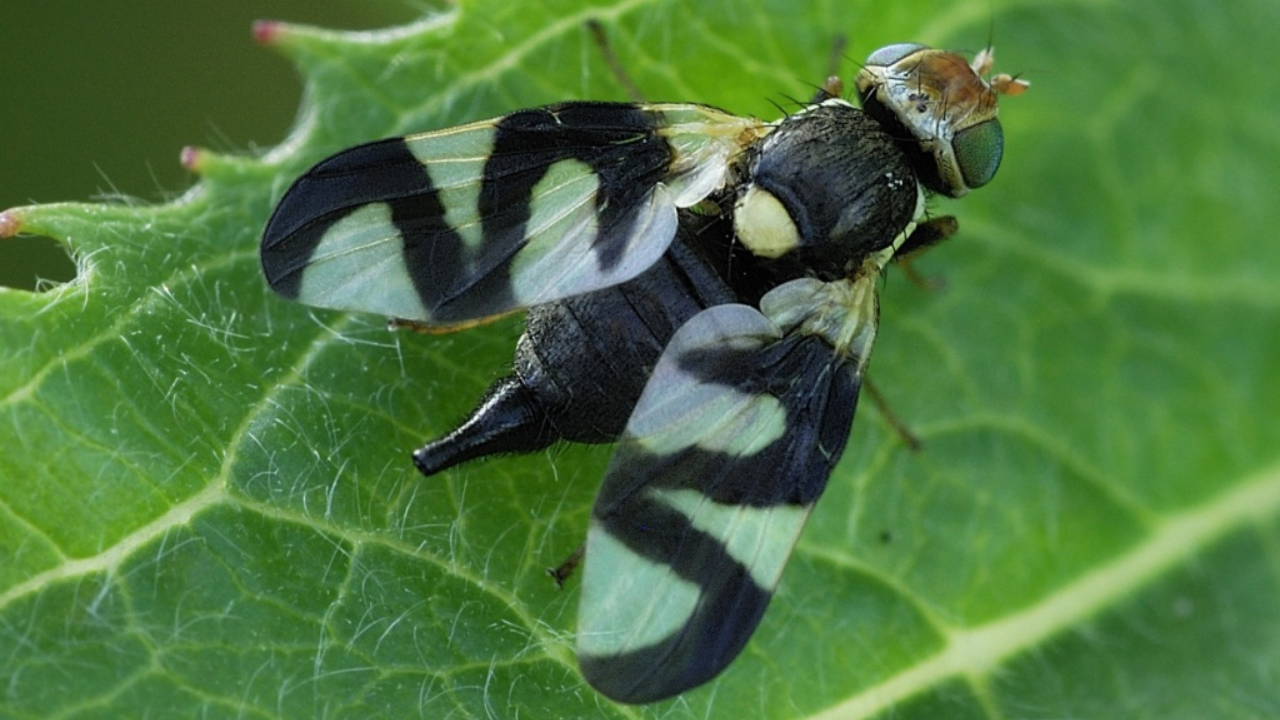
In 1973, agricultural scientists in Montana thought they had a clever fix for an ecological headache. Spotted knapweed, an aggressive Eurasian weed, was choking out native rangelands across the American West. Instead of dousing the landscape in chemical herbicides, officials turned to nature itself. They imported European gall flies (Urophora affinis and Urophora quadrifasciata) and released them by the thousands, hoping the insects would eat the weed into submission.
It sounded great on paper. Nature fighting nature.
Decades later, the real outcome unfolded, and it had almost nothing to do with eradicating weeds. Instead of wiping out spotted knapweed, the biocontrol program triggered an invisible chain reaction. It accidentally engineered a population explosion of deer mice, creating an unexpected vector for a deadly human virus.
How a Weed Control Plan Created a Rodent Buffet
To understand where things went off the rails, you have to look at what the gall flies actually did. The fly larvae burrow into the seed heads of spotted knapweed, forming protective shells called galls while they feed. Field tests back in the 1970s showed this did reduce the number of viable seeds. But spotted knapweed is resilient. It kept right on spreading, adapting, and dominating fields across the Northern Rockies.
The flies didn't destroy the weed. But they did multiply into an astronomical biomass.
Enter Montana's native deer mice (Peromyscus maniculatus). Winter in the Rocky Mountains is brutal, and food is traditionally scarce. Normally, seasonal starvation keeps local mouse populations heavily in check. But researchers, including ecologist Dean E. Pearson from the USDA Forest Service and the University of Montana, discovered a major behavioral shift.
Deer mice figured out how to crack open the dry knapweed seed heads during the coldest months of the year. Inside lay a rich, calorie-dense prize: the overwintering gall fly larvae. In heavily infested areas, those larvae suddenly made up a staggering 85 percent of a deer mouse's winter diet.
The Deadly Ecological Ripple Effect
When you remove a natural bottleneck like winter starvation, animal populations respond predictably. They boom.
With a steady, reliable food source provided by the foreign insects, deer mice survived the winter at unprecedented rates. They entered the spring breeding season fatter, healthier, and far more numerous. Field studies showed that mouse densities in knapweed-heavy areas were double those found in native grasslands.
That is where the situation shifts from an interesting biology quirk to a serious public health concern.
Deer mice are the primary natural reservoir hosts for the Sin Nombre virus, a strain of hantavirus. When mice crowd together—especially during aggressive winter feeding and nesting—the virus spreads rapidly among rodents through droppings, saliva, and urine.
When humans breathe in dust contaminated with particles from these infected droppings, they can contract Hantavirus Pulmonary Syndrome (HPS). It is a devastating respiratory illness with a fatality rate hovering around 36 percent.
Because the gall flies pumped an endless supply of calories into the ecosystem, the local rodent population didn't just double—the number of virus-carrying mice skyrocketed. Blood tests revealed that knapweed-infested sites harbored more than three times as many hantavirus-positive deer mice per hectare compared to untouched native bunchgrass prairies. Montana eventually found itself ranking near the top nationwide for per capita cases of HPS.
Lessons for Modern Conservation
The unintended fallout of the 1973 gall fly release remains a textbook warning in wildlife management. Ecologists call it a trophic cascade—pulling one thread in a complex ecological web causes the entire fabric to warp in ways nobody anticipated.
You cannot introduce a foreign organism into a complex environment and expect it to interact with only the target pest. Every species is connected to a food chain, and opportunistic animals like rodents will quickly exploit whatever humans or foreign bugs put on the table.
Today, land managers approach biological control with a lot more caution. Modern strategies avoid agents that create massive, accessible food packs for rodents. Instead, agencies lean toward integrated methods like reseeding native perennial plants, introducing competitive vegetation, or using host-specific root-boring insects like the Cyphocleonus achates weevil, which attack the plant underground where mice can't harvest them as easily winter snacks.
Fixing an environmental problem takes more than a quick biological patch. If you fail to map out the entire food web beforehand, you might just feed a monster you never intended to invite.