Trying to talk through seawater is basically impossible using standard wireless signals. Radio waves die almost instantly beneath the surface, leaving researchers completely blind once their equipment dips below the freezing line. That single bottleneck has crippled polar exploration for decades.
MIT Lincoln Laboratory engineers recently decided to fix that problem by drilling through nearly four feet of solid Arctic sea ice, dropping a robot into the freezing water, and testing a completely different way to transmit data. The results open up a massive shift in how we monitor the polar regions.
Drilling Through the Frozen Crust
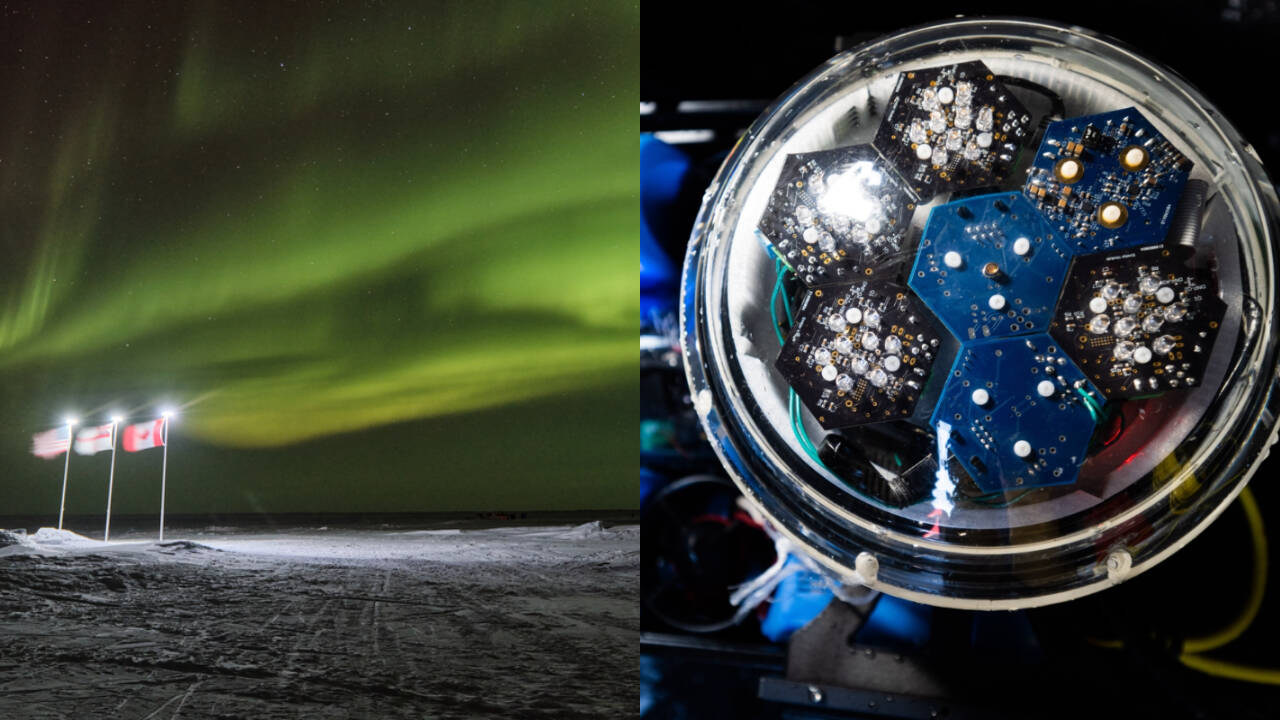
The operation took place during Operation Ice Camp in a lagoon near Utqiaġvik, Alaska. Conditions were brutal. The team dealt with consecutive blizzards, whiteout visibility, constant minus-25-degree Fahrenheit temperatures, and howling winds peaking at 40 miles per hour. Flights were grounded for days at a time.
Despite the extreme weather, researchers managed to carve a precise two-by-three-foot opening through 3.6 feet of thick Arctic sea ice. Through this narrow portal, they lowered a remotely operated vehicle to survey the freezing depths below.
This wasn't just a sightseeing mission. It was a test of survival for hardware designed to operate where humans simply cannot stay safely for long periods.
The Magneto-Inductive Breakthrough
To get information back to the surface without running physical cables through shifting ice, the MIT team partnered with Norwegian defense technology company Havguard. They tested a specialized modem that bypasses traditional radio frequencies entirely.
Instead of radio waves, the prototype relies on magnetic fields.
An underwater magneto-inductive transmitter mounted on the robot beamed data upward through the thick ice shelf to a receiver sitting on the surface. The connection achieved a transfer rate of approximately 1.2 kilobytes per second.
Sure, 1.2 kilobytes per second sounds painfully slow compared to your home broadband connection. But in the middle of an Arctic ice sheet, transmitting any functional data packet through solid ice and freezing water is a massive engineering win.
Tracking Movement Beneath the Ice
The robot itself carried heavy-duty instrumentation. Researchers equipped the underwater vehicle with a Doppler velocity logger and four-beam sonar. This hardware allowed the team to track the robot's precise movements, speed, and orientation as it navigated beneath the frozen ceiling.
This setup builds on previous deployments from Operation Ice Camp, where scientists used commercial off-the-shelf sensors to record underwater sounds, including marine mammal vocalizations. The 2026 tests upgraded those capabilities by introducing high-fidelity geophones designed to pick up acoustic vibrations traveling directly through the sea ice.
As polar ice continues to retreat and fracture, these acoustic signatures become critical. Cracking ice makes distinct noises, and shrinking ice packs mean more maritime traffic will soon attempt to navigate previously impassable waters. Monitoring these changes requires persistent, autonomous sensor networks that can sit underwater for months without human intervention.
What Comes Next for Polar Automation
The ultimate objective of this research goes far beyond a single successful test in Alaska. Engineers want to build autonomous sensor networks that collect data from the ocean floor, transmit it through the ice using magnetic modems, and hand it off to drones or passing satellites.
That workflow removes human danger from the equation. When a storm shuts down camp for a week, automated systems can keep working beneath the surface.
Future iterations will likely explore air-droppable sensor packages to eliminate the need for grueling manual drilling operations altogether. The engineering team plans to refine the modem packaging and sensor integration ahead of Operation Ice Camp 2028.
Polar research is shifting away from putting scientists in mortal danger on unstable ice. Smart engineering, magnetic communication, and autonomous robots are taking over the heavy lifting.