If you tell a doctor you got a rash from amoxicillin ten years ago, that warning stays in your chart forever. You get marked down as penicillin-allergic. From that day on, you receive different drugs, spend more money, and face higher risks of side effects.
Here is the catch. Most of those labels are completely wrong.
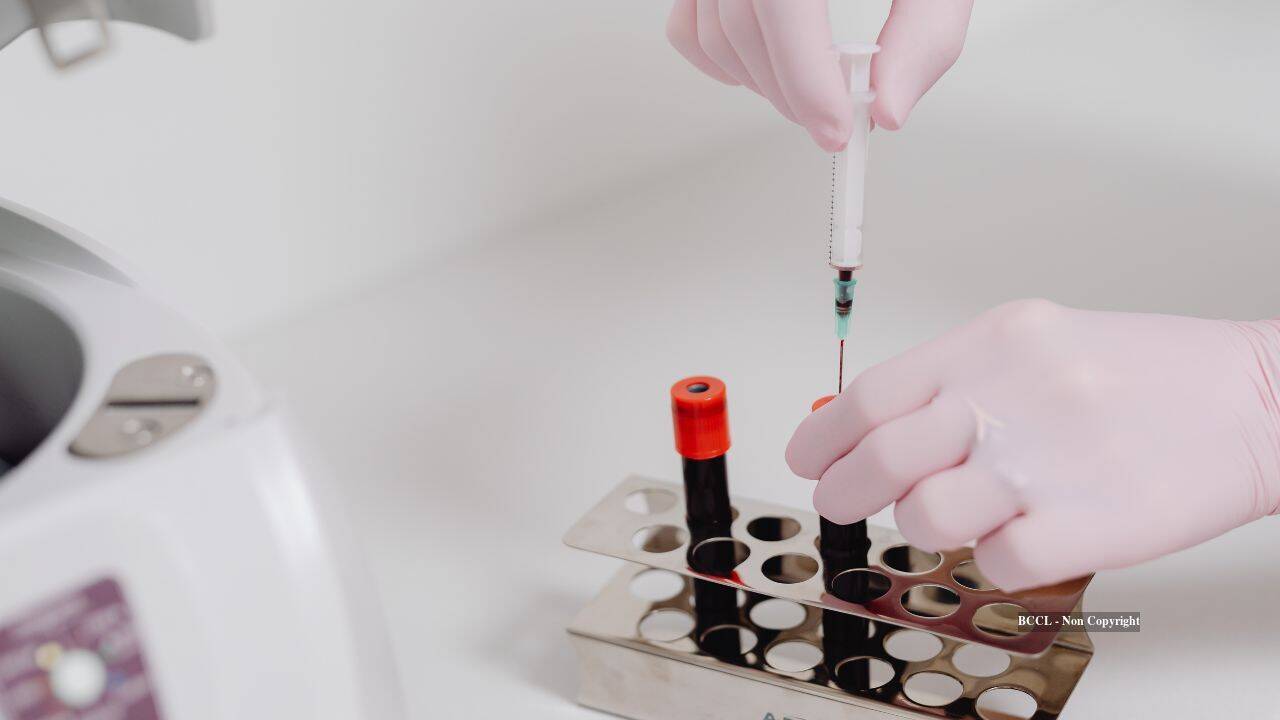
A multidisciplinary team at the University of Malaga published a study in Materials Today Bio pointing toward a massive shift in how we catch actual drug hypersensitivities. They built a blood test using 30-nanometre magnetic particles that spots amoxicillin allergies with 98 percent sensitivity. Standard commercial tests miss the mark entirely by comparison.
The Broken Reality of Penicillin Allergy Labels
Look at the numbers. Roughly 8 percent to 25 percent of the population walks around thinking they are allergic to penicillin. When doctors test them properly, only 1 percent to 10 percent actually show a true allergy.
That means millions of people carry a false label. Why does this happen?
Many children develop a viral rash while taking an antibiotic for an ear infection. The rash comes from the virus, not the drug. Yet the antibiotic takes the blame. Doctors play it safe and document an allergy.
Once that allergy note enters your electronic health record, routine clinical inertia keeps it there. Future physicians avoid first-line beta-lactam antibiotics. They hand you broader-spectrum drugs instead. Those backup drugs often fail to target the infection as cleanly, cost more, and drive the terrifying rise of global antimicrobial resistance.
Why Standard Blood Tests Fail
If you want to check a drug allergy through a blood draw today, you run into a brick wall of low sensitivity.
Traditional commercial testing platforms, such as ImmunoCAP, look for specific immunoglobulin E (IgE) antibodies floating in blood serum. For amoxicillin, standard tests manage a sensitivity of only about 17 percent.
Seventeen percent is abysmal. If a test misses more than 80 percent of actual cases, clinicians cannot trust it. They are forced to rely on skin prick tests or direct drug provocation tests—where you literally swallow the medicine under medical supervision to see if you react. Drug provocation tests work, but they carry real risks of triggering severe allergic reactions.
Inside the Magnetic Nanoparticle Breakthrough
Researchers led by organic chemists Yolanda Vida and María I. Montañez alongside medical experts like María José Torres took a different route. They designed a laboratory diagnostic platform centered on tiny iron oxide cores wrapped in a silica shell.
These particles measure roughly 30 nanometres across. To put that in perspective, they are invisible without advanced laboratory equipment.
The team modified the silica surface with branched molecular structures called dendrimers. Think of them as microscopic hooks. They attached amoxicillin-related chemical groups to those hooks.
When mixed with a patient's blood serum, any circulating IgE antibodies designed to fight amoxicillin latch onto the particles. Because the core is magnetic, technicians apply an external magnetic field to pull and concentrate the captured antibodies instantly. This bypasses slow, messy centrifugation steps.
The results from testing 94 blood samples—split evenly between 50 patients with verified amoxicillin allergies and 44 tolerant controls—caught the medical community's attention. The magnetic system achieved 98 percent sensitivity and 100 percent specificity. ImmunoCAP hit 17 percent sensitivity in the exact same comparison.
What This Means For Your Next Prescription
Don't expect your local clinic to offer a magnetic nanoparticle test tomorrow.
The study represents an early clinical milestone published in 2026. Large-scale multicenter validation studies must happen before regulatory bodies clear this technology for routine hospital use. Scientists need to prove the platform maintains its staggering accuracy across thousands of diverse patients.
Even so, the direction is clear. Nanotechnology is closing the gap between clunky traditional diagnostics and high-risk skin or oral challenges.
If you or someone you care about carries an old penicillin allergy label from childhood, talk to your primary care physician. Ask if an allergist referral and formal evaluation or skin testing make sense for you today. Clearing an inaccurate allergy label gives you back access to safe, cheap, and effective first-line antibiotics when you need them most.