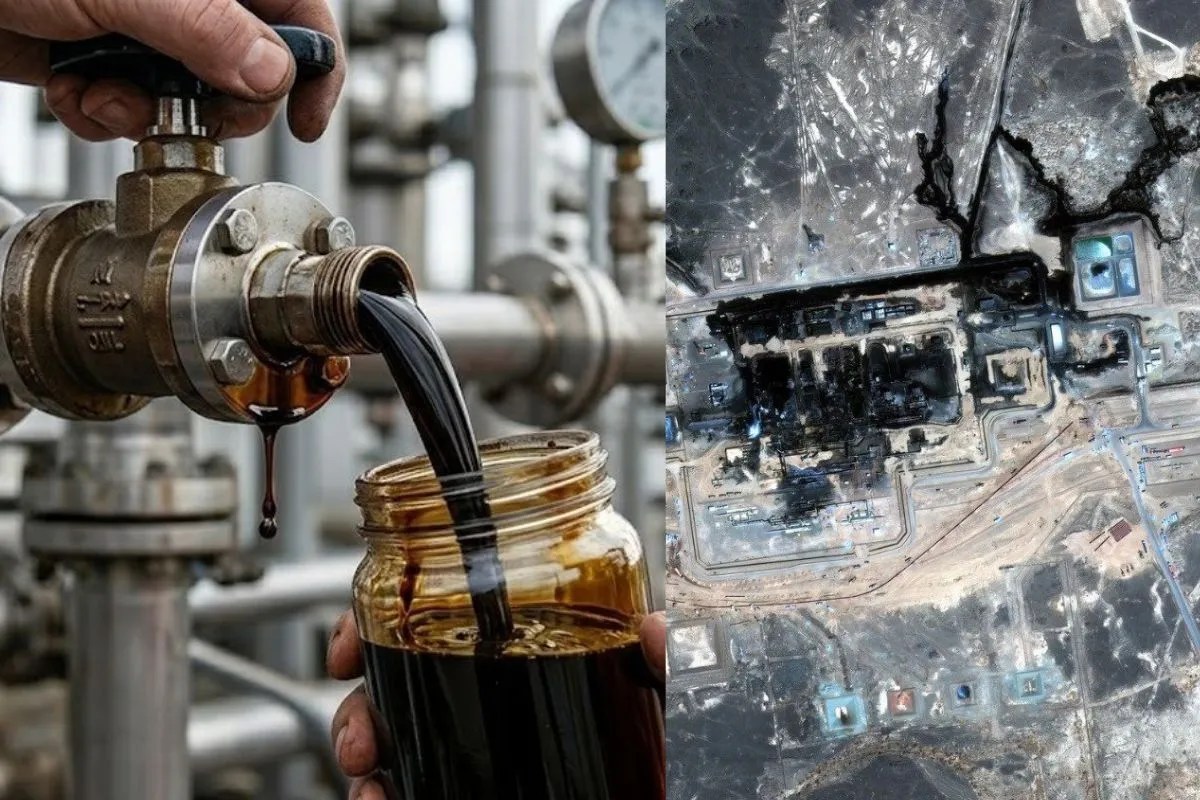
Crude oil is climbing back toward triple digits, and you shouldn't be surprised. Fresh fighting across the Middle East and delayed diplomatic talks have rattled energy markets, pushing Brent crude past $107 a barrel and West Texas Intermediate toward $103.
If you think this is just another short-term blip driven by nervous traders, you're missing the bigger structural breakdown in global energy transit. Let's look at what's actually happening on the ground and why energy costs are squeezing supply chains harder than official forecasts anticipated.
The Pipeline Outage and the Strait of Hormuz Bottleneck
The immediate catalyst isn't just generic geopolitical noise. Recent drone and missile strikes targeting Saudi Arabia's crucial East-West pipeline have severely restricted the kingdom's primary workaround for exporting oil. Normally, this pipeline allows Riyadh to shuttle around four million barrels of oil a day directly to the port of Yanbu on the Red Sea, bypassing the volatile Strait of Hormuz entirely.
When that infrastructure takes a hit, the safety valve vanishes. Traders are panicking because commodity vessel traffic through the Strait of Hormuz has plummeted to fewer than ten transits a day over recent weekends. Compare that to a ten-day baseline average of fourteen transits, and you see a massive choke point tightening. This single corridor carries roughly one-fifth of global oil supplies. When traffic crawls, the math catches up to consumers at the pump fast.
Why Postponed Talks Matter
Diplomacy was supposed to offer an off-ramp. Planned discussions between Gulf Arab states and Iran were quietly shelved, dashing hopes for an immediate de-escalation.
Markets hate uncertainty more than bad news. The postponement signals that regional actors are bracing for a prolonged standoff rather than a quick diplomatic fix. Meanwhile, Houthi forces continue targeting infrastructure deep inside Saudi territory, including military airbases and energy facilities near Yanbu.
This isn't a localized skirmish anymore. It's a multi-front pressure campaign that directly threatens the flow of petroleum out of the Persian Gulf.
What Wall Street Analysts Are Saying
Major financial institutions are scrambling to revise their pricing models. Goldman Sachs notes that shipping risks are now the primary driver of crude valuation, pointing out a scenario where extended disruptions could push prices as high as $120 a barrel.
JPMorgan estimates that each additional month of disruption adds roughly $7 to $8 a barrel to Brent prices. If these bottlenecks drag on for a full quarter, monthly Brent averages could easily touch $114. Citi and ANZ have likewise boosted their short-term forecasts, warning clients that downside price risks are minimal while regional tensions remain uncontained.
The Broader Economic Fallout
Energy shocks never stay confined to fuel markets. Higher crude prices are immediately feeding into broader inflation anxieties, driving benchmark 10-year US Treasury yields close to 5%. Retail diesel prices in the United States have punched past historic highs, adding heavy freight costs to every consumer good moving by truck or rail.
Central banks caught in this crossfire have very few good options. The Bank of Japan and other major institutions face severe pressure to tighten monetary policy even as energy-driven cost-of-living squeezes threaten broader economic growth.
Don't expect relief until physical shipping volumes through the Red Sea and the Persian Gulf normalize. Watch the daily tanker transit counts through Hormuz and pipeline repair updates out of Saudi Arabia. That's where the real story is written.