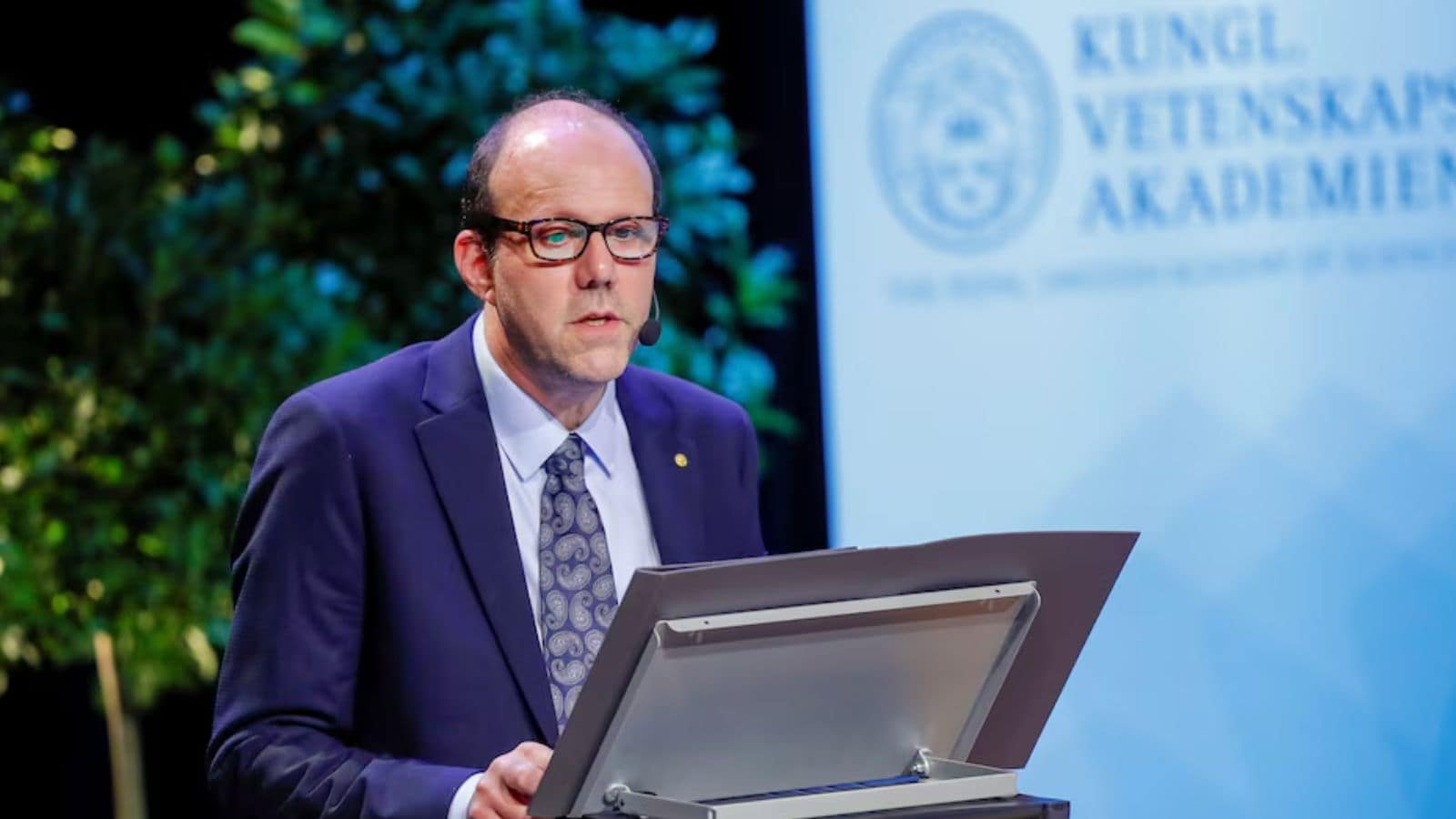
The World Bank just did something unexpected. They hired a sitting Nobel laureate to run their research department.
Michael Kremer steps into the chief economist role on October 1, succeeding Indermit Gill. Past heavyweights like Joseph Stiglitz and Paul Romer won their Nobel prizes after leaving the bank. Kremer walks through the door with his already in hand. That distinction matters. It shifts the institution from theoretical macroeconomics to hard-nosed, field-tested reality.
If you want to understand where global development policy is heading, look at what Kremer actually spends his time doing. He doesn't sit in an ivory tower building abstract growth models. He tests things in the dirt, the classroom, and the village clinic.
The Experimental Economics Revolution
Back in 2019, Kremer shared the Nobel Prize in Economic Sciences with Esther Duflo and Abhijit Banerjee. The prize committee honored them for an experimental approach to alleviating global poverty. Instead of throwing billions at massive, unproven national programs, they championed randomized controlled trials—borrowing methods from medical science and applying them to social policy.
Think of it like software beta testing. Before rolling out a massive public policy across an entire continent, Kremer's approach tests a small intervention in a few dozen villages. Does providing textbooks improve test scores? Do school deworming tablets reduce absenteeism? Does subsidized water chlorine actually get used?
They measure the data. They drop what fails. They scale what works.
This mindset is entering the World Bank at a brutal moment for emerging economies. Developing nations are wrestling with high borrowing costs, expensive energy, and a sharp contraction in international aid. Official development assistance dropped dramatically recently, leaving governments with fewer resources to manage massive demographic shifts. Over 1.2 billion young people are hitting working age in the next decade. They need jobs. Old economic playbooks aren't cutting it.
Where Theory Meets the Dirt
Kremer's track record shows he cares about scaling solutions, not just writing academic papers. Look at his work on Advance Market Commitments (AMCs). He helped design a mechanism guaranteeing funding to encourage pharmaceutical companies to build vaccines for low-income countries. That specific framework for a pneumococcal vaccine led to approved rollouts across 60 countries, saving an estimated 700,000 lives.
Or look at school deworming. His field research showed that treating parasitic infections in children dramatically lowered school absence rates at a fraction of a penny per child. That evidence didn't stay in a journal. It spurred governments across Africa and South Asia to deliver billions of treatments.
At the University of Chicago, where he directs the Development Innovation Lab, his portfolio targets everything from artificial intelligence-driven agricultural weather forecasting to clean water access. He co-founded Precision Development, which sends localized digital alerts to smallholder farmers to boost crop yields.
What Changes on October 1
President Ajay Banga wants bold solutions. Bringing in Kremer signals that the World Bank is tired of guessing what works.
Expect a aggressive push toward rigorous evaluation of bank-funded projects. Funding will likely flow toward interventions that have passed empirical stress tests rather than political wishlist items. Kremer has already critiqued institutional stagnation in global development, calling for better ways to finance high-risk innovation.
Watch how the bank handles agricultural technology and health funding over the next year. If Kremer's past work is any indication, expect less bureaucracy and a lot more obsession with measurable outcomes. Real-world impact is finally getting the steering wheel.