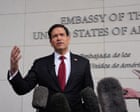
Foreign policy shifts rarely happen without friction. When US Secretary of State Marco Rubio touched down in Quito, Ecuador, he laid out a dual strategy for combating Latin American drug cartels that has left international legal experts shaking their heads. Washington wants to work hand-in-hand with regional allies, aligning with local laws to disrupt trafficking routes. Yet, the military is keeping its finger on the trigger.
Just as Rubio spoke, US Southern Command announced another lethal kinetic strike in the Caribbean Sea. Three more people were dead. That brought the total death toll from over a year of unilateral and joint boat bombings to at least 230 people across 69 separate strikes. You might also find this related article insightful: What Actually Happens When You Lose Control On A Plane And Get Duct Taped.
If you're wondering how a diplomatic tour in South America meshes with explosive military action, you aren't alone. Let's look at what's really happening on the ground and why this policy is drawing fierce backlash.
The Pivot to Regional Partnership
For months, the Trump administration pursued a largely unilateral campaign against vessels suspected of smuggling drugs in international waters. Critics pointed out that these operations ignored local sovereignty and bypassed traditional legal channels. Rubio's recent statements signal a tactical adjustment. As highlighted in detailed coverage by The New York Times, the results are significant.
During his trip to Ecuador, Rubio praised newfound cooperation with partner nations.
"I think it's an incredible advance for the first time to have countries that are willing to participate in these efforts in their territorial waters," Rubio told reporters.
Under this updated model, the US has begun coordinating interdictions inside sovereign waters. In recent joint operations with Ecuador, crews aboard suspected floating refueling stations have been safely detained, handed over to local authorities, and then the vessels themselves have been destroyed. Rubio insists these combined efforts are successfully ending transit routes.
The Unyielding Reality of Kinetic Strikes
Despite the diplomatic charm offensive in Quito, Washington isn't giving up its heavier tools. When pressed by reporters on whether the US would stop blowing up vessels, Rubio was characteristically blunt.
"We still blow up ships, if need be," he stated.
The latest Caribbean strike highlights that contradiction. US Southern Command claimed the targeted "go-fast" vessel was actively moving narcotics, classifying the deceased individuals as "narco-terrorists." But like almost every previous operation, the military released no concrete public evidence proving the boat was carrying illicit drugs.
This lack of transparency drives human rights watchdogs crazy. Independent legal analysts emphasize that drug trafficking is classified under international law as a criminal matter for law enforcement agencies, not an act of war that permits military annihilation. Critics warn that service members executing these orders could ultimately face serious legal liabilities.
Designating New Threats
Part of Rubio's South American tour involved shoring up alliances with conservative leaders facing intense internal security crises. In Ecuador alone, violent turf wars between rival gangs have claimed thousands of lives over the past three years.
To bolster local governments, the US recently designated Ecuador's Los Tiguerones gang as a foreign terrorist organization. Rubio argued that these groups possess weapons and operational gear resembling national armies, justifying a hardline stance.
While asset freezes and financial sanctions hit criminal networks where it hurts, the terrorist designation doesn't legally grant the US military free rein to launch airstrikes against domestic gangs on foreign soil. That distinction matters. It separates traditional law enforcement from the ongoing maritime bombing campaign.
What Happens Next
The Biden-to-Trump transition in tactics hasn't quieted the critics. Analysts from organizations like the Washington Office on Latin America point out that destroying dozens of boats and killing hundreds of people hasn't visibly stemmed the macro flow of drugs northward.
You're left with a stark contradiction. The State Department wants cooperative diplomacy, regional alignment, and shared responsibility. Meanwhile, the Pentagon maintains a high-tempo campaign of lethal strikes with minimal public evidence.
As long as Washington insists it will blow up ships when necessary, the friction between international law and unilateral military force will only grow louder.
33 Boats Destroyed In Ecuador; Marco Rubio SNAPS At Reporters
This video provides additional context regarding Marco Rubio's heated exchange with reporters in Ecuador over regional drug strikes and security cooperation.
http://googleusercontent.com/youtube_content/1