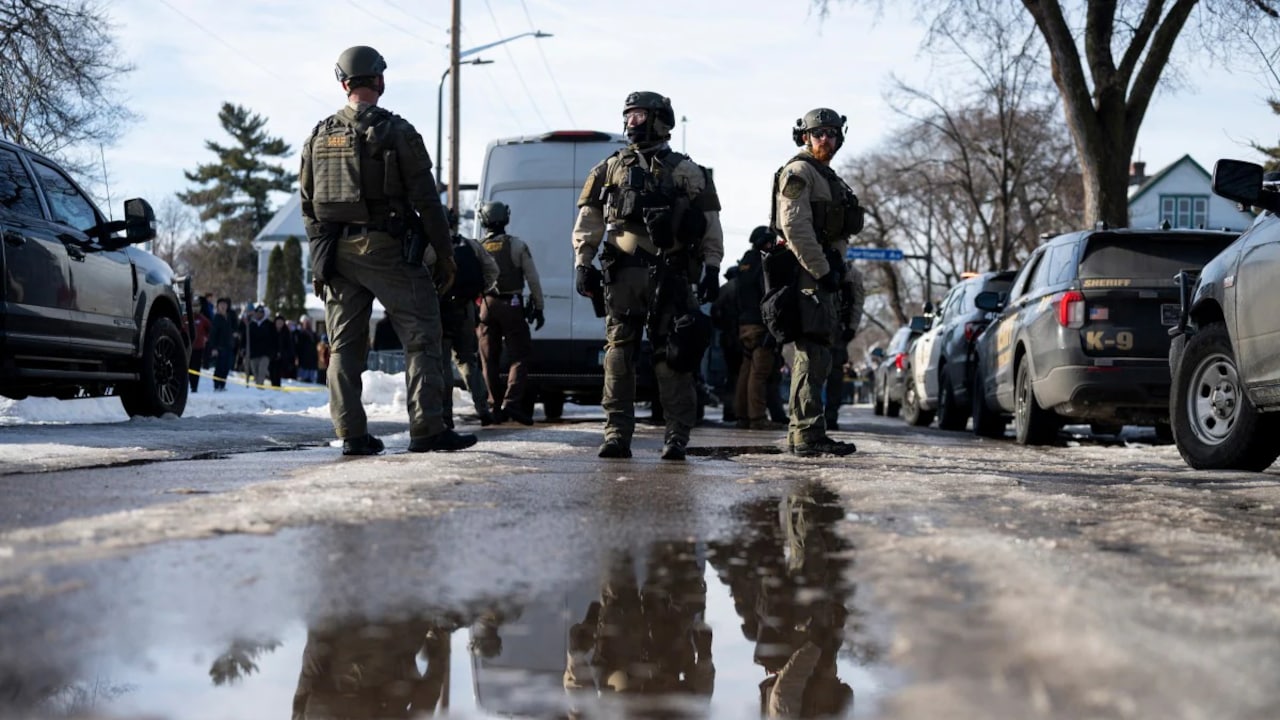
When White House border czar Tom Homan took to Sunday morning television to announce that Immigration and Customs Enforcement agents would soon be required to wear body cameras during vehicle stops, he framed it as a win for transparency. The claim is simple enough. Video footage exonerates good officers, clears up confusion, and gives the public a front-row seat to what federal agents actually face in the field.
It sounds convincing on paper. But if you look at how federal immigration enforcement has operated over the last two years, the promise of body cameras starts to look like a band-aid on a gaping wound.
The announcement came right after two back-to-back fatal shootings during routine immigration actions. In early July 2026, federal agents shot and killed Lorenzo Salgado Araujo in Houston, Texas. Days later, 26-year-old Joan Sebastian Durán Guerrero was shot dead inside a car in Biddeford, Maine. Neither man was the target of the immigration operations underway. In both cases, the agents involved were not wearing body cameras.
This wasn't a sudden oversight. It was part of a predictable pattern.
The Deadly Gap Between Mandates and Reality
Federal officials have promised body-worn cameras for years. Back in February 2025, ICE issued Directive 19010.3, a formal policy requiring officers to activate cameras at the start of enforcement actions. Yet time after time, when blood gets spilled on asphalt, the cameras happen to be missing, turned off, or waiting in a warehouse somewhere.
When Alex Pretti and Renee Good were shot and killed during enforcement actions in Minnesota earlier in 2026, then-Homeland Security Secretary Kristi Noem promised the department would rapidly deploy body cameras nationwide. Congress even set aside $20 million in April 2026 specifically for DHS to buy and roll out the equipment.
Yet, when Salgado Araujo died in Houston, Homeland Security blamed political gridlock and budget delays for why officers were unequipped. When Durán Guerrero was killed in Maine, the story was much the same. You can't record the truth when the cameras aren't on the chest of the agent pulling the trigger.
Words don't save lives. Execution does.
Why Traffic Stops Are a Powder Keg for Federal Agents
Local police officers spend months learning how to conduct safe vehicle stops. They train extensively on defensive driving, de-escalation, spatial awareness, and handling nervous motorists in tight spaces.
ICE officers aren't municipal beat cops.
Their primary mission historically centered on administrative warrants, detainers, and targeted operations at facilities or courthouses. When federal policy shifted aggressively toward mass deportations, field agents were pushed into high-risk street tactics—including roving vehicle stops.
Former federal officials have pointed out this exact friction. Firing into a moving vehicle or boxing in a panicked driver requires specific split-second judgment. When un-trained or under-trained federal agents attempt high-risk traffic interventions on public roads, the odds of a catastrophic miscalculation skyrocket.
The numbers tell a grim story. At least seven people have been shot and killed during federal immigration operations since early 2025. Five of those fatal shootings involved officers firing directly into vehicles.
A camera doesn't stop an agent from pulling a trigger during a botched traffic stop. It only records the disaster after it happens.
The Loophole Machine Inside Federal Policy
Even if every single ICE team carries a body camera tomorrow, systemic loopholes weaken their impact.
Take a close look at the fine print of ICE Directive 19010.3. The policy allows agents to skip camera activation for vaguely defined "operational security concerns" or to protect "sensitive investigative techniques." When an officer fails to turn on a camera, all they have to do is submit a written explanation after the fact.
That is a massive structural flaw.
If an agency gets to decide when a recording is convenient or inconvenient, public trust vanishes. We saw this in Chicago during Operation Midway Blitz, where a federal judge had to explicitly order federal immigration agents to wear cameras because street encounters with protesters and bystanders were degenerating into chaotic, unrecorded shouting matches.
Adding to the opacity, the Department of Justice recently signaled that FBI agents will no longer automatically investigate violent confrontations involving ICE personnel. When internal oversight contracts while field operations expand, a camera on a vest becomes little more than a prop.
What Real Accountability Actually Requires
Slapping a lens on a tactical vest doesn't magically fix a broken operational culture. If lawmakers and DHS leadership actually want to stop preventable deaths during immigration operations, they need to address structural issues directly:
- Enforce strict, mandatory suspension for agents who fail to activate cameras during enforcement actions without a documented technical failure.
- Reinstate an absolute prohibition on firing into moving vehicles, matching standard police guidelines across most major US cities.
- Halt roving traffic stops entirely for civil immigration enforcement and return to targeted, warrant-based operations.
- Require independent, third-party oversight—such as state prosecutors or local district attorneys—to investigate every officer-involved shooting rather than relying on internal federal reviews.
- Establish strict public release timelines for footage within 72 hours of any critical incident involving serious injury or death.
A tool is only as good as the rules governing its use. Until federal immigration enforcement faces real, binding consequences for non-compliance, body cameras will remain what they currently are—a PR buffer deployed on Sunday morning talk shows to quiet public uproar.