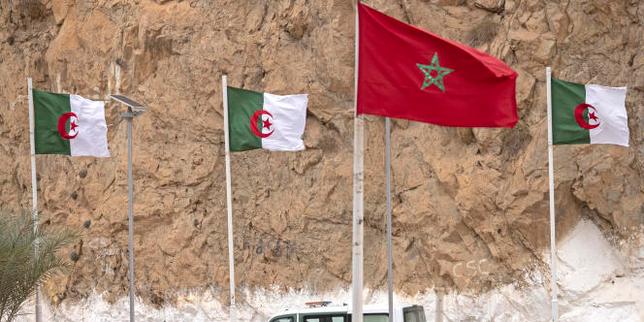
The map of North Africa is freezing up. If you look closely at the region today, the lines dividing nations aren't just administrative borders anymore—they're deep geopolitical fault lines. Algeria and Morocco are locked in a zero-sum logic that paralyzes regional integration, while Tunisia, Libya, and Mauritania navigate their own internal turmoils.
People want to know why a region with so much shared language, history, and economic potential remains permanently gridlocked. The answer isn't a simple misunderstanding. It's a fundamental clash between two completely opposing state models: Rabat's aggressive diplomatic and economic projection versus Algiers' insistence on sovereign depth and non-alignment. Discover more on a related topic: this related article.
The Cost of a Broken Regional Market
The Arab Maghreb Union is dead in all but name. Economically, the region is one of the least integrated zones on the entire planet. Intra-regional trade sits below 5 percent. Compare that to East Asia or the European Union, and the failure becomes glaringly obvious.
Borders remain sealed. Families are separated by political spite. Trade must take expensive detours across the Mediterranean rather than moving freely overland. Politicians talk endlessly about regional solidarity, but practical cooperation is practically zero. More reporting by Associated Press highlights related views on the subject.
Two Competing Visions of Power
You can't understand modern Maghreb geopolitics without looking at the core rivalry between its two heavyweights.
Morocco acts as a connector. Rabat builds its strategy around global supply chains, Atlantic access, financial networks, and smart partnerships with Europe, the United States, and increasingly other African nations. It treats geography as a bridge.
Algeria operates differently. Algiers values strategic depth, energy independence, and a strict doctrine of non-alignment. It views regional security through the lens of protection and insulation.
When these two models collide over issues like the Western Sahara dispute, compromise becomes nearly impossible. Every diplomatic win for one is treated as an existential threat by the other.
The Peripheral Instabilities
It's not just Algeria and Morocco driving the tension. Look south to the Sahel, and you see instability bleeding across porous borders. Look east to Libya, where a fractured political landscape refuses to stabilize. Look inward in Tunisia, where democratic gains face severe internal pressure.
These vulnerabilities turn the entire region into a chessboard for external powers. Russia expands its security footprint. China finances infrastructure through debt-diplomacy and strategic loans. Europe scrambles for energy security and migration control, often playing individual capitals against each other rather than offering a coherent regional policy.
What Comes Next
The danger isn't necessarily a massive, conventional war between states. Total war remains too costly for everyone involved.
The real threat is chronic friction. It's the slow, permanent erosion of diplomatic channels, recurring proxy tensions, and missed economic opportunities that trap millions of young people in stagnation.
Stop expecting a sudden diplomatic breakthrough. Until political elites change their baseline calculations, the fractures across North Africa will only keep deepening.