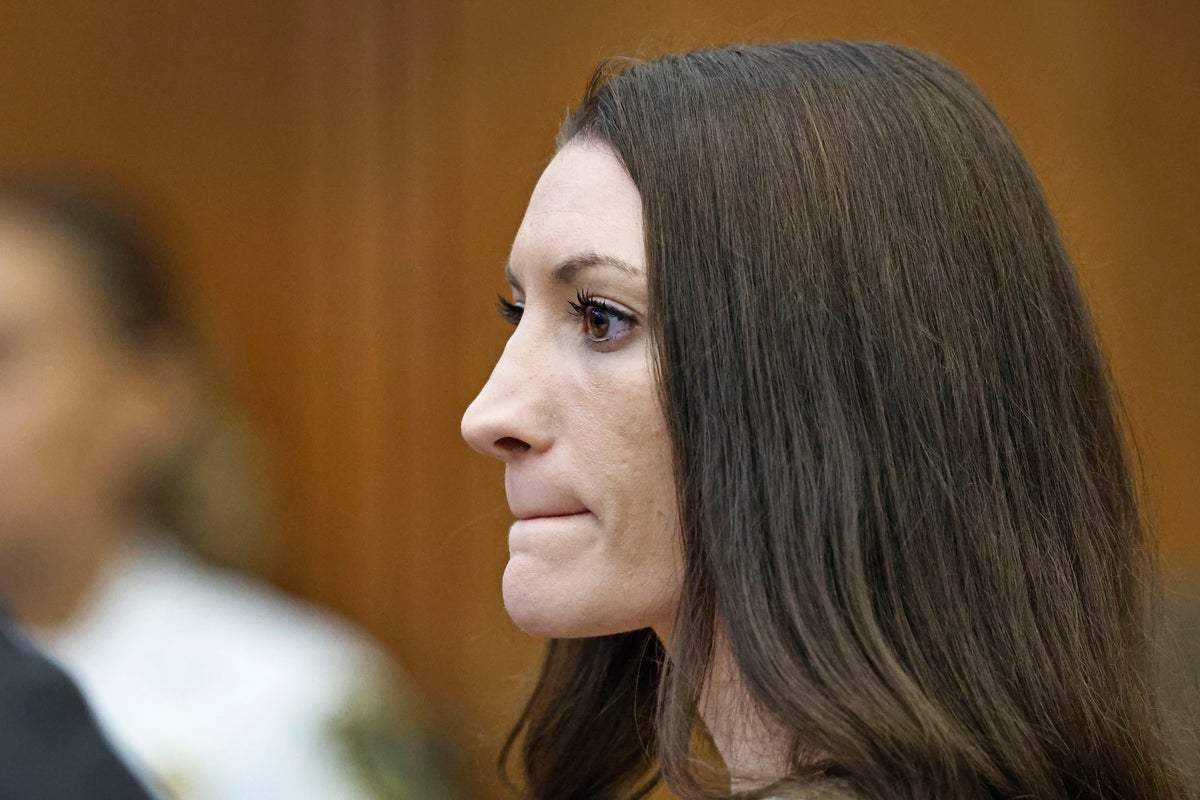
The courtroom in Plymouth, Massachusetts, has spent weeks listening to an agonizing procession of medical experts, police officers, and family members. Eighty-five witnesses have taken the stand to dissect the shattered mind of Lindsay Clancy.
The core question driving this entire legal proceeding isn't complicated to state, though it's terrifying to consider: When a mother strangles her three young children before attempting to take her own life, is she a cold-blooded criminal or a victim of a catastrophic psychiatric breakdown?
Clancy has admitted to killing 5-year-old Cora, 3-year-old Dawson, and 8-month-old Callan in January 2023. Her defense team doesn't dispute the physical acts. Instead, they argue she was drowning in severe postpartum psychosis and overmedication, leaving her completely incapable of understanding the wrongfulness of her behavior. Prosecutors see it differently. They argue she planned the tragedy, orchestrating her husband's absence because she simply wanted a way out of her life.
As the jury prepares to weigh a verdict that carries mandatory life imprisonment versus indefinite psychiatric commitment, the case exposes deep cultural anxieties around maternal mental health, the limits of modern psychiatry, and how the legal system handles invisible illnesses.
The Battle of the Experts and the Postpartum Psychosis Debate
Trials built on an insanity defense live or die by expert testimony. In this case, jurors have sat through a dizzying tug-of-war between forensic psychiatrists presenting entirely opposite reads of the same medical history.
Defense experts painted a picture of a woman completely untethered from reality. Dr. Phillip Resnick, a prominent authority on filicide, testified that Clancy was so severely psychotic on the day of the killings that she felt like a puppet whose strings were being pulled by an external force. Other defense witnesses pointed to a terrifying cocktail of prescription drugs, severe insomnia, and a relentless slide into depression that evaded effective medical stabilization.
The prosecution countered with their own heavy hitters, including forensic psychologists who challenged the presence of acute psychosis or command hallucinations. Their argument hinges on the timeline. Prosecutors maintain that Clancy's actions—such as sending her husband out to pick up medicine and dinner—show calculated steps. They argue that her behavior demonstrated goal-directed awareness rather than the chaotic disconnect of a psychotic break.
This clash exposes a fundamental flaw in how courts evaluate mental illness. Law enforcement and legal statutes demand binary answers to non-binary medical realities. Was she sane or insane? Did she know right from wrong? Human brains, particularly under the brutal physiological siege of severe postpartum disorders, rarely cooperate with neat legal categories.
What Happens Next in the Courtroom
With testimony wrapped up after hearing from 85 witnesses, the trial moves into its final phase. Closing arguments give both sides one last hour to crystallize months of emotional and technical testimony for the twelve jurors and six alternates.
The judge confirmed that the jury will receive instructions on lesser charges, including manslaughter, alongside first-degree murder. While the defense acknowledges Clancy killed the children, a straight not-guilty verdict remains off the table. The real choice for the jury rests between a conviction that guarantees a life behind bars and a verdict of not guilty by reason of mental disease or defect.
If the jury opts for the insanity verdict, Clancy will not walk free. Instead, she will face indefinite confinement inside a state mental health facility like Tewksbury Hospital, subject to periodic evaluations that could span the rest of her life.
No outcome fixes the devastation left in this wake. Whatever the jury decides, the case serves as a grim reminder of how badly the medical and social safety nets can fail families before tragedy strikes.
Review the timeline of jury instructions, monitor local court updates for the start of deliberations, and examine how maternal mental health resources are structured in your own community to recognize warning signs early.