When a monarch chooses rubber boots over formal protocol, people notice. King Harald V of Norway never acted like a distant figure sitting behind high palace walls. When he passed away at 89 on August 28, 2026, he left behind a nation in deep mourning not just because he was Europe's oldest reigning monarch, but because he felt like a member of the family.
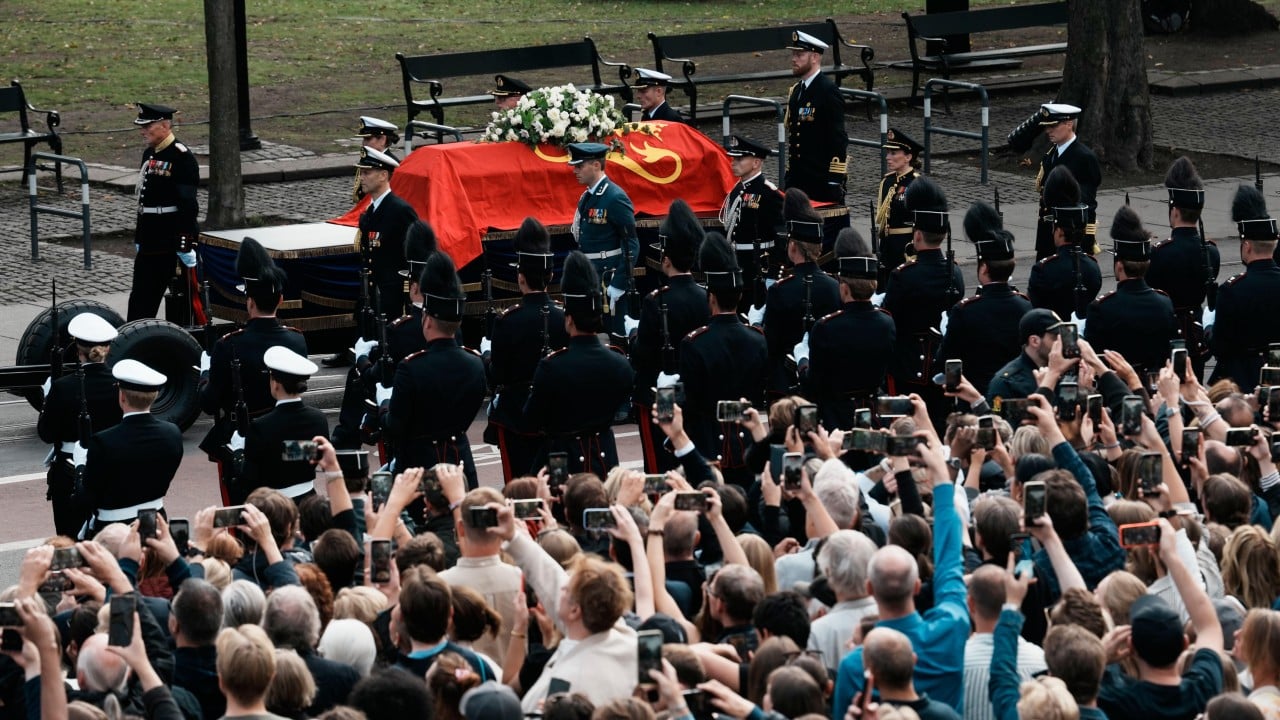
Tens of thousands of people stood in line for hours, stretching queues up to seven hours long over the weekend, just to file past his coffin in the royal chapel. On September 9, 2026, Oslo came to a complete standstill. A 21-gun salute echoed from Akershus Fortress as a solemn procession carried his red-draped casket to Oslo Cathedral, drawing global leaders, European royalty, and everyday citizens together for a nationwide moment of silence.
The King Who Refused to Wear an Ivory Tower
Most European monarchies spent the past few decades retreating behind PR teams and controlled media appearances. King Harald did the exact opposite. He walked among flood victims, spoke openly about mental health, and famously refused to abdicate despite his advancing age, choosing to serve until his final breath.
Parliament speaker Masud Gharahkhani captured his essence perfectly during the state funeral service. He reminded mourners that Harald "wasn't afraid to meet people in his rubber boots." That down-to-earth persona wasn't an act. Back in his 2008 New Year's address, Harald challenged his own citizens to change how they spoke about marginalized groups, stating that he wished people would stop using the phrase "the weakest in society" because those individuals were often among the strongest.
That rare blend of empathy and sharp social awareness turned him into the undisputed "grandfather of the nation." He modernized the Norwegian royal house without losing its traditional roots, steering the institution through changing cultural tides with quiet dignity.
Who Showed Up to Say Goodbye
The state funeral at Oslo Cathedral brought together an unprecedented gathering of global dignitaries. Prince William represented the British royal family, while Ukraine's President Volodymyr Zelenskyy attended to honor Norway's steadfast international partnerships.
They stood shoulder-to-shoulder with monarchs from Sweden, Denmark, Spain, the Netherlands, Belgium, Luxembourg, Monaco, and Jordan. Despite the security lockdown downtown—where police banned bicycles and sharp objects to keep crowds safe—the atmosphere remained deeply personal. Across the country of 5.6 million people, public screens lit up inside libraries, city halls, and churches as millions tuned in to watch the service broadcast by NRK.
Bishop Olav Fykse Tveit noted during the ceremony that the massive sea of floral tributes left outside the royal palace spoke volumes about how deeply the king was loved. The bond between crown and commoner wasn't built on rigid legal authority—the Norwegian monarchy functions primarily as a symbolic office anyway—it was earned through decades of shared grief, shared joy, and constant presence.
What Happens Next for the House of Glücksburg
With Harald's passing, the throne immediately passed to his son, who stepped into his new role as King Haakon VIII. The 53-year-old monarch took his formal constitutional oath in parliament weeks prior, ensuring a smooth and uninterrupted transition of power.
King Haakon VIII inherits a massive legacy. His father set a standard of accessibility that will be difficult to match. Yet, the foundations of the Norwegian monarchy remain stable precisely because Harald spent 35 years anchoring the institution to the everyday realities of modern life.
The flag went back up across Norway once the private royal burial concluded at Akershus Castle's crypt. The mourning period has ended, but the cultural footprint left by a monarch who preferred mud-splattered boots to pomp and circumstance remains permanent.