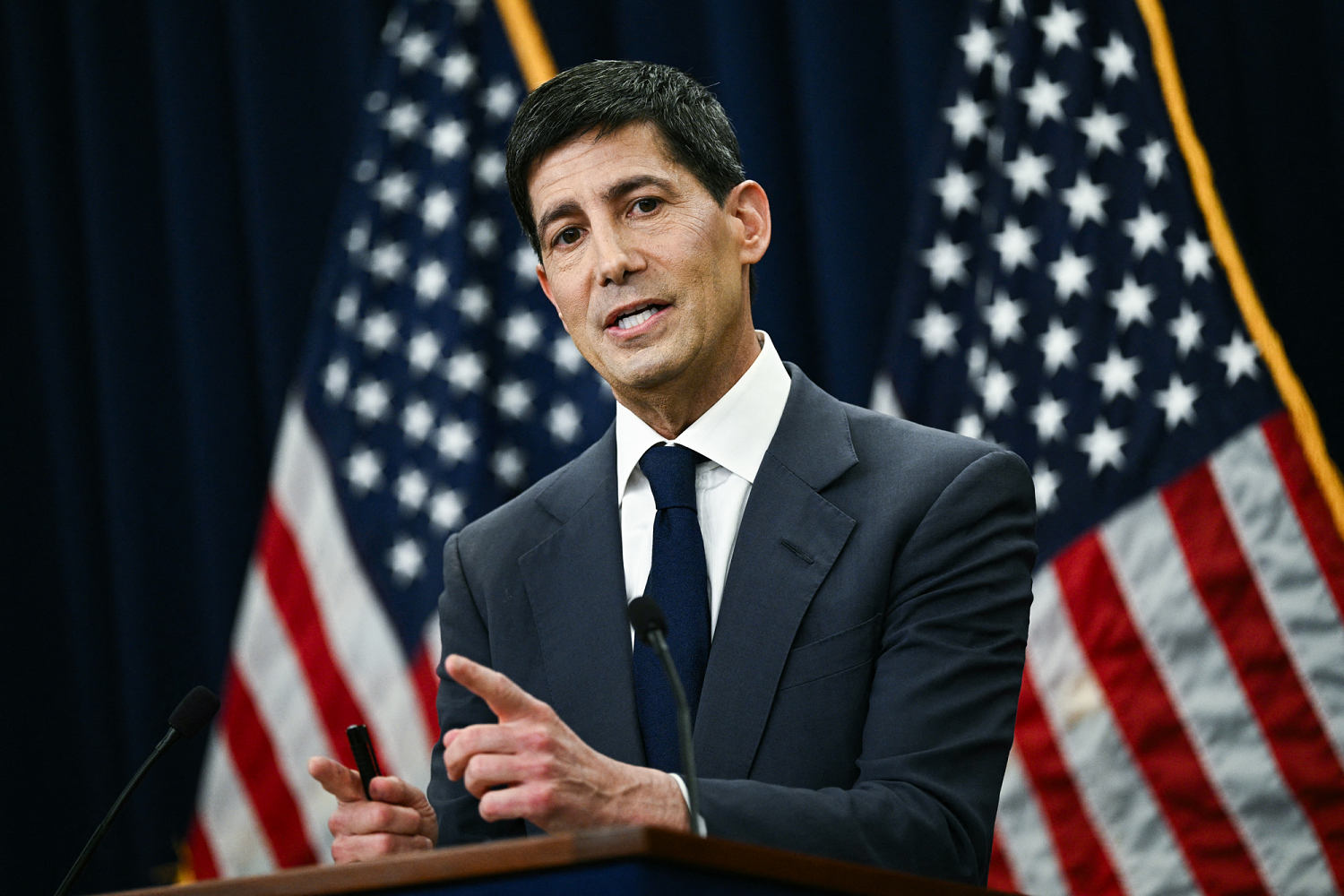
Inflation refuses to die quietly. If you expected Donald Trump's handpicked Federal Reserve Chair, Kevin Warsh, to walk into Jackson Hole and offer soothing words about impending rate cuts, you missed the memo. Warsh used his high-profile Wyoming address to deliver a stark message. The central bank has more work to do, and price stability remains a glaring headache.
Most market analysts spent the weeks leading up to the conference obsessing over whether the Fed would pivot to easing monetary policy. They wanted a clear roadmap. They wanted a predictable reaction function. Instead, Warsh gave them a lesson in central banking realism. He pointed out that stubborn inflation metrics are still too hot and underlying price pressures haven't meaningfully improved.
Why the Jackson Hole Speech Rattled Markets
When a Fed chair stands before a room full of global central bankers and hints that rate hikes remain entirely on the table, Wall Street listens. Warsh noted that while the broader U.S. economy looks surprisingly resilient with a solid labor market sitting at a 4.1% unemployment rate, inflation is the variable that keeps him awake at night.
Let's look at the actual numbers shaping this debate. Consumer prices have hovered stubbornly above the Fed's stated 2% annual target. Tariffs, geopolitical conflicts, and massive corporate spending on infrastructure continue to pump costs through the system. Warsh made it clear that if inflation doesn't move toward its objective at a sufficient speed, policymakers will not hesitate to tighten borrowing costs further.
Traders immediately reacted to the hawkish tone. Short-term Treasury yields climbed, and pricing models shifted to price in higher probabilities of future rate increases.
The Problem With Demanding a Predictable Fed
Wall Street loves certainty. Economists surveyed ahead of the symposium overwhelmingly argued that Warsh needed to lay out his exact economic framework and reaction function. They wanted to know precisely what data points would trigger a rate hike or a rate cut.
Warsh pushed back against that expectation. He argued that our economic understanding simply isn't precise enough to provide a mechanical formula. Circumstances change. Global shocks happen. Pretending that the Fed has a crystal ball does more harm than good.
"We must be confident that underlying inflation is moving to our objective, clearly and at sufficient speed. Otherwise, we have work to do." — Kevin Warsh
This philosophy marks a distinct shift in communication style. A quieter, more deliberate central bank that avoids giving rigid forward guidance is Warsh's preferred model. But it leaves investors scrambling to decode every subtle nuance in his speeches.
Who Pays the Price When the Fed Gets It Wrong
It's easy to get lost in abstract debates about basis points and yield curves. Warsh brought the focus back to everyday Americans. Financial high-fliers can weather volatility, but working families bear the brunt of mismanaged monetary policy. When inflation runs hot and eats away at wages, ordinary people deal with the fallout.
With upcoming consumer price index reports and employment data looming, the pressure on the central bank is mounting. Trump has made his desire for lower interest rates no secret, putting the White House and the Fed chair on a fascinating collision course.
If you're managing a portfolio or trying to plan corporate spending for the remainder of the year, stop betting on an easy monetary pivot. Watch the incoming inflation prints closely, keep an eye on commodity prices driven by global trade friction, and prepare for a higher-for-longer interest rate environment. The Fed isn't blinking yet.
Fed Signals Possible Rate Hike Amid High Inflation | U.S.
This video provides an overview of the Federal Reserve's stance and market reactions following the Jackson Hole economic symposium.
http://googleusercontent.com/youtube_content/1