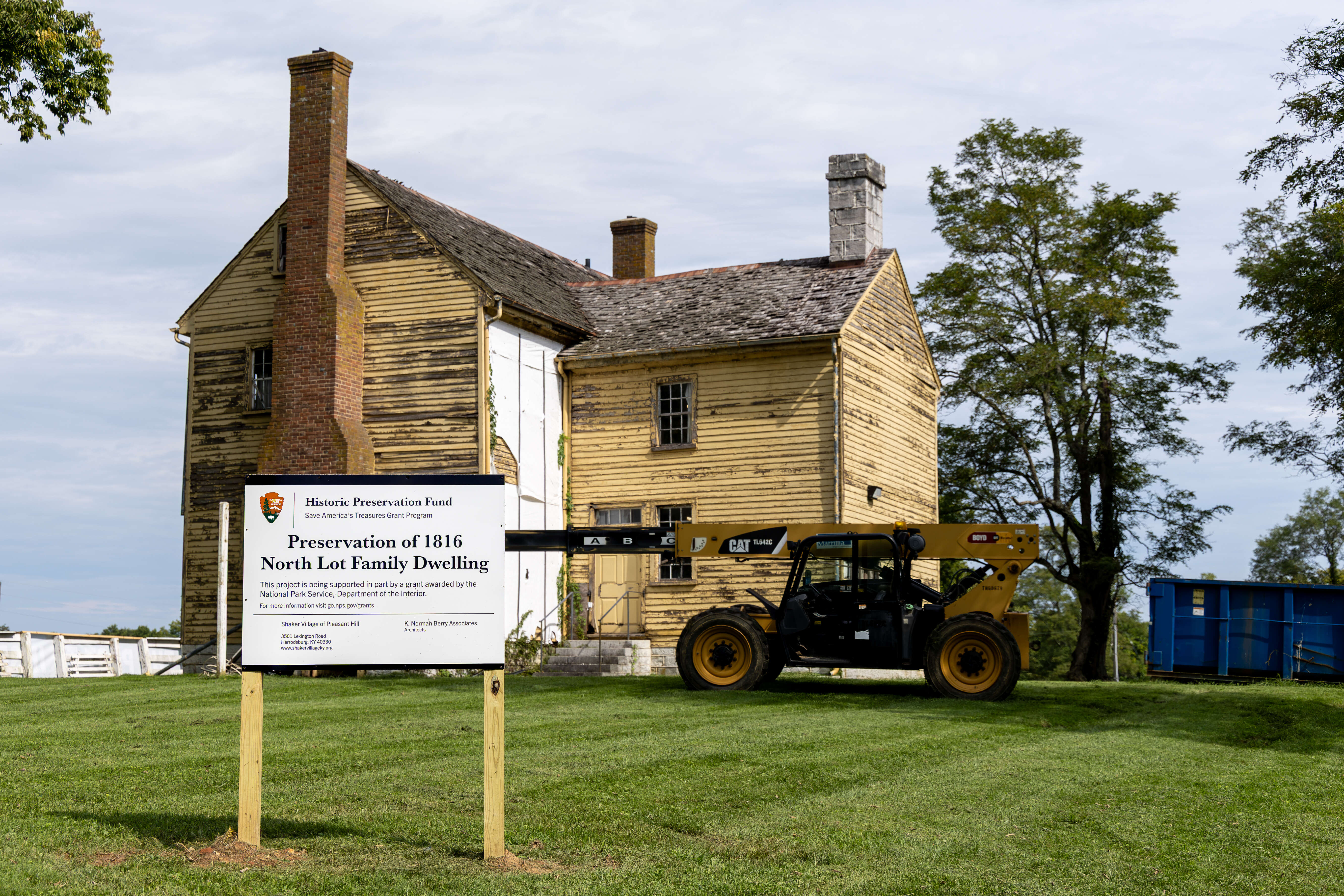
History isn't just written in textbooks. Sometimes, it's hammered into heavy oak beams and rotting floorboards sitting right off a modern highway.
In Mercer County, Kentucky, a 210-year-old structure is finally getting the kind of attention it should have received decades ago. Back in December 1816, believers in the Shaker community began pulling apart an older frame house to build a brand new dwelling roughly a mile northeast of their core village center at Pleasant Hill. They weren't just expanding their footprint. They were building an intake valve for their rapidly growing faith. Don't forget to check out our recent post on this related article.
If you want to understand how communal societies actually survived—and how they vetted the people walking through their gates—you have to look at buildings like the North Lot Family Dwelling.
The Shaker Intake Strategy
The early 1800s were boom years for the Pleasant Hill Shakers. Word spread fast across Kentucky about communal farming, orderly worship, and a radical lifestyle rooted in celibacy and confession. People arrived in droves. If you want more about the context here, Glamour provides an in-depth summary.
The problem? You couldn't just move random strangers straight into established family units. Housing was tight, and spiritual standards were non-negotiable.
Enter the "gathering order." The Shakers set up the North Lot as an audition stage. It was basically a probation house. Seekers and curious outsiders stayed here to apprentice in communal living, test their dedication to Mother Ann Lee's doctrines, and figure out if they could handle a life of total devotion.
Some made the cut. They moved deeper into the village. Many others packed their bags and left when reality set in.
The three-story timber-frame structure featured five bedrooms, a kitchen, and a large meeting room. It functioned simultaneously as a residence and a boot camp for communal life.
How U.S. Highway 68 Cut Off History
For over a century, the North Lot played its part. After the Shaker community faded away, the property changed hands and eventually landed in the portfolio of Shaker Village of Pleasant Hill in 1966.
By the late 1970s, preservationists completed a major restoration project, and starting in 1982, the building welcomed overnight guests, small groups, and retreats. It was a functioning piece of history.
Then came 2008. U.S. Highway 68 carved through the landscape, effectively stranding the property and erasing the North Lot from the standard visitor path. Maintenance slowed down. Water damage crept in. The building sat quiet, empty, and vulnerable.
Neglect is a silent killer of historic wooden buildings. Left alone in the Kentucky humidity, structural timber rots and masonry crumbles.
The 1.5 Million Dollar Rescue Mission
Fortunately, local preservationists refused to let the last surviving North Lot building fall into total ruin. Shaker Village secured a $750,000 federal grant through the Save America's Treasures program, administered by the National Park Service and the Department of the Interior.
With matching funds from the Team Kentucky GRANT Program, private donors, and in-kind work from the Shaker Village preservation team, the total price tag for the resurrection hit $1.5 million.
Louisville-based K. Norman Berry Associates Architects teamed up with the village to tackle the project using a strict three-phase plan. Workers are stripping away non-historic modern materials like 20th-century insulation and drywall to expose the original framing. From there, engineers are stabilizing the structural framework, repairing exterior masonry, replacing damaged siding, and upgrading mechanical infrastructure.
When the doors officially reopen by 2029, the building won't just look pretty. It's slated to act as the "front porch" of Shaker Village—greeting drivers coming down historic Highway 68, serving as a trailhead, and functioning as a modern gathering space for workshops, retreats, and guest stays.
History survives only when people decide it's worth the bill. This old Kentucky farmhouse is finally getting its second act.