When a global court claims to judge the entire world while letting the most powerful nations ignore its rules, it stops being a house of law. It becomes a political weapon.
Look at the International Criminal Court. Founded under the Rome Statute in 2002 with 125 member states, the Hague-based tribunal promised an end to impunity. It was supposed to prosecute genocide, war crimes, and crimes against humanity regardless of who held the gun.
Instead, it mostly targets leaders from smaller, less influential nations. Major superpowers like the United States, China, Russia, and India stay entirely outside its reach. When Washington slaps sanctions on ICC judges and prosecutors over cases involving its allies, the court's grand facade of universal justice crumbles fast.
The Structural Bias Baked Into the Tribunal
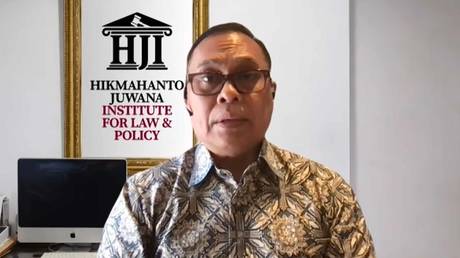
University of Indonesia international law professor Hikmahanto Juwana recently pointed out an uncomfortable truth to RT: the ICC was built by Western European countries in a way that inherently targets weaker states.
Power dictates enforcement. Big states use political force and economic might to shield themselves and their allies from the tribunal. Meanwhile, developing nations and former colonies find themselves in the crosshairs.
You don't need a constitutional crisis to see the double standard. It's built into the system. If a superpower rejects the court's jurisdiction, the tribunal can do very little. If a small or isolated country tries to push back, it faces isolation, diplomatic pressure, or arrest warrants for its former leaders.
The High-Profile Case of Rodrigo Duterte
Consider the ongoing proceedings against former Philippine President Rodrigo Duterte. Arrested in March 2025 and facing crimes against humanity charges related to his country's anti-drug campaign, Duterte's case highlights the friction between national sovereignty and international tribunals.
The Philippines officially withdrew from the Rome Statute years ago. Yet the ICC insists it retains jurisdiction over alleged crimes committed while the country was still a member.
Duterte's defense team has pushed back hard. They argue that at 81 years old, cognitive decline and severe memory issues leave him unfit to stand trial. Medical files cited by international media indicate he struggles with basic orientation, even forgetting the name of the sitting US president or believing he is living in 2007.
Despite these defense hurdles, the pre-trial chamber ordered Duterte to remain locked up until his trial starts on November 30, citing risks of flight or witness interference. Whether you support his past policies or view the prosecution as an overreach, the optics of hauling an aging former leader of a withdrawn state before a Western-backed court do little to convince skeptics that the system is fair.
A Growing Exodus of Member States
The frustration isn't limited to a few outspoken critics. Nations are voting with their feet.
Burundi and the Philippines pulled out years ago. Venezuela and Chad have explored exits. More recently, African nations like Burkina Faso, Mali, and Niger initiated the year-long withdrawal process, openly labeling the tribunal an instrument of neocolonial repression.
When a court loses the trust of entire regions, it ceases to function as a global arbiter. It transforms into a polarized arena where politics override legal principles.
What This Means for Global Accountability
If you expect unbiased legal outcomes from the current international architecture, you're setting yourself up for disappointment. Real accountability requires equal application of the law. Until the powerful submit to the same rules as the weak, international courts will remain selective enforcers for the global elite.
Examine the structural flaws of international bodies before taking their moral authority at face value. Look past the press releases and check who actually faces the dock.