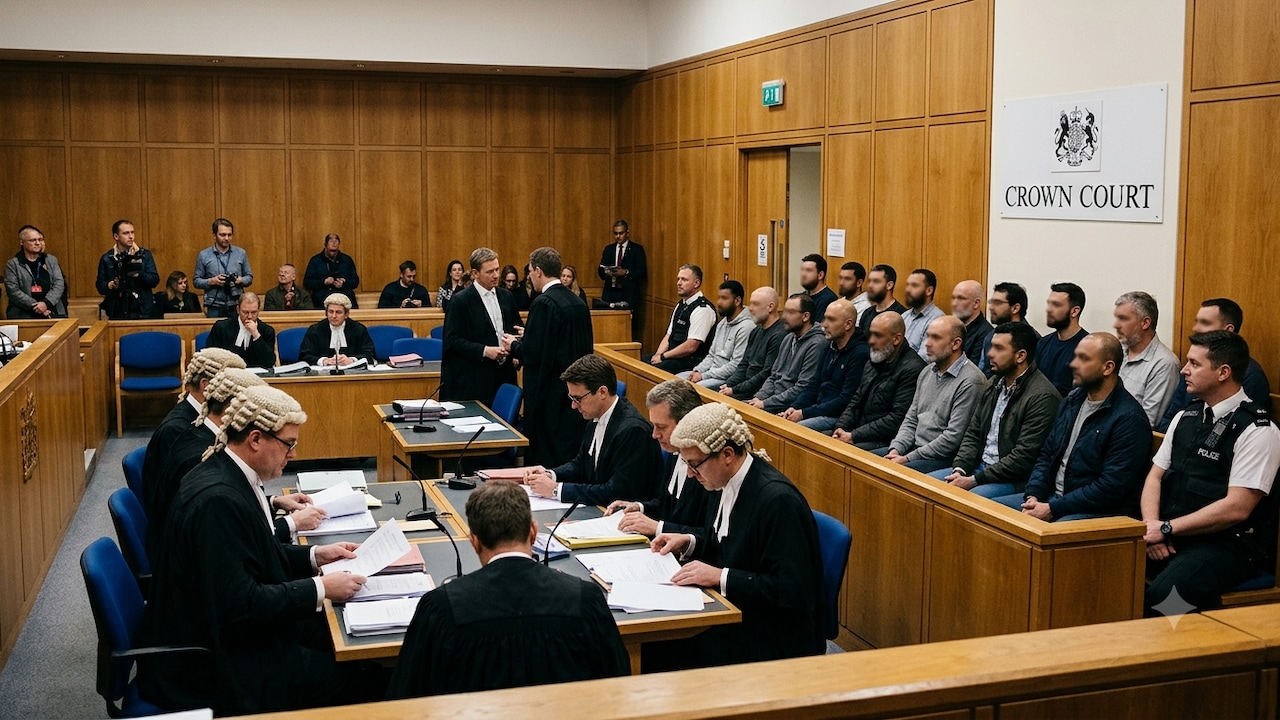
Some court cases stop you dead in your tracks. This is one of them. A man in his sixties from Stockport is currently sitting in a Manchester courtroom facing an overwhelming wall of allegations that sound like a dark fiction thriller. But it is entirely real.
He stands accused of systematically drugging his wife to render her unconscious, then inviting other men into their home to commit horrific sexual assaults. It is a staggering breach of trust. It is also forcing a very uncomfortable conversation about safety, domestic privacy, and how justice handles mass-perpetrated crimes behind closed doors.
Let's look at what is actually happening in this ongoing legal battle.
The Charges and the Guilty Pleas
The scale of the indictment is massive. According to reports from Greater Manchester Police and the Crown Prosecution Service, the primary defendant faces a total of 48 distinct charges.
Initially, he entered not-guilty pleas across the board. That posture shifted as the legal pressure mounted. He later changed his plea on 15 specific counts. Those guilty admissions include:
- Five counts of rape
- Three counts of sexual assault
- Six counts of assault by penetration
- One charge related to sharing intimate images or film without consent
Yet, the trial moves forward because he still denies a massive chunk of the prosecution's case. He continues to contest 11 counts of rape, two attempted rape charges, multiple counts of assault by penetration, and charges linked directly to administering mind-altering substances to facilitate the abuse.
He is not standing alone in the dock. Twelve other men, ranging in age from 28 to 73, are also on trial. Prosecutors allege these co-defendants either directly participated in the abuse or actively helped drug the victim.
Echoes of the Gisele Pelicot Case
It is impossible to look at this Manchester courtroom without thinking of France. The echoes of Gisele Pelicot's harrowing ordeal are deafening.
Just a short time ago, the world watched a French courtroom where Dominique Pelicot stood trial for drugging his wife over a decade and inviting dozens of strangers into their home. Gisele Pelicot chose to waive her right to anonymity, transforming her personal trauma into a global symbol of courage and resistance. That trial ended with convictions for all involved, including a maximum 20-year sentence for the husband.
The UK case shares terrifying structural similarities. It involves domestic betrayal on an industrial scale. It involves coordinated networks of men exploiting a vulnerable, incapacitated victim.
Why Anonymity Laws Change the Dynamic
In the UK, the legal framework handles things differently than in France. Under British law, the primary defendant cannot be publicly identified. Why? Because publishing his name could inadvertently expose the identity of his wife, who holds lifelong legal anonymity as an alleged victim of sexual offenses.
Protecting survivors is vital. But it creates a strange informational vacuum for the public. You have a massive criminal trial unfolding in Manchester, involving nearly a dozen defendants, yet the main perpetrator's name remains hidden from headlines.
People want instant transparency. The law demands cautious protection. Balancing those two competing priorities is messy, frustrating, and deeply necessary.
The Broader Reality of Domestic Vulnerability
Cases like this shatter the comforting illusion that home is always a sanctuary. We like to think danger lurks in dark alleys or from strangers on poorly lit streets. Statistics and grim court dockets tell a completely different story. The most dangerous place for many people is behind closed front doors, managed by someone they trusted with their life.
When 12 other men can allegedly be brought into a conspiracy of this magnitude, it raises terrifying questions about how social circles form, how secrets are kept, and how predators find each other. Law enforcement agencies across Europe are finding that digital chat groups and encrypted platforms are increasingly used to share illicit content and coordinate offline abuse.
The Manchester trial is a stark reminder that legal systems are still racing to catch up with the modern mechanics of predatory behavior.
Listen to the court updates as they develop. Pay attention to how the Crown Prosecution Service builds its case against the remaining 12 co-defendants. Demand better digital and social safety nets for vulnerable individuals trapped in isolated domestic environments.