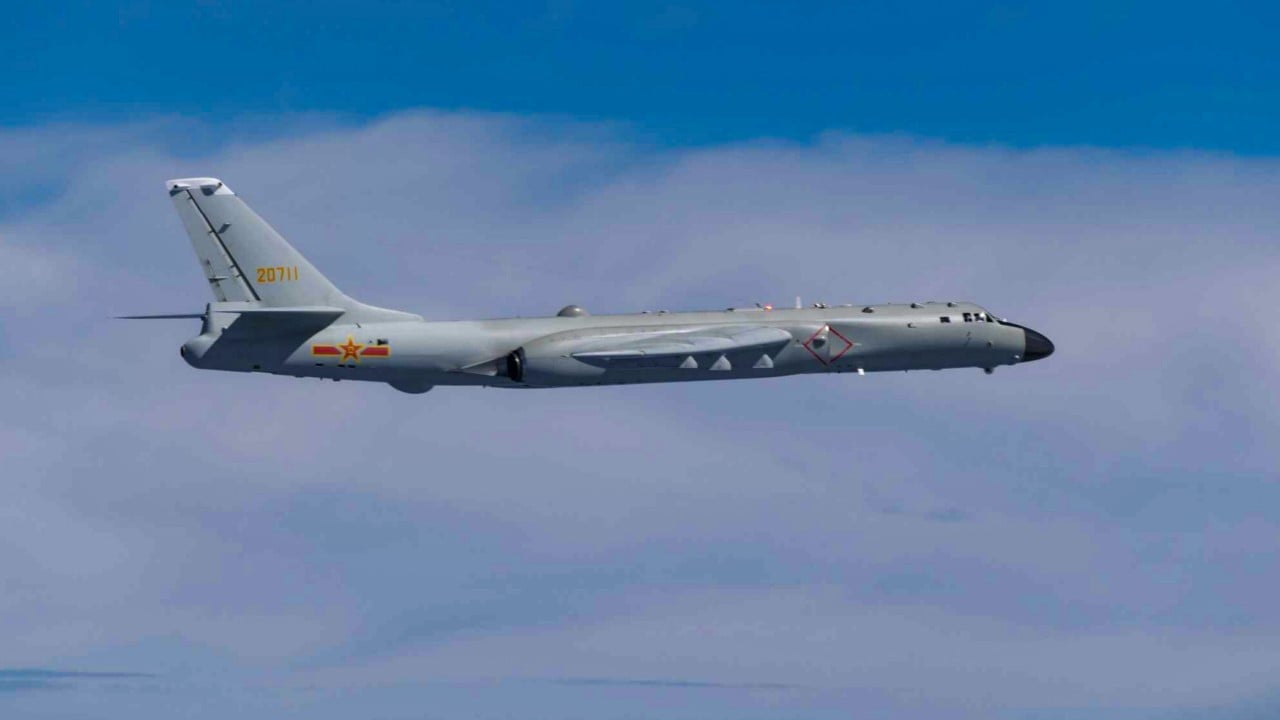
Military analysts spend decades arguing about how nuclear triads actually shift the global balance of power. Most people miss the practical reality. When the People's Liberation Army Air Force showcased the H-6N strategic bomber carrying a large centerline weapon—often identified by observers as the JL-1 air-launched ballistic missile—they weren't just showing off for state television. They were locking in a long-sought objective. They finally solidified an airborne leg for their nuclear forces.
For years, skeptics pointed out that China relied heavily on land-based silos and a growing fleet of nuclear-powered submarines while lacking a modern strategic bomber capable of delivering heavy nuclear payloads from standoff distances. The H-6 platform is an evolution of a vintage design, but the "N" variant is different. It features a modified fuselage with a recessed centerline recess built specifically to haul massive munitions, including air-launched ballistic missiles and potentially hypersonic glide vehicles.
Closing the Triad Gap
Building a functional nuclear triad requires land, sea, and air components working in sync. Land silos are vulnerable to preemptive strikes. Submarines offer incredible survivability patrolling the deep oceans, but communication can be challenging and operational tempos are complex. Air-launched capabilities offer a flexible middle ground. You can scramble bombers on short notice. You can recall them if a crisis de-escalates.
By pairing the H-6N with the JL-1 missile, Beijing has plugged a glaring historical weakness. Ground-based intercontinental ballistic missiles face constant tracking. Submarines face formidable anti-submarine warfare networks operated by adversaries. An airborne platform operating from inland airbases introduces a completely different calculus for enemy defense planners.
Why Standoff Range Changes Everything
Flying right up to heavily defended airspace is a quick way to lose expensive aircraft. Modern air defense systems make traditional gravity-bomb runs suicidal for non-stealthy platforms. That is why the centerline recess on the H-6N matters so much.
The missile it carries gives the aircraft the ability to launch from thousands of kilometers away. The bomber stays deep within friendly air defense bubbles while its payload speeds toward a target at supersonic or hypersonic velocities. This standoff capability drastically increases survivability. It turns a vulnerable regional bomber into a strategic asset capable of threatening targets far across the Pacific without ever exposing the flight crew to close-range fighter intercepts.
Second-Strike Credibility in Practice
Deterrence is only as good as your adversary's belief that you can retaliate after absorbing a first blow. A second-strike capability is your ultimate insurance policy. If land silos are flattened and ports are blocked, airborne assets parked at dispersal airfields across the mainland become exceptionally difficult to wipe out entirely.
Pilots can scramble at the first sign of an incoming attack. They disperse to remote or civilian dual-use runways, wait out the initial exchange, and retain the power to strike back. That flexibility alters strategic stability. Adversaries can no longer assume a clean first strike will eliminate China's nuclear arsenal.
What Happens Next
We are watching a fundamental modernization wave ripple through military logistics. The H-6N is an interim step toward even more advanced next-generation stealth bombers currently in development. Yet, it serves an immediate purpose today.
Don't expect defense planners in Washington or Tokyo to ignore this shift. The completion of this airborne leg means exercises will grow larger, patrols will extend further outward, and the margin for miscalculation at sea or in the air narrows significantly. Keep a close eye on how joint exercises integrate these bombers with stealth fighters like the J-20. That combination hints at how future air campaigns will actually unfold.


